



Imagine offering exceptional audiology care but not getting noticed online, while your competitors attract twice as many patients, frustrating, right? This is because you must be doing something wrong. In today’s ever-evolving digital care, delivering exceptional care is just not enough. With 65% of patients searching online before contacting a doctor or healthcare provider, having a strong online presence is non-negotiable. But how can you make your audiology business stand out in the highly competitive audiology industry? By doing the right SEO and choosing the right SEO keywords for audiologists.
Whether you are based in London, Canada, or Berlin, potential patients are turning to search engines to search for terms like “best audiologists near me” or “hearing aid specialists in [City].” If your audiology practice is not ranking higher for these searches, then you are missing out on a lot of valuable clients.
If you are looking to enhance the search engine visibility of your audiology practice, then this blog is for you. It will discuss the importance of SEO keywords, steps to do keyword research, the top 50 effective SEO keywords for audiology practices, the best keyword tools, and more. So, let’s get started.
Importance of SEO Keywords for Audiologists
If you are managing or promoting an audiology clinic, selecting the right SEO keywords can make all the difference. Your SEO efforts will go in vain if you do not choose the keywords that your target patients are using to search for your services and treatments. Here are a few reasons why audiology seo matters.
- For Effective Patient Acquisition
Targeted SEO keywords act as a bridge connecting people with hearing problems to your specific services. When patients search for “hearing health treatments near me” or “Tinnitus treatment,” using these terms in your website’s content and local listings guarantees that your practice appears as a relevant solution.
This direct visibility can drive highly qualified leads, who are already prepared to seek auiology treatment directly to your booking page.
- Generating Local Foot Traffic and Revenue
For audiology practices, local SEO must be the top priority. This is because more and more patients are turning to healthcare providers who are located near them.
By optimizing your website for location-specific keywords, such as neighborhoods, cities, and “near me” terms, audiology practices can ensure that their practice appears in Google’s Local Pack, the map section, and the top of the local search results. This dominance in local search results directly boosts foot traffic and patient appointments.
- Establishing Credibility and Authority
Ranking in a prominent position in relevant search results fosters immediate trust and credibility. Patients often choose the top-ranking results and consider them the most authoritative and reliable sources of information and services.
By developing detailed, keyword-optimized content that directly addresses common patients (e.g., blog posts on “Signs of hearing loss” or “Choosing a good hearing aid”), audiology practices can position their practice as a valuable resource. This authority helps potential patients feel more confident in choosing your audiology practice over others.
- Gaining Competitive Advantage in the Local Market
The local healthcare market is pretty crowded. While your audiology competitors may depend on traditional marketing, investing in an effective keyword strategy can give you a significant digital advantage.
Choosing effective SEO keywords for audiologists can help you capture more organic traffic. By constantly monitoring and adapting your keyword strategy to include new SEO trends and particular service niches, audiology practices can outshine local audiology practices and secure a significant share of the local patient base.
How to do Keyword Research for your Audiology Practice
In order to find the right keywords for your audiology practice, conducting effective keyword research is the first step. Keyword research can give you a clear idea of what your target patients are actually typing in.
Not only that, but thorough keyword research can help audiologists develop helpful articles that perfectly align with the audience’s needs, and also provide valuable insights into user search intent and market trends.
But effective keyword research is not as easy as it sounds. But don’t worry, we can make it easier for you. This section of the blog will provide a quick guide for audiology practices to conduct effective keyword research. But before we get started with the steps to conducting keyword research, let us discuss the type of keywords that audiologists can incorporate.
Types of Keywords Audiologists Can Consider
Here is a list of keywords based on structure, competition, and search intent for audiology practices.
- Types of Keywords Based on Search Intent
These keywords are based on why a person is searching for a specific keyword.
- Informational Keywords: Users are simply looking for information or answers to their audiology-related queries. For example, “What are the symptoms of Meniere’s disease?” or “How to clean hearing aids at home?”
- Navigational Keywords: These are keywords used by patients who are looking for a specific page or website, such as a product name or brand name. For example, “[Practice Name] website”, or “[Audiology Clinic Name] reviews.”
- Commercial Keywords: Search terms that are often used by patients who are researching for audiology products, services, and comparing options before making a decision. For example, “Pediatric hearing aids cost,” or “Cochlear implants vs Hearing aids.”
- Transactional Keywords: Patients use these keywords when they are ready to book an appointment or schedule a consultation. For example, “book hearing test,” or “audiology clinic near me.”
- Types of Keywords Based on Structure
These search terms often describe the length and specificity of the search terms
- Short-tail Keywords: These are broad and high-volume terms that usually contain one to three words and are highly competitive. For example, “hearing aids,” “audiology,” and “hearing loss treatments.”
- Long-tail Keywords: Long-tail keywords are literally gold for your audiology practice. According to Backlinko, 92% of all keywords that people type into search engines are long tails. They are more specific and have longer phrases, usually containing three or more words. Long-tail keywords have lower competition but a very high conversion rate. For example, “audiologists specializing in balance disorders,” “Pediatric cochlear evaluations near me.”
How can Audiology Services Conduct Effective Keyword Research
Now that we have a clear understanding of the type of keywords audiology practitioners can leverage, let us discuss the steps on how audiologists can do effective keyword research for their search engine optimization efforts.
- Understand your Audience

First things first, to conduct effective keyword research, audiology practices need to understand who their target audiences are. Start by identifying who you want to attract.
Common audiology audience:
- Adults with hearing loss
- Parents of children with hearing problems
- Individuals experiencing Tinnitus
- Older people in need of hearing aids
- Individuals who are looking for vestibular testing
Understanding your audience is vital to determining the right SEO keywords for audiologists. Different groups of people search using different terms. For example, a parent seeking audiology services for their children’s hearing issues is likely to use search terms like “child hearing test.” On the other hand, older people seeking hearing care treatment might use terms like “best hearing aids for older people .”
- Brainstorm a List of Major Services

In this step, you need to make a note of all the major products, services, or topics that are relevant to your audiology practice.
Now, you need to leverage these topics to generate a comprehensive list of seed keywords that you can use to explore more specific terms. For example, as an audiology practice, your seed keywords will be “hearing tests,” “hearing aids,” “Cochlear implant evaluations,” or “Tinnitus treatment.”
- Leverage Keyword Research Tools
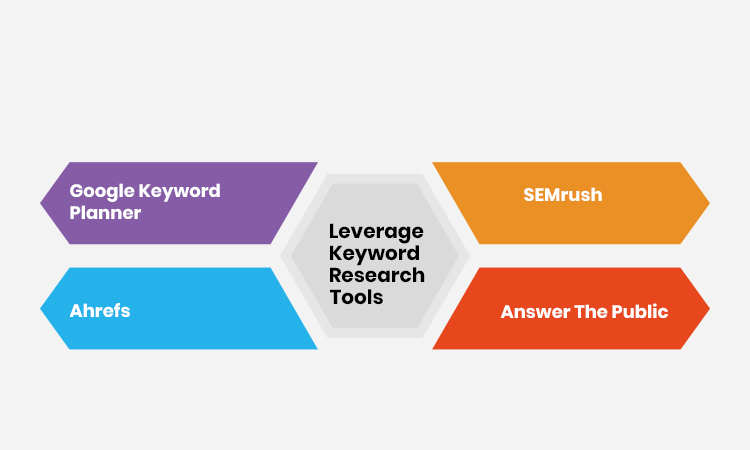
Audiology practices can implement certain keyword research tools, as these will help them gain insights into search volume (how many people are searching), keyword difficulty, and related keyword ideas.
Here are some of the most preferred SEO keyword research tools that audiology practices can consider
- Google Keyword Planner: A free keyword research tool that can help build lists of keywords for search campaigns.
- SEMrush: SEMrush’s keyword Magic Tool can generate comprehensive lists of targeted keywords, explore long-tail keywords, identify high-value keyword opportunities, and determine user search intent.
- Ahrefs: This tool can help explore keyword difficulty or competition for specific keywords. It also offers backlink analysis to help enhance authority by identifying highly authoritative websites.
- AnswerThePublic: This offers a wide range of queries your audience is asking. This tool basically provides valuable insights into what people are searching for, offering an assortment of long-tail keyword ideas.
- Put Emphasis on Local Keywords
As we have already discussed earlier in this blog, the majority of patients search for local audiology services. In fact, 8 out of 10 customers in the US say they search for a local business online at least once a week. This statistic showcases the importance of incorporating local keywords in order to make sure your practice appears in local searches. When conducting keyword research, audiology practices must make sure to add local keywords such as “Audiologist in Birmingham,” or “hearing aids near me” in their list in order to rank for local searches and reach local patients.
- Keep a Close Check on Your Competitors

Sometimes, taking ideas from your competitors can prove to be beneficial for your audiology practice. By assessing what keywords your competitors are using and ranking for, you can discover opportunities and identify gaps in their strategy.
For effective competitor analysis, you need to determine:
- What keywords are they using on their homepage?
- What blog topics are they writing about?
- What locations are they targeting?
- What type of conditions are they focusing on?
Besides this, audiology practices can incorporate their competitors’ URLs in tools like Ubersuggest or SEMrush to evaluate what keywords they are ranking for.
- Analyze and Refine your Keywords

Now that you have a comprehensive list of relevant keywords with you, you need to scrutinize them. How? Let’s get into it.
- Analyze search intent: The first thing you need to do is understand “Why” an individual is searching for a specific term. Are they simply looking for information (informational intent), trying to seek an audiology service (transactional intent), or researching a particular audiology practice (navigational intent)?
- Filter down by search volume and competition: Look for keywords that have a good search volume but lower or moderate competition. Audiology practices can consider using long-tail keywords that have a lower search volume but are more specific and have high conversion rates. If you are just starting out and want to position your audiology practice in a prominent place, you can use these highly specific keywords as they are easier to rank for.
- Identify Variations: Audiology practices must not just focus on one exact keyword. They must rather look for and target similar keywords or relevant terms that their audiences are likely to use.
- Finalize your List of Keywords
In the final step of keyword research, you need to align your chosen keywords to specific content ideas that will satisfy the intent of searchers and help them easily find the information they were looking for.
Categorize your keywords by intent or topic to develop a clear and organized list of your content creation efforts.
Top 50 SEO Keywords that Audiology Practices Must Consider
Here is a comprehensive list of the top 50 SEO keywords for audiologists, categorized by type, search intent, and priority. These keywords can help audiology specialists to significantly enhance their practice’s visibility in the search engine results pages.
- Service-Based Keywords
Audiology practices can implement these high-intent keywords in their services pages.
| Keywords | Intent | Difficulty Level |
| Hearing test cost | Commercial | Medium |
| Custom hearing aid fitting | Transactional | Low |
| Professional ear wax removal | Transactional | Medium |
| Custom hearing aids fitting | Transactional | Medium |
| Tinnitus management program | Transactional | Medium |
| Pediatric hearing screening | Transactional | Medium |
| Cochlear implant consultation | Transactional | Low |
| Hearing aid repair services | Transactional | Low |
| Industrial hearing tests | Transactional | Low |
| Auditory Processing Disorder (APD) testing | Transactional | Medium |
Condition-Based Keywords
These keywords are great for targeting specific patient conditions with treatment-focused content.
| Keywords | Intent | Difficulty Level |
| Signs of hearing loss in adults | Informational | Medium |
| Sudden hearing loss treatment | Informational | Medium |
| Chronic ear ringing relief | Informational | Medium |
| Otosclerosis treatment options | Informational | Low |
| Vertigo and balance therapy | Informational | Medium |
| Acoustic neuroma monitoring | Informational | Low |
| Noise-induced hearing damage | Informational | Medium |
| Presbycusis symptoms | Informational | Low |
| Hyperacusis treatment | Informational | Low |
| Best hearing aids for severe loss | Commercial | Medium |
Local/Geo-Based Keywords
These local keywords are vital to enhance your practice’s visibility in local searches. Audiology practices can incorporate these keywords in the Google Business Profile and location pages.
| Keywords | Intent | Difficulty Level |
| Audiologist near me | Navigational | High |
| Best hearing clinic in [City] | Navigational | Medium |
| Hearing tests [City] | Navigational | Medium |
| Pediatric audiologist [City] | Navigational | Medium |
| Tinnitus specialist [Neighborhood] | Navigational | Low |
| Ear wax removal services [City] | Navigational | Medium |
| Audiology services [County/Area] | Navigational | Low |
| Top rated hearing doctor [City] | Navigational | Medium |
Long-Tail and Informational Keywords
Audiology specialists can incorporate these search terms in blogs, FAQs, and awareness content.
| Keywords | Intent | Difficulty Level |
| How much do hearing aids cost out of pocket | Informational | Low |
| What causes Tinnitus | Informational | Medium |
| Are invisible hearing aids right for me | Informational | Low |
| Does insurance cover hearing aid batteries | Informational | Low |
| How long does a hearing evaluation take | Informational | Low |
| Difference between BTE and ITE hearing aids | Informational | Medium |
| Hearing aid financing options | Commercial | Low |
| Tips for communicating with hearing loss | Informational | Low |
| What is the best way to clean my hearing aid | Informational | Low |
| Can hearing loss be reversed | Informational | Medium |
| Over-the-counter vs prescription hearing aids | Informational | Medium |
- Branded and Reputation Keywords
These are search queries that are directly related to a specific business, product, or service. Branded keywords can help drive high-quality traffic, lead to higher conversion rates, and are cost-effective as well.
| Keywords | Intent | Difficulty Level |
| [Clinic Name] office hours | Navigational | Low |
| [Clinic Name] patient portal | Navigational | Low |
| [Your Doctor Name] audiologist reviews | Navigational | Low |
| Best rated audiologists in [City] | Navigational | Medium |
| Phonak hearing aid specialist [City] | Commercial | Medium |
| Oticon More hearing aid price | Commercial | Medium |
| Book appointment [Clinic Name] | Transactional | Low |
- Content and Media Support Keywords
| Keywords | Intent | Difficulty Level |
| Hearing aid maintenance video guide | Informational | Medium |
| Protect your hearing tips for concerts | Informational | Low |
| Workplace hearing protection guidelines | Informational | Low |
| Success stories hearing aid users | Informational | Low |
How to Strategically Place these Keywords in your Website and Blog Content
Finding the right keywords for your audiology practice is not the major challenge. The major challenge is how you are implementing them throughout your website.
In order to achieve exceptional SEO results, audiology care services must strategically incorporate these keywords in their website and only where they are relevant to avoid keyword stuffing. This is crucial to make sure that both search engines and website visitors can easily find the information they are looking for.
So, here’s a complete guide on how you can incorporate effective SEO keywords for audiologists into your website and blog content, organically and strategically.
- Create a Clear Site Structure
Even before you start optimizing your website page, it is important to make sure that your website has a logical and simple structure. In fact, 70% of users judge a website’s credibility based on its ease of navigation and layout. A clear and well-organized structure can help search engines easily crawl your website and index your content more efficiently.
Best practices to develop a clean website structure:
- Audiology practices must cluster related pages into different categories and subcategories
- Make sure each major page has one credible page in order to avoid cannibalism
- You need to keep your navigation menus simple, clean, and descriptive.
- Implement Keywords in High-Impact Pages
Remember, certain sections of your website carry more SEO weight than others. So, you need to focus on incorporating your primary keywords in these high-impact pages before anything.
- Page Title
Audiology practices must include their primary keyword within the first initial words of the title. Make sure to keep it engaging and under 60 characters to avoid it from being truncated in the search engine results.
- The First 100 Words
Search engines like Google often pay special attention to the beginning of the content. So, audiology practices must ensure that the primary keyword has been naturally incorporated in the first 100 words of the content.
- URL
Write a short and clear URL that includes your primary keyword and seamlessly conveys what is inside a particular webpage. For example, “https://services/Tinnitus-Management”
- Headings (H1, H2)
Your H1 must have the main keyword. Secondary keywords fit organically in H2s and H3s to enhance relevance and readability.
- Meta Description
Audiology practices must not forget to add their primary keyword to their meta description in order to boost click-through rates. Make sure to keep your meta description between 150-160 characters so that it appears well in the search results.
- Internal Links
It is a good idea to link to other relevant content by implementing descriptive anchor text and avoiding using generic links like “Click here.” By implementing keywords in anchor texts, hearing care specialists can help search engines better understand the relationship between the two linked pages.
- Image Alt Text
This is often overlooked by a lot of businesses, but image alt texts are equally important. Optimizing your image alt texts with your primary keyword can easily tell search engines what the picture contains without any hassles. However, audiology practices must use their primary keywords in image alt texts only where they fit naturally.
- Call to Actions (CTAs)
CTAs are one of the most magical elements of a website. Do you know, implementing a specific, clear CTA can increase conversion rates by 161%? If written nicely, these elements can easily attract attention and encourage visitors to take a desired action. Adding keywords to CTAs can enhance contextual relevance, especially for pages that are targeted for conversions.
- Implement Keywords Naturally in Your Content
Keyword implementation must look and feel natural. Make sure to write for humans first and then optimize. Avoid developing content just to rank on search engines that does not offer any value for patients who are seeking audiology services.
If your content is not meaningful and helpful for your audience, they are likely to leave and choose your competitors over you.
Not only that, search engines like Google also prioritize people-first content. Stuffing keywords in your content just to rank on the search engines can not only make you lose potential patients but also drop your rankings in the search engine results.
Helpful Tips to Implement Effective SEO Keywords for Audiologists Naturally in Content:
- You can leverage synonyms or related phrases of your primary keyword.
- Audiology practices must maintain a conversational tone when implementing keywords in their content.
- Focus on answering the search intent behind the keyword.
- Strategically Leverage Internal Linking
Internal links do much more than just help your website visitors navigate through the website seamlessly. They convey authority across your audiology website and tell search engines which pages are the most important.
But how can you implement internal linking strategically on your website? Here is how.
- Audiology practices must link to their main website pages frequently
- When doing internal linking, you must avoid linking the same page multiple times.
- You must leverage keyword-rich and descriptive anchor texts when linking to other relevant pages on your website.
- Avoid Keyword Stuffing
Overusing a single keyword repeatedly in a single content can negatively impact readability and might even lead to penalties. When incorporating valuable SEO keywords for audiologists, you must make sure to follow the thumb rule, which is: if a keyword feels repetitive, either remove it or rephrase it.
Here is how audiologists can avoid keyword stuffing:
- Focus on user intent: Audiology practices must develop content that directly addresses the queries that your audiences are actually looking for, and not just stuff keywords to boost rankings.
- Develop natural content: Hearing care specialists must write content in a conversational tone that does not sound forced. If it sounds unnatural, then you are probably stuffing keywords.
- Read it aloud: After you are done writing the content and you are about to post it online, you need to test it by reading it aloud. This will help identify unnatural tone or repetitive phrases, making it easier for you to remove them.
- Use your secondary keywords: If you use your primary keyword multiple times in a content, then it might harm the readability of your content. In this case, what you can do is you can expand on your topic with other related keywords that can add value to your content.
- Avoid repeating keywords frequently: Audiology practices must avoid incorporating keywords in every sentence. Rather, place keywords only where they feel natural and add value.
- Consider Content Clusters
A proper content cluster strategy strengthens your topical expertise. Audiologists can choose one high-value topic, such as tinnitus treatment, and create a cluster.
Pillar Page: This would be your full-service page around back pain physiotherapy.
Cluster content involves:
- Creating a comprehensive pillar page targeting a broad keyword.
- Publishing cluster posts can target relevant long-tail keywords.
- Interlinking the pillar page and cluster page.
This structure can help search engines better understand the depth and expertise of your audiology practice.
- Do Not Forget to Implement Schema Markup
Schema Markup can add structured data for your audiology website, allowing search engines to easily interpret your content. Proper implementation of schema markup can also help audiology practices improve search results with SERP features.
Common types of schema markup for keyword-optimized content include:
- FAQ Schema
- Local Business Schema
- Article Schema
- Product Schema
Are you finding all of this too overwhelming? Then you can partner with a professional SEO agency that leverages advanced tools and technologies for comprehensive keyword research.
Best Keyword Research Tools that can Leverage Audiology Practices
Now that you have a clear understanding of the type of SEO keywords you can incorporate, how to do effective keyword research, and how you can incorporate them in your website and content, let us look into some of the widely used keyword research tools and the special features they come with.
- SEMrush

First off, we have SEMrush. To find valuable SEO keywords for audiologists, SEMrush is the best keyword research tool available in the market today and is loved by SEO experts. With SEMrush, audiologists can not only gain a comprehensive list of search terms, but it also offers a treasure trove of information about organic and paid keywords that audiology specialists can leverage to elevate their marketing strategy.
For beginners, it provides a complete overview of any specific keyword that you enter in the tool, be it organic search volume, keyword suggestions, or trends.
Another interesting feature of SEMrush is that by implementing this tool, audiology practices can easily view the Phrase Match Keywords and Related Keywords. These comprehensive reports can help audiology practices optimize their content for relevant keywords.
Pricing: SEMrush’s basic plan starts from $99 per month, and audiologists can get access to all its special features along with a 7-day free trial.
Why SEMrush?
- SEMrush can help audiologists explore both short-tail and long-tail keywords seamlessly
- Audiology practices can export keyword reports for further analysis without any hassle.
- It offers valuable data on paid and organic keywords along with their cost-per-click (CPC) rate.
- This tool can help audiology practices to view traffic information for every keyword.
- By implementing SEMrush, audiology practices can easily identify competitor backlinks
- Allows hearing aid specialists to seamlessly track keyword positions across websites.
- SEMrush also offers a complete website audit.
- Audiology practices can research topics and use the SEO Content Template to incorporate relevant keywords.
- Google Keyword Planner

Google Keyword Planner is a free keyword research tool offered by Google and is a part of Google Ads.
Now you must be thinking, Google Planner is useful for running paid ads, but what about SEO? Google Keyword Planner is not just a great tool for paid advertising, but it also serves as an exceptional platform to conduct keyword research for your organic strategy.
By implementing this tool, audiology practices can create a list of relevant search terms for their SEO campaign. And the best part? This tool clearly shows past data for every keyword.
Pricing: Google Keyword Planner is a free tool. All audiology practices need to do is sign up/ sign in on Google Ads with their email addresses to get started.
Why Google Keyword Planner?
- Audiology practices can get keyword ideas seamlessly and for free.
- This tool allows audiologists to determine the competition level for each search term.
- The keyword forecasts that this tool’s features can help hearing care specialists filter keywords.
- Google Keyword Planner can help audiology practices create new content topics by exploring keywords.
- Ahrefs

Like SEMrush, Ahrefs is also more than just a mere software for exploring search queries. Audiology practices can leverage this tool to find relevant SEO keywords for audiologists, conduct thorough competitor analysis, generate new keyword ideas, and perform advanced organic search.
Not only that, but Ahrefs can also seamlessly track the performance of your SEO campaigns and compare them with your competitors, helping you to understand opportunities and identify gap areas.
All you need to do is enter any keyword> select the search engine you wish to target> choose a location> hit “Search,” and Aherfs will provide you with all the details for your keyword, e.g., keyword difficulty, search volume, traffic potential, and global volume.
Pricing: The basic plan of Ahrefs starts from $99 per month, and you gain access to track 500 keywords. Moreover, this tool also offers a paid trial period where you can access all of its features.
Why Ahrefs?
- Ahrefs offers detailed keyword ideas.
- It also offers valuable insights into keyword volume, difficulty, CPC, SERPs, and clicks for every keyword.
- It allows audiology practices to conduct a thorough website audit to identify gaps.
- Audiology practices can monitor in which position their keywords are ranking.
- The Domain Comparison feature of Ahrefs offers a comprehensive competitor analysis.
- The Link Intersect option of this tool highlights backlinking opportunities.
- Audiologists can generate content ideas with the Content Explorer feature of Ahrefs
.
- Google Trends

Google Trends is another free tool that is offered by Google and can help audiology practitioners analyze keyword popularity over time across various languages and regions, leveraging a scale of 0-100.
The best part about this tool is that it offers valuable insights into search interest for a given keyword and offers relevant topics and queries.
Audiology practices can implement this tool to conduct thorough keyword and content research, gain an understanding of the latest market trends, and optimize advanced marketing strategies.
Pricing: Google Trends is a completely free tool and helps audiology practices to discover the latest search trends over time. Anyone can access this tool to evaluate the popularity of search results.
Why Google Trends?
- Google Trends allows audiologists to identify trending topics and keywords to help them create content that engages.
- This tool lets audiology practices compare the popularity of multiple keywords side-by-side to determine which one has more search intent or how their trends have emerged differently.
- The Trending Now section of Google Trends can provide important information on what audiology topics are currently trending.
- Google Trends offers trending topics and keywords that hearing aid specialists can use in their content to enhance brand awareness.
- AnswerThePublic
AnswerThePublic is one of the best keyword research tools, basically because it is pretty convenient when you are looking to get content topics and new keyword ideas, especially long-tails.
This tool is very easy to use. All you have to do is enter a broad keyword. After that, this tool will provide you with a variety of related keyword suggestions in terms of composition, patient queries, and alphabetical order.
What sets this tool apart from the others is that you get to know what type of audiology-related queries your patients are searching for.
Pricing: AnswerThePublic has three types of plans: individual, pro, and expert. The Individual plan is $10, the Pro plan is $49, and the Expert plan is $99. The basic plan offers 100 searches per day, while the other two plans offer unlimited searches per day.
Why AnswerThePublic?
- This tool can offer audiology practices with exceptional blog post ideas
- AnswerThePublic helps audiologists to explore an abundance of long-tail keywords
- With AnswerthePublic, audiologists can also download the keyword suggestions as a CSV file.
- It also helps hearing aid specialists to determine what queries their potential patients are asking.
FAQ’s
Ans. You should update your keyword list at least every 3 to 6 months in order to stay ahead of the competition, or even more frequently if you witness significant changes in industry trends and your rankings.
Ans. Voice search queries can significantly influence an audiology keyword strategy by completely diverting the focus from short-tailed, typed keywords to longer, more specific, conversational, and question-based phrases.
Ans. Yes, audiologists must target symptom-based keywords as a major part of their digital marketing efforts and SEO strategy. Prospective patients often start their journey online by searching for information about the symptoms they are experiencing.
Ans.Hyper-local keywords are crucial as they connect your audiology practice directly with potential patients who are located in your immediate vicinity and actively searching for hearing care services.
These keywords are essential for increasing foot traffic, driving high-intent traffic, and achieving a competitive advantage in your specific community.
Wrapping Up
Implementing targeted SEO keywords for audiologists is not just a promotional move; it is vital for enhancing your practice’s rankings in the search engines and getting noticed by a wider audience. The keywords you choose will heavily determine whether your practice appears when people search for audiology services, treatment options, or a good audiologist nearby.
Investing in advanced keyword research techniques can not only lead to higher search engine rankings but also help audiology practices reach the right audience by developing keyword-rich and meaningful content.
If you are someone who is just starting out and has no idea how to proceed further, we recommend partnering with an audiology marketing expert who can help you find high-impact SEO keywords for your audiology practice and offer personalized marketing solutions to help your practice thrive and grow in the highly competitive market.

