


The fact that the demand for herbal products is escalating is undeniable. In fact, the global herbal medicine market size is expected to go from USD 251.25 billion in 2025 to USD 437 billion by 2032. However, with more and more people turning to the internet to search for health-related information, not having a robust online presence means your business is non-existent to people. This is exactly where SEO for herbal products comes into play.
Search engine optimization is a valuable digital marketing approach that can help herbal products businesses enhance their online visibility by improving their search engine rankings, driving more targeted traffic to their website, and ultimately generating higher leads and sales. According to Ahrefs,53.3% of website traffic comes from organic search, making SEO the top driver of web traffic.
If you are someone looking to enhance your business’s online visibility, then this blog is for you. It will discuss the importance of search engine optimization for herbal products, effective SEO tips for herbal product businesses, common SEO mistakes herbal product companies must avoid, and more. So, let’s get started.
How SEO Works for Herbal Products
Search Engine Optimization for herbal products is an effective digital marketing strategy that includes optimizing your herbal product website to enhance its online visibility in search engine results, implementing advanced strategies such as keyword research for specific herbs and health issues, and developing valuable and educational content for patients.
Major SEO aspects include targeting herb-specific keywords, offering valuable information, establishing authority through quality content, and optimizing to rank for local searches.
Here are 4 major types of SEO for herbal product companies:
- On-Page SEO: This is the process of optimising individual web pages in order to rank higher in the search engines for specific keywords and attract more potential customers.
- Off-Page SEO: Off-page SEO is a strategy that is done outside of your website to enhance its rankings in the search results and establish authority and trustworthiness.
- Local SEO: Local SEO is the part of SEO that includes optimizing your herbal business’s online presence to attract more local patients. This strategy often includes optimising your website with “near me” search terms.
- Technical SEO: Technical SEO is a digital marketing strategy that includes optimising a website’s structure to enhance its crawlability, indexability, and search engine rankings.
When compared to PPC ads, Search Engine Optimization usually takes a significant amount of time to show results. However, it offers long-term benefits such as getting more customer queries and web traffic, making it a better choice for herbal product businesses that are looking to achieve long-term benefits rather than instant results.
Why SEO for Herbal Products is Essential
Now that you have a clear idea of what is SEO for herbal products and the types of SEO you can consider, let us now look at some of the major benefits this digital marketing offers:
- Enhances Visibility and Improves Rankings
One of the biggest reasons why SEO is preferred by many marketers is because of its ability to increase the online visibility of your herbal products business, making it easier for customers to notice your business when they search for natural remedies.
And we all know, the higher you rank in the search engine results pages, the more easily customers will find and click through to your website.
- Drives High-Quality Traffic
Organic traffic is the visitors who discover your herbal product website through unpaid search engine results and not through paid ads.
SEO is a major contributor to increasing website traffic. By creating an effective SEO strategy, herbal products can drive a good amount of traffic to their website. SEO not only helps drive a significant amount of traffic but also enhances the quality of your web traffic.
- Help Build Authority
Page Authority is a significant ranking factor that herbal product businesses must consider. If users search for various topics and they always find your website on the first page of the search engines, they will start to consider your business as a credible source of information.
Not only that, but Google also prioritises Experience, Expertise, Authoritativeness, and Trustworthiness. Although it is not a major ranking factor, it does affect how people see your content and business.
By following Google’s E-E-A-T framework and creating high-quality content and website pages, you can position yourself in a prominent place in the herbal products market and make customers trust your business.
- Offers a Better Customer Experience
Half of your SEO efforts involve generating valuable content and on-page optimization, ultimately resulting in a positive and seamless customer experience.
People who are searching for information online usually want the fastest and easiest way to find the information. If you make it harder for them to find the information, they will simply leave your website and choose your competitors for good.
Pages that have a higher amount of bounce rate often signal search engines that your page does not have what they need, ultimately leading to lower search engine rankings.
A positive user experience means creating positive interactions with every person who visits your herbal products website. Besides helping your website rank higher, search engine optimisation helps determine the gap areas of user experience, allowing you to improve and create positive customer interaction.
- Generates Measurable Outcomes
The amount you invest in SEO will offer an exceptional ROI. Herbal product companies can easily monitor this return on investment by comparing the amount they invested in SEO to the number of conversions they have received through this investment.
Other metrics, such as bounce rates, page rankings, and organic search traffic, further signal success. Herbal products businesses must note that SEO takes several months to generate effective results, so they must set their expectations accordingly.
Proven SEO Strategy for Herbal Products Businesses
With more and more people turning to the Internet to search for information, SEO is no more a need but a necessity. However, SEO for herbal products is not an easy process. So, in this section of the blog, we will discuss some of the crucial SEO tips that herbal products can consider.
- Ensure a Mobile-First Website Design
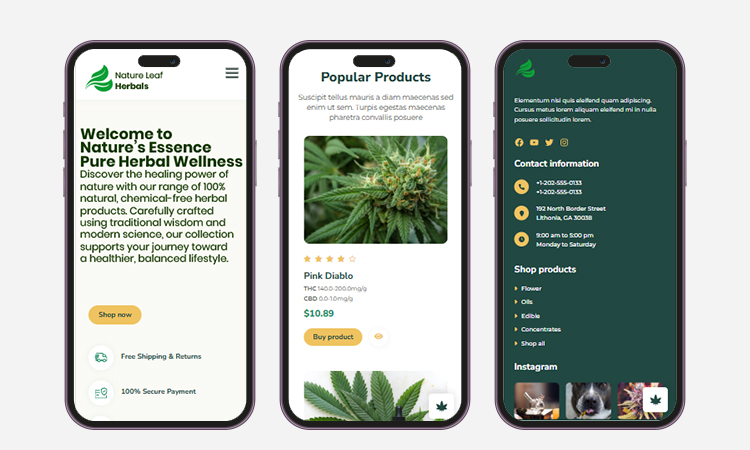
In 2025, when 62.54% of web traffic comes from mobile devices, herbal products businesses must consider designing a mobile-friendly website. Undermining the significance of navigation for mobile users might lead to a negative user experience while also affecting your online reputation.
Here are a few website design elements that herbal product companies must consider:
- Colour Pattern: The colour of your website plays a vital role. Do you know, colour can boost brand recognition by up to 80%. So, focusing on website colour is a must. The colour themes that herbal product businesses use on their website should clearly convey their business’s style. A lot of businesses have a colour scheme that they associate with their brand. Herbal practices must make sure to implement their signature colours in their web design.
- Page Layout: Herbal products companies must make sure to make information easily accessible and readable on mobile devices. It is best to implement a simple and subtle website layout rather than having a loud and complicated website.
- Visual Elements: Any photo or video you are using on your website should reflect the values of your herbal products business. Make sure to include images that are relevant to your messages and products. Visuals are a great way to make visitors stay on your website for a longer time.
- Font Size and Style: The text style you are using on your website should be consistent and easy to read on smaller screens like mobile devices. Herbal products companies must consider fonts that are easy to read, understand, and are appealing to their customers while reflecting their brand’s concept successfully. If your herbal products business is sort of high-end, then serif fonts are a great choice.
- White Space: This may sound weird, but the amount of white space you add to your website also matters to a large extent, as it adds to your website design. When developing a mobile-friendly website design, herbal products clearly break up pages to enhance readability on smaller screens.
How can Herbal Products Companies Develop a Mobile-First Website Design?
To develop a mobile-friendly website, herbal practices need to follow a few steps.
- Define Goals and Audiences: Herbal product companies must clearly understand the needs, preferences, and mobile behaviour of their audience. For example, are they simply looking for the information about a herbal product, or are they searching to make a purchase? This detail will help the herbal product businesses to prioritize their most crucial features and content.
- Focus on Quality Content: You need to start the design process by identifying which is the most crucial content for a mobile user, such as product benefits, details, usage instructions, and a clear and engaging call-to-action.
- Develop a Mobile Wireframe: When developing a mobile-friendly website, herbal products must keep it basic, focusing on simplicity as well as exceptional functionality. A clear interface can reduce clutter, which is crucial owing to the small size of the screen.
- Incorporate Responsive Design Principles: Use flexible grids and layouts that can adjust seamlessly to various screen sizes. This will guarantee an easy cross-device user experience.
- Implement Brand Aesthetic: Herbal practices must use a natural colour theme (earthy tones, e.g., browns, grey, greens) and consistent branding across the website to reflect the organic values of your herbal products.
- Optimise Speed and Performance: Optimizing page speed is a vital aspect of SEO for herbal products. Mobile users often have slower connections. So, the herbal products businesses must avoid overloading their website, as it reduces the loading speed of the website. To optimize the speed and performance of your herbal products website, you must optimize images by compressing them or incorporating lazy loading. Not only that, make sure to minimize CSS/ JavaScript files and leverage browser caching to guarantee a fast loading speed.
- Design Effectively for Touch Interactions: Herbal products companies must make sure all the interactive elements of their websites, such as links, buttons, and form fields, are well-spaced and large enough to be tapped with a thumb.
- Experiment on Real Devices: Avoid relying solely on clones. Rather, you can perform thorough usability testing on various real mobile devices and browsers to determine and fix any performance and compatibility issues.
- Select and Implement the Relevant Keywords

Keyword research plays a significant role and is the foundation of SEO. All your SEO efforts start from here; if you mess this up, then your entire SEO strategy will become irrelevant. This approach requires identifying keywords that are closely related to your products and services, and are being used by your potential patients when they are searching for herbal products for their health and beauty needs.
By identifying and implementing the right keywords, herbal products suppliers can enhance their visibility in the search results, rank for the right keywords, and reach the right customers.
Here are a few major types of keywords that herbal product companies must consider:
- Navigational Keywords: These types of keywords are search terms that are usually used by users when they are willing to navigate straight to a particular page, website, or brand. These keywords often include business names, product names, or website names. For example, “Dr. Polsy’s Herbal Capsules.”
- Transactional Keywords: Transactional keywords are search terms that clearly signify a user’s intent to complete a transaction, such as making a purchase, requesting a quote, or signing up for a service. These keywords include words such as “free shipping,” “order,” or “buy.”
- Long-tail Keywords: The most crucial thing for herbal products businesses to consider when performing keyword research is targeting long-tail keywords. These are highly specific, longer search phrases that usually have lower search volume but a higher conversion rate in comparison to short-tail keywords. For example, you can use “best herbal products for weight loss” rather than “herbal products.”
- Informational Keywords: Informational search terms are used by users when they are simply finding information or finding answers to their queries. These keywords contain queries such as “why,” “how to,” and “what is” or words like “Tips” and “Step-by-step-guides.” For example, “How to use a ginseng supplement” and “Complete guide to make herbal tea.”
- Local Keywords: Local keywords are one of the most crucial assets for effective local SEO for herbal products. These are search terms that include geographical information, such as neighbourhood, city, or “near me,” signalling a user’s intent to find a herbal product or service in a specific location or in the close proximity of where they are based. For example, “best natural remedies near me” or “Ayurvedic shop in Berlin.”
Now that you have a clear understanding of the various types of keywords, let us now discuss the steps to conduct thorough SEO keyword research.
Strategy 1: Brainstorm Core Topics

The first step to effective keyword research is listing broad topics that are relevant to your business or the herbal product industry. When you are done with that, you now need to consider your target audience and identify what they are interested in or have a query regarding. Now, herbal product businesses need to determine the products and services of their business and what type of problems they solve.
Strategy 2: Incorporate Keyword Research Tools
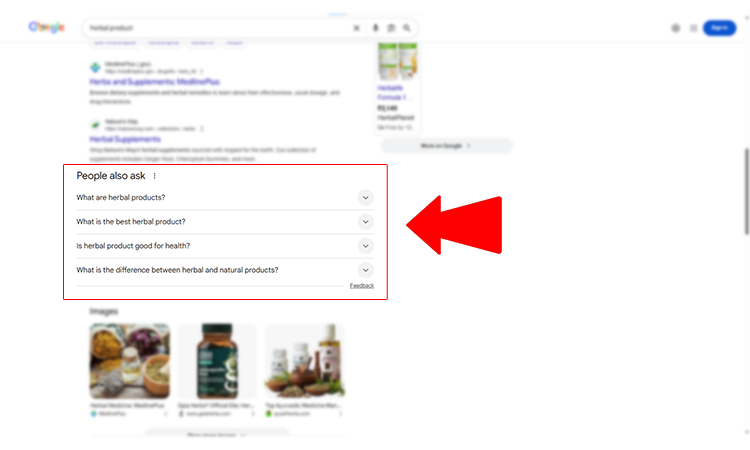
For effective keyword research, herbal products businesses can implement keyword research tools like Google Keyword Planner or SEMrush. To start keyword research, enter your core topics in any of the SEO tools to generate a comprehensive list of potential keywords.
When you have the complete list of keywords, you need to look for keyword variations, long-tail keywords, and queries related to your topics. Herbal products can implement features like Google Suggests, Google Trends, and “People Also Ask for” sections to get more keyword ideas.
Strategy 3: Evaluate Keyword Competition and Search Volume

Herbal practices need to evaluate keywords based on a perfect balance between search volume (how often people are searching for that term) and difficulty (how difficult it is to rank for it).
By implementing the data from your SEO tools, herbal products businesses can easily identify search terms that have a good search volume with a manageable level of competition.
Strategy 4: Do Not Forget to Consider Search Intent

You will never be able to edge the keyword research strategy if you have no idea about the search intent behind a particular keyword. When considering a keyword, ask yourself, what is the user trying to achieve through their research?
Consider the top-ranking search results for a keyword to determine what type of content is already ranking and try taking ideas from them to develop effective content for your herbal products business.
Strategy 5: Track your Competitors

One of the most crucial parts of effective SEO for herbal products is analyzing your competitors. For proper competitor analysis, herbal product companies can evaluate their content and analyze reviews to determine commonly used search terms that they are targeting and ranking for.
This research can help you explore new keyword opportunities and give you a clear idea of what keywords are effective in your niche.
In order to get very precise details on your competitor’s digital performance across various digital channels, you can implement specialized keyword analysis tools such as SEMrush and Similarweb.
Strategy 6: Refine and Modify your List

To ensure a successful keyword strategy, herbal products businesses must regularly refine and adjust their keyword list. For this, herbal product businesses need to group related keywords into topic clusters, as modern search engine optimization places more emphasis on topics rather than a single keyword.
Make sure to focus on keywords that are most relevant to your herbal products business and audience so that it is easier for them to find your business when they search for natural products.
Finally, organize the complete list of keywords you have achieved in a spreadsheet to track and keep your strategy well-organized.
To conduct effective keyword research, herbal products businesses can implement certain tools. We have listed the most popular ones below.
- SEMrush
If you are looking for a keyword research tool, then SEMrush is the ideal choice for you. This tool holds a large amount of keyword data, making it easier for herbal products companies to identify and implement the right keywords for their business.
The free plan of this tool allows herbal product businesses to conduct up to 10 free searches in the Keyword Magic Tool or assess up to 10 competitor domains per day, along with a domain overview.
SEMrush is the most accurate keyword research tool for search volume data, as its vast database has a great coverage in comparison to other keyword research tools.
Special Features of SEMrush:
- Features a Keyword Magic Tool that can generate millions of relevant keywords, group them by topics, and show their search volume, CPC, and difficulty.
- Helps herbal products businesses to determine keyword gaps by comparing your keyword list with up to 5 competitors and identifying what they are ranking for.
- Allows businesses to understand whether users want to know, leave, or buy, helping you to align your content to user needs and preferences.
- By implementing SEMrush, herbal products companies can easily assess how difficult it is to rank for a specific keyword (Keyword Difficulty)
- Features a Topic Research Tool that can help discover popular content ideas and questions around a specific topic, which is great for content creation.
- SEMrush can be seamlessly integrated with other tools. It can easily move keywords to Position Tracking to track rankings and SEO Writing Assistant to optimize content.
- Ahrefs
Ahrefs is an SEO tool that features tools for keyword research, link building, competitor research, and more. The Free Keyword Generator of Ahrefs is very easy to use and offers quick access to page-level keyword rankings.
However, it is not as effective as SEMrush; this tool does not offer precise search volumes or other crucial details, such as CPC, trends, and intent. It only shows data for a very few results. In case you wish to access complete details, you need to pay for an Ahrefs plan.
Special Features of Ahrefs’ Keyword Explorer:
- Helps herbal products businesses to estimate prospective clicks for a specific keyword, and not just keyword search volume, showcasing what a page could realistically get.
- Ahrefs also shows keyword difficulty, a score based on the backlink profiles of top-performing pages, signalling how difficult it is to rank.
- It allows herbal product dealers to identify the keywords their competitors are ranking for, their top pages, and their paid strategies, including past ad data.
- By implementing Ahrefs, you can evaluate how a domain’s ranking for a keyword has changed over time, getting a clear idea of merging opportunities.
- Ahrefs can help herbal products companies to determine vital data (keywords, traffic volume) for top-ranking pages to determine what type of content works the best.
- The best feature of this tool is that it can generate thousands of related keyword ideas, going beyond simple keyword variations.
- Herbal products companies can seamlessly identify broken links and smooth sailing link-building targets within content.
- Google Keyword Planner
When it comes to keyword research for effective SEO for herbal products businesses, Google Keyword Planner stands out from the others. The best part of it is that it is completely free, so you never have to worry about running out of limits or taking up an expensive plan.
This tool consists of two major features: one for explanatory keyword research and exploration, and another for deeper research on search volume and forecasting. Google Keywords Planner can clearly state your organic strategy by showcasing where ranking organically can help you save your PPC costs.
Special features of Google Keyword Planner:
- Google Keyword Planner can generate keyword ideas for you. You just need to enter your seed keywords, product categories, and website URL. This helps herbal products businesses easily find long-tail keywords and competitor insights.
- By implementing Google Keyword Planner, herbal products businesses can easily estimate their average monthly searches and past or future trends for keywords, allowing them to gain popularity.
- Through Google Keyword Planner, herbal products businesses can assess the competition level of the keywords they are willing to target. This can help herbal products identify less competitive keywords for their business. Not only that, but this tool also helps find long-tail keywords to target niche audiences.
- Helps align content with user intent by showcasing what people actually search for, enhancing relevance.
- UberSuggest
Ubersuggest is one of the best keyword research tools that can help herbal products businesses to generate keyword and content ideas. This keyword research tool includes monthly search volume, SEO, and content ideas.
In order to achieve the right keywords for your herbal product business, you need to start by entering your seed keywords or any keywords that you wish to track and click on the “Enter” button. Although the free plan of this tool is very limited, it can be managed if you avoid researching multiple keywords all at once.
Special Features of UberSuggest:
- Ubersuggest offers clear and detailed keyword metrics, such as keyword difficulty, CPC, and estimated visits on the basis of rankings.
- This tool offers valuable insights into the actual users behind the searches, like click analysis, age range, and mobile vs desktop searches.
- By implementing Ubersuggest, herbal products businesses can easily identify top-performing (articles, blogs) for a given topic based on backlinks, potential visits, and social shares, allowing them to develop more comprehensive and effective content.
- Ubersuggest can also help herbal product suppliers generate a vast list of relevant long-tail keywords, propositions, questions, and comparisons.
- Herbal products companies can create “projects” to monitor keyword rankings directly across various devices and locations to track site health over time, giving you necessary alerts for major changes.
- Incorporate Content Marketing Strategies
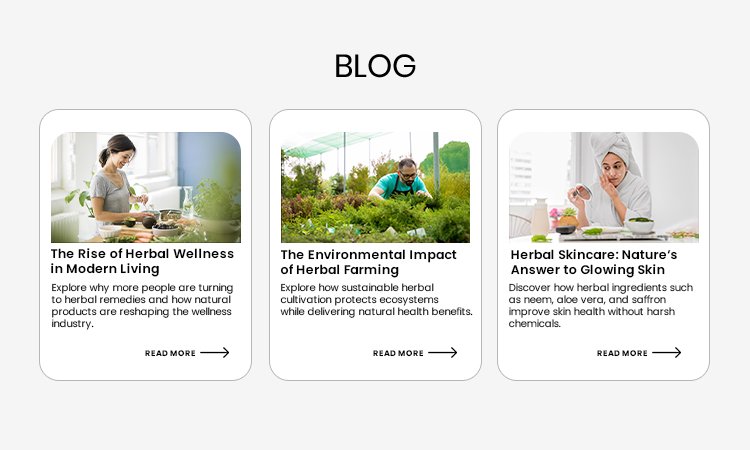
We all must have heard the popular phrase, “Content is the king.” Well, it is indeed true, especially when it comes to SEO. To successfully promote yo ur herbal products online, you need to focus on content marketing. Writing content that is both informative and engaging can not only attract clients but also make them stay longer on your website, reducing bounce rates.
However, writing appealing and educational content is not enough; to reach the right audience, herbal products companies need to optimize their content with the right keywords.
When creating content, you need to remember that healthcare is a sensitive topic and avoid making content that might hurt the sentiments of your customers.
Another crucial factor of SEO for herbal product businesses that needs to be considered when creating content for their business is following Google’s E-E-A-T framework. Following this framework is crucial as Google ranks websites based on this exact framework. Now you must be thinking what this is, and how I can create content following it? So, let’s get into it.
What is EEAT?
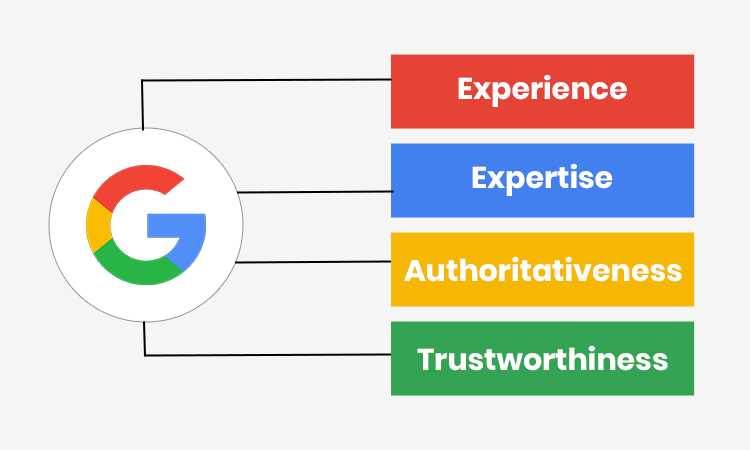
EEAT stands for Experience, Expertise, Authority, and Trustworthiness, which is a framework that Google leverages to determine the quality and credibility of a website’s content.
This framework helps Google decide which websites should rank at the top of the search engine results by prioritizing reliable and helpful information.
This is especially important for topics that could affect the health, well-being, and financial stability of a customer.
Major Components of EEAT:
- Experience: The herbal products businesses must have first-hand and direct experience with the topic.
- Expertise: Make sure you have the required skills and knowledge on the subject they are writing about.
- Authoritativeness: Both the content creator and the website are well-established and recognized as credible sources of information on herbal products.
- Trustworthiness: Make sure the content is relevant and accurate, with transparent information about the author and their qualifications.
How to Follow the EEAT Framework When Creating SEO Content
Now that you have a clear idea of what EEAT is and how it is crucial for effective SEO for herbal products, let us get into how herbal product companies can create Google-friendly content.
Choose the Right Topics
Selecting the right topic is the core of EEAT content. It is not just enough to write what’s popular; herbal products businesses must focus on areas where they can showcase genuine expertise to align with Google’s EEAT framework perfectly.
But how can you choose the right topic? Here are a few ways you can do it.
- Use your Strengths
The best topics are those where herbal product businesses can share their real-world experience. As you have a professional background in making herbal products, use it as a competitive advantage.
Share nuances that only you are familiar with and offer valuable insights from practical experience to showcase what EEAT is in action.
- Define your Expert Niche
The more specific and narrower the topic, the easier it is to become a credible expert. Rather than covering a broad field like “herbal products,” you must focus on “Herbal products for skin” or “Natural products for insomnia.”
- Identify Information Gaps
Herbal products need to evaluate which customer queries lack relevant answers. The most valuable content often fills the gap. If your competitors avoid complex topics, your thorough analysis can act as solid proof for showcasing your expertise, aligning with EEAT SEO principles.
- Plan your Content Strategy Effectively
From beginner to advanced, a robust SEO strategy includes content of various challenges. Combine formats like guides, reviews, case studies, and research to showcase your deep understanding of herbal products and meet EEAT guidelines while addressing various customer concerns and needs.
- Keep Creating Expertise
Expertise needs constant growth. Herbal product companies need to stay updated on the latest trends, engage in professional discussions, and conduct their own experiments. The deeper you get into a particular topic, the more valuable your content becomes for your audiences. fortifying how to develop credible and effective content for Google.
Here are a few examples of topics that highlight expertise:
- Comparative analyses based on personal testing. For example, a comparative analysis of Chamomile and Lavender Herbal Tea Blend and Valerian Root Capsules.
- A comprehensive breakdown of complex case studies from your expertise. For example, herbal product businesses can write content on an in-depth case study on various herbal drinks.
- Industry trends based on real-time insights. For instance, “Growing Popularity of Herbal Products in India.”
- Detailed guides with relevant insights featuring unique methodologies that you have developed. For example, “A Comprehensive Guide on Phytochemical Analysis and Compound Identification.”
- Create People-First Content
Herbal products businesses must create content that is valuable to people, rather than just to rank higher in search engine results. This will not only help you showcase your brand’s expertise but also set you apart from your competitors.
When developing content for your herbal product business, avoid “selling” content. The main objective of your content must not be selling or promoting your herbal products; rather, it should focus on how your products can be helpful for your audience and why they must choose your products over others.
Here are a few ways you can ensure that you are creating people-first content.
- Do you have an existing or intended audience for your herbal products business or website who would find your content useful if they directly visit you?
- Does your content clearly showcase hands-on expertise and a deep knowledge of the herbal products market?
- After reading your content, will someone leave feeling like they have learned enough about a particular topic to help them achieve their objective?
- Does your herbal products website have a primary purpose or focus?
- Will someone reading your content leave with a satisfied experience?
Note: If you tick out all the checkboxes, then you are probably on the right track.
- Conduct In-Depth Research
Conducting thorough keyword research is vital to ensure successful SEO for herbal products. The quality of your content heavily relies on the depth of your research. Google’s EEAT framework prioritizes extensive analysis and data validation over shallow coverage to ensure trustworthiness.
But how many sources should you use in your content? According to major publications such as Mayo Clinic and Healthline, here are some of the major sources that herbal product businesses can use.
- YMYL (Your Money, Your Life) Topics: These contain topics such as finance, health, and safety. Herbal products must cite at least 5-7 authoritative sources.
- Informational Articles: Informative articles contain the latest news reports, how-to guides, and scientific articles. To ensure EEAT-friendly content, you need to include at least 3-5 various informative sources.
- Niche-Specific Content: These include reviewed case studies or scientific journals, quality control and certification organizations, and content from certified herbalists. Herbal product companies must make sure to add at least 3 of these highly specialized content sources.
- Opinion Pieces and Reviews: Herbal product businesses must depend on personal experiences, but support crucial facts with relevant sources.
Make sure to implement various perspectives, like analytical case studies, academic research, and historical context. Herbal products businesses can also compare global data and local data to make their content more unbiased in order to align with the EEAT framework.
When including sources in your content, you need to make sure:
- Verify relevance (data that is older than 2 years can be outdated)
- Avoid referring to summaries; rather, refer to primary sources.
- Make sure to carefully assess research methodologies
- Format links and citations correctly.
In case you are just starting out and have no idea how to create EEAT-friendly content, you can perhaps seek professional content marketing services.
- Use Various Content Formats
Different formats demonstrate different aspects of Google’s EEAT format. You can ensure an effective strategy by combining them successfully.
Step-by-step guides are very effective for showcasing practical experience. The more comprehensive the guide is, the better. Here is what herbal product businesses can include,
- Cautions about prospective challenges
- Tips that cannot be easily found in official manuals
- Visual representations for every step
Now let’s move on to case studies. These can be used for real-world storytelling with relevant insights to establish trust, solve problems, and showcase values. Now, what to include in case studies?
- The initial situation and challenge
- Decisions that were made and their justification
- Outcomes (Best if relevant metrics are included)
- Conclusions and takeaways.
Research and analytics are great for fortifying expertise through extensive analysis. Key elements of research and analytics for herbal products must contain
- A clear and relevant methodology
- Visual data
- Logical conclusions and not just facts
Interviews with industry experts offer in-depth and precise insights from expert herbalists and are very effective in building content authority. These include:
- Niche-specific questions
- Interpreted questions
- Links between practice and theory
- Produce Visual Evidence
Visuals matter a lot in establishing trust in EEAT content. The most effective types of visuals include:
- Videos of the manufacturing process of a herbal medicine
- Diplomas, certificates, or thank-you letters
- Well-explained screenshots (with highlights and arrows)
- Graphs from your research
Herbal product businesses must make sure to use only original and current materials and avoid using stock photos for proof.
- Establish your Brand Reputation
Your herbal products business’s reputation directly impacts the assessed trustworthiness of content and overall website. So, you need to try and get as much positive exposure as possible.
There are various tactics that herbal practices can try, such as:
- Guest Posting: Write authentic and valuable articles for other sites in your niche.
- Influencer Marketing: Leverage influencer marketing to promote your herbal products business to your audiences.
- Digital PR: Craft compelling stories about your brand and get journalists to cover them.
- Social Media Management: Establish strong relationships with your audience through social media platforms.
- Link Building: Herbal product companies must encourage relevant and high-quality sites to link with their content
For example, suppose you have launched a new herbal product (medicine, tea), you can create an engaging story about it in order to promote it and let journalists cover it.
- Local SEO Strategy for Herbal Product Businesses
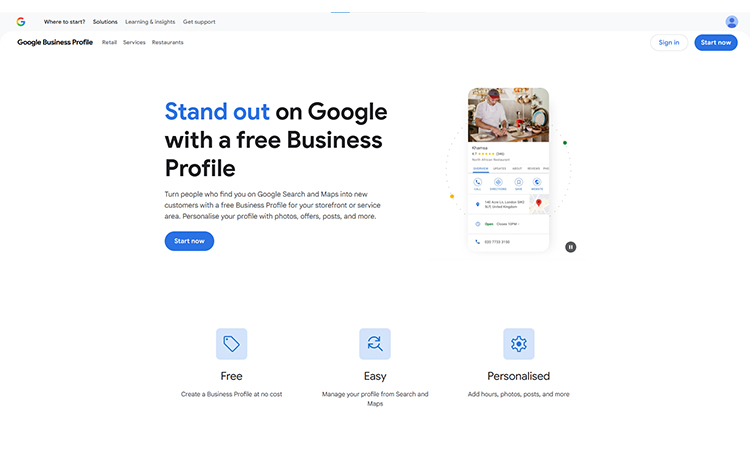
Local SEO for herbal products is an effective digital marketing strategy that can help herbal product manufacturers to enhance their online visibility in location-based search results. By doing proper local SEO, herbal product companies can easily appear in “near me” searches on search engine results pages and Google Maps, driving more foot traffic and sales by successfully connecting their business to customers who are ready to make a purchase.
This strategy involves the effective optimisation of the Google Business Profile, local citations, and website content to make your business appear in a prominent position in the Google Map Pack as well as organic results.
But how can a herbal product company optimise for local SEO in order to get more foot traffic? Here’s how.
- Claim and Verify your Google Business Profile
64% of people have used Google Business Profiles to find contact details of a business. This statistic shows the importance of claiming and verifying your Google Business Profile. Not having a verified GBP can make you miss out on a lot of local clients.
So, herbal product businesses must claim and verify their Google Business Profile. How? Let’s get into it.
- Find your Business: Start by searching the name of your herbal products business on Google Search or Google Maps.
- Initiate Claim: If it’s listed, click on “Claim this business”. In case it is not listed, you need to list it by tapping on the “Add your business” option.
- Select your Account: If you have created a new GBP or you already own a Google Business Profile, in either case, you need to click on “I own or manage this business.”
- Enter your Business Information: Add your business’s name, category, and address. You need to add additional information, such as hours of operation, website URL, and relevant categories available (e.g., “herbal product supplier” or “herbal product manufacturer”).
- Add Contact Details Correctly: When you are done adding all the essential business details, it is time to add your contact details. Enter an accurate contact number, email address to make it easier for your customers to contact you.
- Finish Setting Up: Review all your business details carefully before clicking. “Finish” to complete the setup of your Google Business Profile.
- Choose Verification Method: Google offers several verification options, such as
- Phone/SMS: Get a direct code via automated call or text
- Postcard: Google sends a code to your business address (usually takes weeks/days)
- Video Recording: Another great way to verify your herbal products business is by recording a video showing your tools, location, and signage for quick verification.
- Email Verification: Receive a verification link or code at your business email address.
However, your job is not done here. Claiming and verifying your GBP is not enough; you need to optimise it. No one would visit a website with a shabby and unattractive Google Business Profile.
Here’s how you can optimise your Google Business Profile in order to attract more local customers.
- Write a Clear Business Description
Herbal products businesses must summarise their business offerings, who they serve, and where they are located. Add a brief, relevant, and engaging description about your business, along with relevant local keywords such as “best herbal products supplier near me” or “best herbal tea supplier in Canada,” to make your business appear for local searches and attract more local customers.
- Maintain NAP Consistency
NAP, your Name, Address, and Phone number must be consistent across every customer touchpoint, such as your GBP, website, socials, and third-party listings.
- Add Relevant Photos and Videos
Herbal product businesses must include relevant images and videos of their storefront, products, team of herbalists, and staff in order to enhance brand authority and easily demonstrate to customers what their business is about. According to research by Brightlocal, businesses with more than 100 images on their GBP get 520% more calls than average businesses.
- Update your Business Hours Regularly
You must make sure that your operation hours are up-to-date, especially during occasions and events. This is very important to foster trust among customers.
- Enable Messaging
In order to ensure seamless customer interaction through GBP, herbal product companies must turn on their messaging feature to allow customers to directly contact them from their Google Business Profile.
- Conduct Local Keyword Research
To successfully do local SEO for herbal products companies, local keyword research is a must. So, here is a complete guide to conduct thorough local keyword research for your business.
- Determine Industry-Specific Keywords
Before you start conducting local keyword research, you need to understand what you offer and what products or services you wish to promote. Then, brainstorm a list of keywords that are relevant to your herbal product business.
Confused? Simply go to Google, and search your main service (for example, “ashwagandha powder”) and check the “related searches” which pop up at the bottom of the search result pages to get ideas.
Another effective trick is, start typing your primary keyword into Google and see what auto-fills appear- those are the terms people are using the most to search for herbal products.
When you have the complete list of keywords, you can use tools like Google Keyword Planner or SEMrush to evaluate how popular they are.
- Leverage Keyword Modifiers
Implementing keyword modifiers can allow herbal product businesses to focus their efforts on particular areas or types of searches to gain targeted traffic and achieve positive outcomes from their local SEO efforts.
For example, suppose you are writing an article for a person about choosing the right type of herbal tea for their anxiety. Rather than just targeting broad terms like “anxiety,” herbal product businesses can use keyword modifiers such as “essential oils for anxiety relief,” “aromatherapy for anxiety,” or “herbal remedies for anxiety” to narrow down their focus and reach specific audiences who are searching for anxiety relief remedies.
- Consider Search Intent
When people search for something online, they have a goal in mind. Are they all ready to make a purchase, just looking around for more information, or simply browsing? This is exactly what “search intent” is.
For effective local keyword research, herbal product businesses need to understand this intent so that they can better target keywords and develop content that aligns with their needs.
Here are a few examples of the major types of search intents.
- Transactional: “Buy organic ashwandha powder,” “Order customized herbal blend tincture”
- Informational: “How to make chamomile tea”, “Benefits of using herbal skincare products”
- Commercial: “Dr. Mariah’s ginseng supplement reviews,” “Price of organic elderberry syrup”
- Navigational: “Buy peppermint essential oil near me,” “Lavender tea supplier in the Netherlands”
- Perform Competitor Analysis
Herbal products businesses can take keyword ideas from their competitors. By analyzing your competitors’ strategies, you can edge your local keyword research. It is like taking a sneak peek into their keyword research efforts to see what works and where you can surpass them.
Here is a quick guide on how herbal product companies can examine their competition and leverage their tactics to their advantage:
- In-depth Content: Evaluate their content. In which area are they focusing the most? Are they prioritizing more on blog posts, patient testimonials, or local news? How have they been leveraging your target keywords? Observe the patterns and assess how you can create even more interactive content.
- Investigate SERPs: Herbal product companies must begin by searching for their target keywords in Google. Websites that appear at the top are your major competitors, so you need to focus on them.
- Identify Gap Areas: Notice what’s missing from their strategy? Are there any keywords they are overlooking? Any content formats that they have missed exploring? Determining these gaps can offer a competitive advantage.
- Create Local Content
By developing local content, herbal product businesses can target audiences searching for herbal product suppliers nearby. Local content can help boost local visibility, establish authority in location-specific relevance, and attract high-intent customers who are ready to make a purchase.
However, for effective local SEO, you cannot just create generic content and expect it to work. So, herbal product companies must create personalized content by implementing local keywords (e.g., “herbal products suppliers near me”) in order to attract local customers and gain more foot traffic.
Here is how herbal product companies can create local content for successful local SEO
- Target Audience: Target local residents who are interested in natural remedies, health, wellness, and specific products you offer (e.g., “Organic ashwagandha tincture for anxiety in Boston”)
- Integrate Keywords: Herbal products businesses can combine “seed keywords” (e.g., “natural supplements,” “herbal tea”) with location modifiers such as region, city, and neighbourhood.
- Content Focus: Offer authoritative, educational, and engaging content that clearly addresses specific health needs using your products, rather than just promoting them.
- Conduct Localized Keyword Research: Herbal product suppliers must implement tools like Google Keyword Planner to find relevant long-tail, local keywords that people are using when looking for herbal products near them. Example, “best herbal products suppliers in Utah”, “natural anxiety remedies in Singapore,” “Where to buy organic herbs in Manhattan.”
Structure your Blog Posts with Local SEO:
- Titles and Headings: Herbal products businesses must implement local keywords organically and relevantly in their post titles, H1s, and subheadings (H2, H3)
- Body Content: Clearly mention community events, local landmarks, or local health concerns to strengthen your local relevance.
- Internal Linking: Link your blog posts to relevant product pages and vice versa using detailed anchor texts to enhance site authority and user experience.
- Image Alt Text and Meta Descriptions: Herbal product companies must optimize their alt texts and meta descriptions with relevant local keywords.
- Focus on On-Page SEO
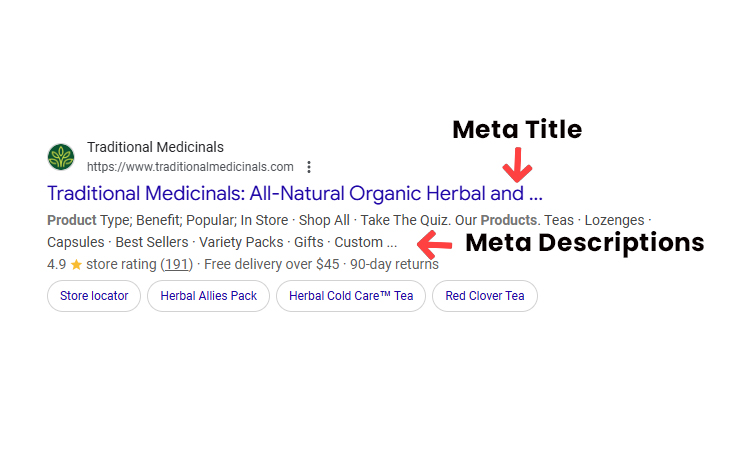
This is another crucial aspect of search engine optimization. Your SEO efforts are not complete without proper on-page SEO optimization.
On-page SEO is the process of optimizing the on-page elements of your website, including content, meta tags, image alt tags, URLs, and other relevant components. So, let’s discuss them in detail.
- Meta Tags and Descriptions: Herbal products companies must write compelling meta titles and descriptions for every page of their website. These snippets appear in the search engine results and can heavily contribute to improving click-through rates.
- Website URLs: Optimizing the structure of your URL is another vital aspect of your on-page SEO efforts, and herbal product companies must focus on it. Make sure to create clear, brief, yet descriptive URLs that include your target keywords. This will help both your customers as well as the search engines to easily determine what the content is about.
- Image Alt Tags: Herbal product companies must make sure to include alt text of every image they are using on their website, clearly defining what the image is about. This approach can improve accessibility and offer another opportunity to implement the target keywords.
- External and Internal Links: Make sure to link to other relevant pages within your website to improve navigation and make visitors stay longer on your website.
- Title and Header Tags: Herbal products businesses must craft header tags to structure their content. This will make it easier for search engines to identify your webpage’s hierarchy and enhance readability for users.
- Technical SEO for Herbal Products is a Must
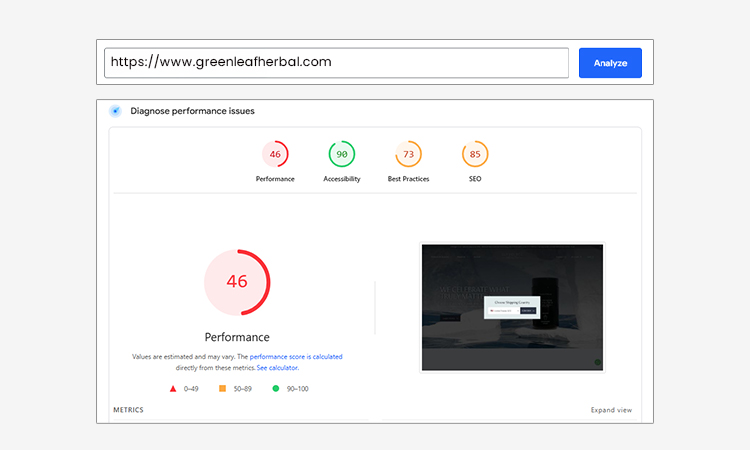
Technical SEO for herbal products businesses is often overlooked, but it is vital to rank your business higher in the search results. Technical SEO is the process of optimizing a website’s technical aspects to improve online visibility and search engine rankings.
Let’s discuss some of the major elements of technical SEO:
- Indexability and Credibility: Herbal products businesses must make sure that search engine bots can easily explore their website and seamlessly index all the vital pages without encountering any errors. This includes implementing advanced tools such as XML sitemaps and Robots.txt accurately.
- Page Speed: Do you know, 53% of mobile site visitors abandon a website if it takes more than 3 seconds to load a page? This statistic showcases the importance of page speed for technical SEO. By optimizing the page speed of your herbal product website, you can improve customer experience and rankings in the search engines. Page speed includes compressing your images, shortening CSS and JavaScript, and leveraging lazy loading.
- Site Structure: Herbal product businesses must develop a website with a logical structure to ensure user-friendliness. Develop a website by clearly defining the categories (e.g., Herbal Skin Care Supplements, Organic products) to prevent confusing customers and the search engines.
- Fix Broken Links: Broken links are the type of links that can severely affect your search engine rankings as well as frustrate your visitors, leading them to leave your website and choose your competitors. Herbal product companies must audit their website regularly to identify and fix 404 errors, internal, and external links.
- Schema Markup or Structured Data: Implement schema markup for the benefits, ingredients, and usage instructions of your herbal products. This will allow search engines to clearly understand what your content and website are about, increasing the chances of getting featured in rich snippets, further enhancing click-through rates.
- Incorporate HTTPS: Herbal product companies must know that Google prioroitizes websites that effectively secure their customers’ information. So, you must make sure to develop a secure website by installing SSL certificates, as it can help secure customer data.
- Do Not Forget Off-Page SEO

Off-page optimization is another major component of SEO. By optmizing for off-page SEO, herbal product companies can establish their site’s authority, trust, and visibility.
But how can you do proper off-page SEO for your business? Here are some of the most effective off-page SEO techniques that you can consider.
- Online reviews: If you wish to position your herbal product business in a prominent place in the search engine results, encouraging your customers to leave their reviews is a must. You must encourage satisfied customers to leave their reviews on Google, Yelp, and other platforms where your business is listed. This is vital for ranking higher in the search results as well as fostering trust among potential buyers.
- Brand Mentions: Try gaining mentions of your business across the Internet, even without a direct link. This will help herbal products companies to build brand awareness online. Remember, brand mentions can be positive, negative, as well as neutral; you must keep track of them regularly to determine how your business is perceived online.
- High Quality Backlinks: Backlinks are highly crucial for SEO. Herbal products businesses must acquire high-quality backlinks from other reputable websites. These links actually serve as “votes of confidence” signalling search engines that your business is authoritative and credible.
- Social Media Marketing: Establishing a robust social presence and effectively engaging with customers on social media platforms like Facebook, Instagram, and Twitter can not only enhance brand awareness but also boost website traffic.
- Digital PR: Another great off-page SEO approach is getting featured in news outlets and other online publications to establish brand authority and drive traffic.
- Influencer Outreach: Collaborating with influencers is another effective off-page SEO approach that can help herbal product companies successfully promote their content and tap into a wider audience.
Common SEO Pitfalls Herbal Product Businesses Must Watch Out For
SEO for herbal products is not as easy as it sounds, and not everyone gets it. Due to this lack of SEO technicalities, a lot of businesses end up making mistakes. However, even a small SEO mistake can have negative effects on your SEO efforts. Staying updated and watching out for SEO pitfalls is the key.
In this section of the blog, we will discuss some of the most common SEO mistakes that herbal product companies must avoid.
Mistake 1: Targeting the Wrong Keywords
Focusing on overly broad and highly competitive keywords (e.g., “herbal remedies”) can be the biggest mistake when doing SEO. Instead, herbal products businesses must target precise, long-tail keywords (e.g., “best herbal tea supplier for insomnia”) that align the best with user search intent.
To avoid this mistake, you must focus on conducting thorough keyword research to determine the exact terms potential customers are using to search for herbal products. Herbal product businesses must incorporate highly specific, long-tail keywords rather than short-tail keywords, as they are easier to rank for.
Mistake 2: Developing Low-Quality, AI-generated Content
Herbal product companies must avoid being heavily reliant on AI to write content like product descriptions or website content. AI-generated content often lacks a human touch and fails to provide value.
Even if you are using AI-generated content, you need to make sure to get it edited by a human so that it is valuable, engaging, and informative for your readers. This will prevent herbal product businesses from creating overly generic or inaccurate content.
Mistake 3: Not Focusing on Slow Loading Pages
Neglecting page speed optimization is another major SEO mistake that herbal products businesses must avoid. This mistake is crucial to avoid as it can hamper both the user and the search engine experience, increasing bounce rates.
Herbal product businesses must optimize their image size, implement browser caching, and leverage a Content Delivery Network (CDN) to guarantee fast website loading time on both mobile and desktop devices.
Mistake 4: Unoptimized Pages for Search
Failing to optimize on-page elements such as meta descriptions, title tags, headings, and schema markup. Due to unoptimized pages, search engines often find it challenging to determine the topic of the page and its content, leading to missed ranking opportunities.
Make sure every blog post and product page has a unique and detailed meta title and description that includes relevant keywords. Implement proper header tags (H1, H2, H3) to structure your content effectively and incorporate structured data for reviews, products, and prices.
Mistake 5: Treating SEO as a One-Time Approach
SEO is not a one-time approach. Viewing SEO as a checklist of tasks to complete once, like adding a few keywords, or publishing just one blog post and then forgetting about it, will be your biggest mistake.
You must incorporate ongoing SEO monitoring and maintenance. Herbal products businesses must regularly update outdated content, track keyword performance, establish quality backlinks, and stay informed on the latest algorithm changes and search engine guidelines.
Key SEO Metrics Herbal Product Companies Must Track to Measure the Effectiveness of Their SEO Efforts?
In order to measure the effectiveness of your SEO campaign, here are some of the major metrics herbal products must measure.
- Conversion Rates
This metric tracks how many organic visitors have made a desired action, such as making a purchase or filling out a contact form.
- Organic Traffic
This particular metric measures the number of visitors who are coming to your herbal products website through organic search results. A boost in this metric over time demonstrates that SEO efforts are paying off.
- Click Through Rate
This is the ratio of the number of impressions (how many people have come across your link on search results) to the number of clicks. A high CTR conveys that your meta descriptions and title tags are appealing enough for audiences.
- User Engagement
Tracking user engagement is vital to ensure effective SEO for herbal products. This metric measures the average time that a visitor spends on your website, or a particular webpage. Engagement rate demonstrates whether your customers are finding your content engaging or not.
- Bounce Rates
Bounce rate is the metric that offers insights into how many people are leaving your website without navigating to other pages or scrolling further. A high bounce rate denotes that your audience is not finding your content valuable and appealing.
- Return on Investment
This metric measures the profit from organic search against SEO cost. ROI in SEO is calculated as [(Revenue from SEO- SEO Cost)/ SEO Costs) x 100]
- Mobile Traffic
As the name itself suggests, this metric measures the amount of organic traffic that is coming from mobile devices. This metric is crucial to track as the majority of the web traffic nowadays comes from mobile devices.
- Domain Authority and Backlinks
Herbal products businesses need to track this metric in order to measure the number and quality of external sources that are linking to their websites. This is because these links can signify authority and help establish a strong online presence.
FAQ’s
Ans. Yes, SEO can help your herbal product brand compete with large marketplaces like 1MG and Amazon by implementing advanced SEO strategies, such as targeting niche audiences and establishing brand authority that are often overlooked by these big brands.
Ans. Yes, herbal SEO can work even without paid ads. SEO focuses on generating organic traffic, which is very cost-effective. This long-term strategy can heavily contribute to enhancing online visibility, sales, and business credibility.
Ans. For herbal product websites, you can expect initial measurable SEO results in 3-6 months, but significant, high-ranking success often takes more than 6-12 months, depending on competition, site authority, and quality of backlinks.
Ans. Yes, you can use AI-generated content for a herbal product SEO, given that it is used as a tool to help humans and not replace them. Google always prioritises reliable, valuable, and authentic content that is created for people.
Conclusion
Doing SEO for herbal products can be challenging. However, it is crucial to enhance your online visibility, attract more targeted customers, and rank higher in the SERPs. Search engine optimization, being the most affordable digital marketing strategy, can yield great results. However, unlike other marketing strategies such as PPC, this is a much slower process but offers long-term benefits. All you need to do is stay consistent with your SEO efforts.
However, managing a herbal product company and constantly monitoring the performance is nearly impossible. In order to make the job easier for you, you can perhaps partner with a professional SEO agency.

