


In the digital-first world, 80% of people look up health-related information online, so in order to get noticed by the right audience, gastroenterology practices must have a strong online presence. This is possible only through effective SEO for gastroenterologists.
When implemented correctly, medical SEO for gastroenterologists can not only help them enhance their online visibility and attract more patients to their website and clinic, but also establish authority in the highly competitive healthcare market.
If your gastroenterology clinic appears in a significant position for terms like “best gastroenterologist near me” or “colonoscopy specialist”, then it is likely to boost brand visibility, exposing your website to a wider audience.
In this blog, we will discuss how implementing SEO strategies can benefit gastroenterology specialists, best SEO practices, common SEO pitfalls gastroenterologists must watch out for, and more. So, let’s get started.
What is SEO for Gastroenterologists?
Before we move on to the benefits of gastroenterology SEO, let’s take a look at what SEO is for gastroenterology practices:
Gastroenterology SEO is a specialised digital marketing strategy that is specifically designed to boost the rankings of gastroenterology websites in the search results and help them to get discovered by the right patients.
Effective search engine optimization involves proper optimization of your website’s structure, local listings, and technical structure for keywords like “gastroenterologists near me” and specific conditions.
5 Major Reasons Gastroenterology Practices Invest in Search Engine Optimization
Now that you have a clear sketch in your mind regarding what SEO is for gastroenterologists, here are some of the major reasons why gastroenterologists must consider SEO:
- Expands Visibility in Local Searches
With the majority of people turning to search engines to find healthcare services, having a powerful online presence is non-negotiable. Search engine optimization can help gastroenterology practices enhance the visibility of their clinics in the search engine results, boosting the likelihood of being found by potential patients easily.
- Offers an Exceptional Patient Experience
Implementing effective search engine optimization strategies includes optimizing the website design, navigation, and structure of your gastroenterology websites, leading to a better patient experience. When patients can easily find the information they are looking for, navigate the website seamlessly, and access it from various devices, they are likely to stay longer and ultimately choose your gastroenterology practice over others.
- Establish Trust, Credibility, and Reputation
Higher the search engine rankings, the more credible and trustworthy your gastroenterology practice will be to your potential patients. When your hospital or clinic appears in a prominent position in the search results, audiences will see it as an authoritative source, thus positively influencing their decision-making process.
- Helps to Acquire Patients and Drives Practice Growth
When done right, patient acquisition through SEO for GI clinics can be very effective. Through effective SEO strategies, gastroenterologists can bring in patients who are actively seeking gastroenterology services, rather than passive buyers.
In comparison to paid advertising, which stops bringing in leads as soon as the budget expires, search engine optimization offers a more sustainable and long-term return on investment.
While pay-per-click advertising can provide instant results, SEO for gastroenterologists focuses on establishing long-term authority, attracting consistent organic traffic to your gastroenterology website over time without having to pay a single penny.
- Drives Targeted Traffic to Your Gastroenterology Website
Search engine optimization helps gastroenterology hospitals and clinics to target specific terms and phrases that are relevant to their specialities, services, and location. By optimizing your gastroenterology website for relevant keywords, you can attract highly targeted traffic from people who are actively seeking solutions for digestive issues.
4 Types of Search Engine Optimization Gastroenterologists Must Be Familiar With
Although there are multiple ways to drive traffic, what can be more effective than SEO? So here are 4 types of SEO that can be effective for gastroenterology practices:
- On-Page SEO
This type of SEO is all about optimizing the actual content and structure of gastroenterology websites in order to make them relevant for specific medical searches.
On-page SEO for gastroenterology clinics includes:
- Healthcare Content Strategy: This includes developing high-quality blog posts, FAQs, and service pages that clearly address patient needs while maintaining medical accuracy.
- Keywords: Effective on-page optimization includes targeting and keywords such as “gastroenterologist,” “gastroenterology specialist near me,” or “best gastroenterologist in New York” naturally within on-page elements of your website, such as title, headings, and meta descriptions.
- Doctor Profiles: Creating detailed doctor biography pages to showcase their experience, honours, and credentials
- Internal Linking: Optimizing this on-page element includes linking related service pages and blog posts together to get a better site structure.
- Off-Page SEO
Off-page SEO focuses on establishing credibility, trust, and authority of the website but through external factors.
Off-page SEO includes:
- Backlink Building: This includes earning high-quality links from reputable medical publications, health insurance sites, government healthcare sites, or established hospital websites to enhance domain authority.
- Content Marketing and Social Media: By sharing valuable health-related content on platforms like Facebook, LinkedIn, or various medical forums, gastroenterology practices can enhance their online presence and credibility.
- Professional Networking: This off-page SEO strategy includes getting listed on medical board websites and professional directories.
- Technical SEO
Technical SEO for gastroenterologists ensures that search engines can seamlessly crawl, index, and rank understand your gastroenterology website, which heavily impacts user experience and search engine rankings.
This type of SEO includes optimizing your gastroenterology website for:
- Mobile-Friendliness: By optimizing websites for mobile-friendliness, gastroenterology practices can ensure the website is well-responsive and easier to navigate even on smaller screens like smartphones, as the majority of patients access the Internet through their mobile phones (96.3%).
- Site Speed: Improving the page loading speed of your gastroenterology practice is crucial to prevent patient abandonment. Aim to keep it under 3 seconds.
- Schema Markup: Incorporating medical schema, such as (Procedure, Gastroenterologist), can help search engines clearly display rich snippets, such as treatment details and review stars.
- Security (HTTPS): By optimizing your gastroenterology website for top-level security, you can successfully build trust among visitors.
- Local SEO
Local SEO is the most crucial type of SEO for gastroenterology practices. This SEO type can be highly beneficial, as it helps nearby patients find a clinic or doctor in close proximity so they can visit in person.
Local SEO includes the optimization of:
- Google Business Profile: This includes optimizing a practice listing with accurate information such as location, contact number, photos, and operational hours.
- Local Citations: Effective local SEO strategies include ensuring NAP (Name, Address, Phone number) consistency across multiple directories like Bing Places, HealthGrades, and WebMD.
- Patient Reviews: By actively generating patient reviews and responding to them, gastroenterology practices can enhance search visibility and establish trust.
- Location-Based Keywords: By leveraging keywords such as “best gastroenterologists in California” or “nearest gastroenterology clinic.”
Gastroenterology SEO: 9 Best Search Engine Optimization Strategies to Generate Organic Performance
Gastroenterology practices must start with SEO by focusing strongly on developing authoritative content, local visibility, and performance tracking.
To achieve SEO success, gastroenterology practices need solid strategies. So, this section of the blog will discuss some of the most effective SEO strategies that gastroenterology practices must leverage:
Strategy 1: Conduct Thorough Keyword Research
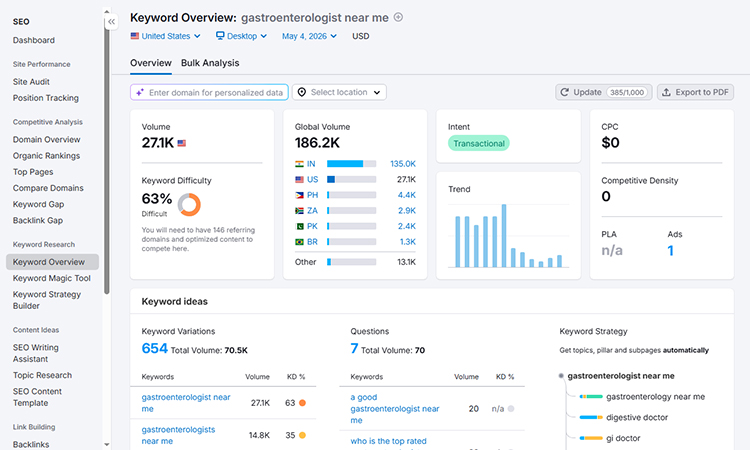
SEO starts with keyword research. Your SEO efforts mean nothing if you do not research and incorporate the right keywords. Why? Because this is what will help the right patients find your practice.
Keywords are basically signals that Google and other search engines make use of to rank your content on the search engine results pages. By targeting and incorporating the right SEO keywords, gastroenterology practices can not only boost organic traffic but also make sure that their content corresponds to the user intent.
- Why is Keyword Research Crucial for SEO?
Here are some of the major advantages of keyword research for gastroenterology SEO:
- Determine User Intent: Effective keyword research can immensely help gastroenterology practices to understand user intent. Which means they can gain a clear idea of what their target audiences actually want and create content that answers their queries, ultimately boosting search engine rankings.
- Helps Target Relevant Traffic: Instead of just getting random visitors to your gastroenterology website, you attract patients who are genuinely looking for solutions for digestive issues, boosting the chances of conversions.
- Identify Opportunities: Keyword research can help identify low competition keywords that are easier to rank for, offering quicker wins and higher visibility.
- Understand Market Trends: Data that is achieved from keyword research clearly showcases shifts in customer behaviour, preferences, and emerging topics, always keeping your content strategy up-to-date.
- Keep an Eye on Competitors: By analyzing competitor keywords, gastroenterology practices can determine major gaps in their strategy and identify opportunities to outperform them.
- Adapt to Evolving Searches: Thorough keyword research can allow businesses to optimize for voice search and conversational queries, which are becoming more common than typed searches.
- Drives High-Quality Traffic: SEO for gastroenterologists can help bring in high-quality traffic. By focusing on keyword relevance, gastroenterology practices can ensure the traffic you drive to your website is genuinely interested in what you offer, boosting engagement.
- Best Keyword Research Practices for Gastroenterology Practices
The majority of healthcare professionals do not have an idea where to get started when doing keyword research. So, here is a step-by-step guide to effective keyword research for gastroenterologists:
Step 1: Define Your Seed Keywords and Core Topics
- The first step to thorough keyword research is listing down 5-10 core topics that are actually relevant to your healthcare practice.
- Next, you need to brainstorm “seed keywords” that your audience might leverage to find these topics.
- For example, as a gastroenterology practice, seed keywords could be “digestive health clinic,” “gastroenterologist near me,” or “colonoscopy.”
Step 2 : Generate Keyword Ideas by Implementing Advanced Tools
- By leveraging tools like Ahrefs, Google Keyword Planner, Ubersuggest, and SEMrush, gastroenterology practices can expand their list.
- “People Also Ask” and Google Autocomplete are free tools that can be very helpful to identify real-time patient search queries so that gastroenterologists can directly address them.
- Gastroenterology practices must consider and look for long-tail keywords that often have lower competition. These are longer, more-specific phrases that have lower search volume but high conversion rates.
Step 3 : Thoroughly Assess Keyword Metrics
- Search Volume: Higher volume often signals to the generation of more potential traffic but higher competition.
- Keyword Difficulty: This metric determines how difficult it is to rank on the first page of the search engine results page. Gastroenterology practices must focus on keywords that have lower density, as this can ensure faster wins.
- Search Intent: Make sure the keywords you are picking match what your target patients are looking for.
- Informational Search Intent: “What causes chronic bloating?”
- Navigational Search Intent: “PrimeCare clinic gastroenterology department”
- Transactional Search Intent: “Book colonoscopy appointment online”
- Commercial Search Intent: “Best gastroenterologist in Norway”
- Relevance: Gastroenterology must choose and incorporate keywords that are actually relevant to your service and content.
Step 4: Keep an Eye on Your Competitors
- One of the most crucial things to do when conducting keyword research is to analyze competitors. By leveraging modern tools, SEMrush and Ahrefs, gastroenterology practices can track which keywords their competitors are ranking for.
- Make sure to determine which keywords your competitors are ranking for, where they lag, and incorporate those keywords in your content to outperform them.
Step 5 : Thoroughly Review and Group Keywords
- For effective SEO for gastroenterologists, it is crucial to create keyword clusters. For that, gastroenterology practices must filter out irrelevant keywords and focus on high-value, high-conversion keywords.
- By grouping similar keywords into clusters, gastroenterology practices can create topics, which can help them to develop high-quality, comprehensive content that completely covers a specific subject.
Step 6 : Plan Keywords to Content
- In order to incorporate keywords strategically in your content, they need to develop a robust, comprehensive content plan by mapping keywords to specific pages on their website.
- Make sure to optimize existing content by updating it with relevant, trending keywords that you have identified during the research.
- Effective Keyword Research Tools to Implement
Now that we have a clear understanding of how gastroenterology practices can conduct thorough keyword research for successful SEO, let’s take a look at some of the best keyword research tools that can make keyword research easier for gastroenterology firms:
- SEMrush: This is one of the most effective keyword research tools that features a “Keyword Magic Tool” that helps with in-depth analysis on long-tail keywords, search intent, and keyword difficulty (KD). This is vital for balancing informational patient searches with service-specific phrases.
- Ahrefs: Ahrefs is an exceptional tool that can help analyze the search rankings of competitors and identify gaps in your content strategy. This offers complete information on keyword difficulty and search volume.
- Google Keyword Planner: One of the best free tools that can help gastroenterology practices find search volume and structure PPC campaigns, especially for local gastroenterology firms that are targeting specific regions.
- WordStream: Gastroenterologists can implement this keyword research tool to quickly identify relevant keywords with search volume across various search engines, such as Google and Bing.
- KWFinder: KWFinder includes a wide range of unique details, including search intent for every keyword and the type of content that is already ranking. It also includes numerous SEO tools like AI search grader, SEO content optimizer, and SERP simulator.
Strategy 2 : Claim and Optimize Your Google Business Profile
After you are done with keyword research, you must start optimizing your Google Business Profile. A well-optimized Google Business Profile can not only help gastroenterology practices to enhance their local SEO but also help them enhance their online presence.
Do you know that complete and verified Google Business Profile pages are 80% more likely to appear in searches? Google Business Profile is basically the first impression of your gastroenterology practice, so it is crucial to optimize it regularly and keep it updated.
However, a lot of healthcare professionals do not have an idea how to optimize their GBP effectively.
- Step-by-Step Guide to Optimizing Google Business Profile
Here is a comprehensive guide how gastroenterologists can optimize their GBP:
- Ensure Compliance with Healthcare Industry Guidelines
Healthcare is a sensitive sector. Before you start optimizing your gastroenterology Google Business Profile, it is crucial to understand the strict guidelines that Google imposes on healthcare practices.
- Avoid Using Personal Information: Google limits the sharing of protected health information (PHI) in posts and reviews.
- Accurately Represent Your Business: Gastroenterology practices must list only those locations where patients can visit and get treated. Virtual-only practices must simply adhere to specific healthcare guidelines.
- Avoid any Misleading Claims: Make sure to avoid making unverified medical claims, as these can lead to suspensions.
- Category Selections: When optimizing your Google Business Profile, gastroenterologists must select the most relevant primary category (e.g., “Gastroenterologist,” “Urgent care for gastric ulcers”) and leverage secondary categories to add extra services.
- Optimize Google Business Information for Local SEO
As discussed earlier, a complete and verified Google Business Profile is crucial for SEO for gastroenterologists. As proper optimization can help gastroenterology practices to appear in a prominent position in searches compared to an unverified one.
A complete and accurate Google Business Profile can enhance local rankings and help patients find you more easily. Here are some of the major elements gastroenterology practices must focus on that heavily affect rankings:
- Business Name, Address, and Phone Number (NAP) Consistency
- The first thing to do when ensuring NAP consistency is to ensure your practice’s name, address, and phone number are the same across different listings, directories, and business websites.
- Make use of a local phone number instead of that of a call center or tracking number whenever possible.
- If you are managing in multiple locations, then maintaining consistency across various profiles is crucial to avoid confusion.
- Categories and Attributes
- Gastroenterology practices must select one primary category that best suits their practice. For example, “Gastroenterologist” or “specialist for gastric ulcers.”
- To optimize categories and attributes of your Google Business Profile effectively, gastroenterology practices must add secondary categories for additional services (if any)
- Make sure to use attributes like “Accepts New Patients” or “Wheelchair Accessible” in order to provide useful details.
- Business Description
Your gastroenterology practice’s Google Business Profile should:
- Clearly state who you are, what you offer, and who you serve.
- Gastroenterology practices must be clear and concise (maximum 750 characters) and well-optimized with relevant keywords but not stuffed.
- Make sure to avoid promotional content or special offers, as Google limits descriptions that are too salesy.
- Leverage High-Quality Photos and Videos
Visual content is better consumed by patients these days in comparison to textual content. By incorporating visual content such as photos and videos, gastroenterology practices can make potential patients feel more comfortable before their visit. Not only that, but Google also heavily prioritizes visual content, making it a crucial ranking factor.
- Here are some of the best practices for GBP photos:
- Gastroenterology practices must upload real images of their clinic, exam rooms, waiting areas, and team of experts and staff.
- Make sure to leverage professional, high-quality photos with clear focus and bright lighting.
- You can also include team photos to build trust and credibility among patients.
- By posting images on your Google Business Profile regularly, gastroenterology practices can immensely boost engagement.
- Strict Guidelines for GBP videos:
- For effective SEO for gastroenterologists. They must create and upload a short clinic tour to show the environment of their clinic.
- They can also post doctor introduction videos in order to build a personal connection with potential patients.
- Developing and uploading videos highlighting new equipment and patient-friendly amenities in your Google Business Profile can be a great idea.
- Encourage and Gain Patient Reviews
Reviews are one of the most impactful ranking factors and play a major role in patient decision-making.
- How can Gastroenterology Practices Get More Reviews on Google Business Profile?
- Ask patients to leave their reviews directly in follow-up emails.
- Make sure to leverage email reminders and SMS with a direct review link.
- Clearly display a “Leave us a review on Google” scanner in the clinic so that patients can easily scan and leave their reviews on your Google Business Profile page.
- Make sure to offer exceptional services in order to encourage positive feedback organically from real patients.
- Respond to Reviews Promptly and Professionally
- Whether it is a positive or negative comment, review, or mention, gastroenterology practices must make sure to always respond to them.
- Make sure to thank the reviewer every time they share their experiences with your gastroenterology practice while strictly adhering to HIPAA regulations.
- Gastroenterology practices must avoid discussing any details related to healthcare. For example, “We appreciate your valuable feedback” instead of something like, “We are glad that your colonoscopy went well.”
- To effectively optimize the Google Business Profile of your gastroenterology practice, you must address negative reviews with professionalism and empathy.
- Use Google Posts to Engage More Patients
Google Posts is a free tool that can help gastroenterology practices share practice updates directly on their Google Business Profile. This can heavily contribute to both lead generation and profile engagement.
Gastroenterology practices can leverage Google Posts to:
- Announce new treatments or services
- Share seasonal healthcare tips
- Offer valuable updates on holiday hours and closures
- Share educational content for patients (“5 Tips to treat gastric ulcers at home”)
- Track Insights and Refine Your Strategy
Google offers crucial insights into how patients are interacting with their Google Business Profile. Here are some of the major metrics to track:
- Search Queries: What keywords patients are using to find your gastroenterology practice.
- Profile Views: How often your listing appears in the search results.
- Click Actions: This includes metrics such as website visits, calls, bookings, and direction requests.
Strategy 3 : Create High-Quality, Patient-Focused Content
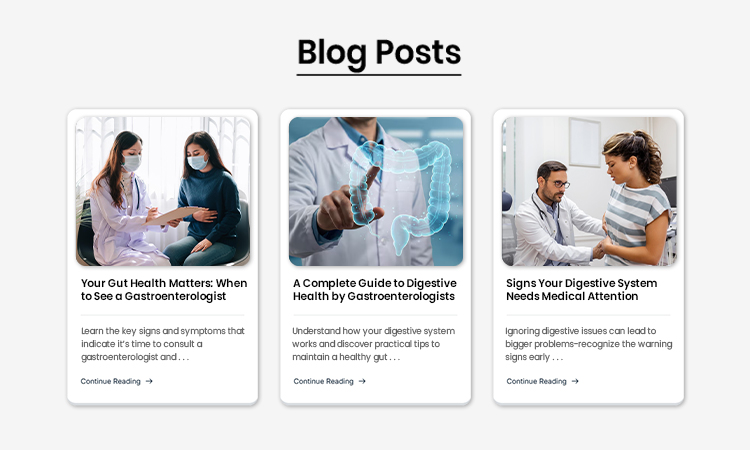
Creating high-quality, patient-focused content is crucial for effective SEO for gastroenterologists. Content marketing solutions can help gastroenterologists rank higher in the Google search results and attract patients.
However, in the healthcare sector, developing any type of content will not work. When developing medical content, gastroenterologists must adhere to E-E-A-T guidelines (Experience, Expertise, Authoritativeness, Trustworthiness). Following E-E-A-T ensures credibility in SEO, helping gastroenterology practices to gain patient trust and boost rankings.
- What is E-E-A-T, and Why Developing E-E-A-T Friendly Content Matters?
E-E-A-T is a framework that is used by Google’s search quality raters in order to evaluate the overall quality of a web content.
Although it is not a direct ranking factor, these guidelines can be immensely helpful for Google’s automated systems to determine high-quality, authoritative, and “people-first” content.
The major elements of E-E-A-T include:
- Experience: This evaluates whether or not the content creator has first-hand life experience with the topic they are writing on.
- Expertise: The skill, knowledge, or qualification the content creator has regarding the subject matter.
- Authoritativeness: Authoritativeness determines the reputation and recognition of the content creator or your gastroenterology website within the industry.
- Trustworthiness: Trust is the core component of the healthcare sector. In order to gain the trust of patients, gastroenterology firms must develop trustworthy content. This E-E-A-T element focuses on the accuracy, transparency, and security of the content.
Now, why does creating E-E-A-T- friendly content matter for gastroenterology
- Higher Search Visibility and Rankings
Content that clearly showcases strong E-E-A-T is more likely to rank higher in the search engine results, as Google prefers high-quality and reliable information. Pages that demonstrate poor E-E-A-T often struggle to gain visibility, especially in the highly competitive healthcare industry.
- More User Trust and Engagement
Users are more likely to engage, stay, and return to sites that appear to be more trustworthy and showcase relevant expertise. Establishing trust can help gastroenterology practices convert leads into loyal patients.
- Resistance Against Algorithm Updates
Google rolls out new features every two weeks to penalize low-quality, shallow content. By adhering to E-E-A-T guidelines, gastroenterologists can not only make their website more “future-proof” but also ensure consistent performance rather than relying on instant, short-term results.
- Crucial for “Your Money or Your Life” Topics
Google wants the best for their users. So when it comes to topics that affect a person’s financial stability, health, or safety, Google applies the highest standards of E-E-A-T. If your content lacks credibility in these areas, then it might lead to serious penalties in search rankings.
- Sets Your Content Apart from AI-Generated Content
As AI-generated content is becoming more prevalent, with the majority of brands leveraging AI tools to generate content, Google is prioritizing content that showcases “real-world” experience and human expertise. E-E-A-T offers a human touch to content that can never be replaced by AI.
- Types of Content Gastroenterologists Can Create
To ensure effective SEO for gastroenterologists, there is a wide range of content gastroenterology practices can create.
- Short-Form Videos: These are incredibly effective for breaking down complex topics into a more simplified one. By creating short-form videos such as TikTok, Instagram reels, or YouTube Shorts, gastroenterology practices can clearly explain topics like “What to expect during a colonoscopy treatment” or offer valuable tips to prevent acid reflux during certain occasions.
- Infographics: Infographics are visually appealing content that makes data more “digestible” for patients. Gastroenterologists can create infographics to clearly explain diet tips for IBD patients or a step-by-step journey for complex procedures like endoscopic submucosal dissection.
- Live Q&A Sessions: Gastroenterology practices must host live sessions on social media platforms like Instagram and Facebook in order to address the patient concerns in real-time.
- Informative Blog Posts: Articles on your Gastroneterology website that cover multiple topics like colorectal cancer, IBS, and Crohn’s screening to enhance SEO and patient knowledge.
- Procedural Videos: High-quality videos that showcase endoscopic techniques such as capsule endoscopy, for professional education can also be leveraged by patient education.
- Engaging Webinars: Hosting online seminars for the general public and other healthcare professionals on the latest gastroenterology treatments and technology.
- Downloadable Patient Guides: Providing valuable resources on, for example, “Preparing for a Colonoscopy”, can be valuable to gain the trust of patients.
- Email Newsletters: Sending emails regularly on gut health tips, reminders for routine screenings.
- Patient Success Stories: By sharing patient experiences with proper consent from them, to foster trust and showcase expertise.
- Case Studies or Images: Submitting high-quality clinical, pathologic, or endoscopic images to professional journals to showcase expertise and contribute to medical literature.
- How Can Gastroenterology Specialists Develop E-E-A-T Friendly Content for Patients?
Here is a comprehensive breakdown of how gastroenterologists can develop E-E-A-T friendly content for their patients:
Step 1: Demonstrate Your Experience
- One of the major steps to develop E-E-A-T friendly content is to share anonymized patient or success stories of your gastroenterology practice that clearly highlight how a specific gastroenterology practice is treated and diagnosed.
- By creating short videos or posts that clearly explain what to expect during procedures like a colonoscopy or upper endoscopy, to minimize patient anxiety.
- Gastroenterology practices must have practitioners share their personal insights on treatment procedures or newly adopted technologies in endoscopy.
Step 2: Showcase Expertise
Medical content must be written or heavily reviewed by a qualified subject matter expert.
- Author Credentials: Every piece of medical content that you are producing must have a perfect byline with the author’s credentials and a link to a detailed bio.
- Expert Review Badge: By adding a “This content was reviewed by [Doctor Name] badge, including the date of review, gastroenterology practices can improve credibility.”
- Detailed Bios: Gastroenterology practices must create robust author pages clearly listing professional licenses, certifications, years of experience, and education.
Step 3: Authoritativeness: Establish Reputation
For successful SEO for gastroenterologists, they must clearly showcase that your author or hospital is recognized as a go-to source in the healthcare sector.
- Cite Reputable Sources: Make sure to link your content to peer-reviewed research, government health agencies, academic journals, or respected professional bodies.
- Earn Backlinks: By creating valuable resources, gastroenterology practices can make sure other healthcare websites, news organizations, and universities want to link to them.
- Local SEO: Ensuring accurate, consistent listings on Healthgrades, Yelp, Google Business Profile, and other directories is crucial for establishing authoritativeness.
Step 4: Trustworthiness: Ensure Complete Transparency
This is one of the most crucial components for patient-facing content.
- Ensure Accuracy: Gastroenterologists must review and update their content regularly or at least annually to make sure it reflects the latest medical guidelines and not the outdated ones.
- Transparent “About Us”: Clearly define the mission, staff, and medical review processes on your gastroenterology website.
- Clear Content Information: Make sure to provide easy-to-find phone numbers, contact forms, and addresses in order to make your gastroenterology practice more accessible.
- Secure Your Site: Gastroenterology must make sure that its website leverages HTTPS in order to protect patient privacy.
- Editorial Policy: By explicitly stating the process of content creation, including how they ensure accuracy, gastroenterologists can easily address potential conflicts of interest. In case you are looking to create high-quality, authoritative content, you can consider seeking personalized content marketing services.
Strategy 4 : Develop a Mobile-Friendly Website
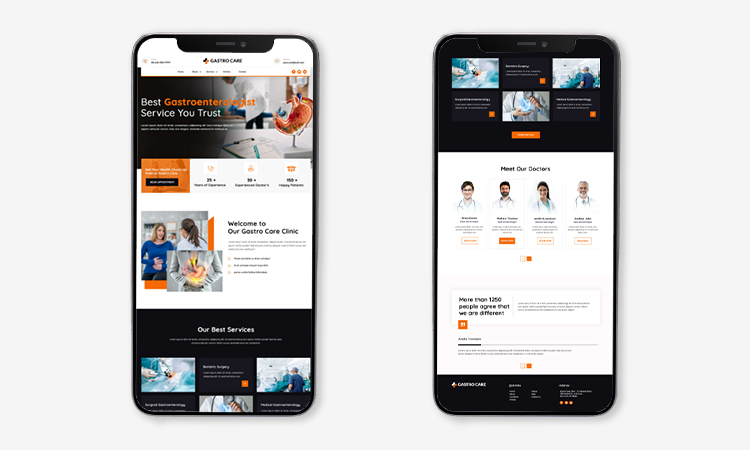
In the modern day, 64.35% overall website traffic comes from mobile devices. If your gastroenterology website is not well-optimized and responsive on smaller screens, you will miss out on a lot of potential patients.
In fact, Google also prioritizes websites that perform well on mobile devices and considers them to be a necessary asset for a positive user experience.
- How Can a Mobile-Optimized Website Help With SEO?
Here are a few ways a mobile-optimized website can be effective for SEO:
- Mobile-Fast Indexing: Google primarily uses the mobile version of a website for crawling, indexing, and ranking. A poor mobile experience can prevent a website from appearing in a prominent position in the search results.
- Faster Loading Speed: Mobile users often expect faster loading speed, so they often abandon sites that take more than 3 seconds to load. According to Shopify, websites that load within one second have 2.5 times higher conversion rates in comparison to those that load within five seconds. Gastroenterology practices must leverage optimization techniques like compressing images, caching directly, and shortening codes to enhance core web vitals, which are major ranking factors.
- Better User Experience: Mobile-optimized websites feature responsive designs that can easily adapt to any screen size, offer seamless navigation, and have large, clickable buttons. Better UX can reduce bounce rates, making patients stay longer on your gastroenterology website.
- Boosts Local SEO: A lot of mobile users search for local businesses, making mobile optimization crucial for local search rankings, appearing in “near me” searches and Google Business Profile.
- Higher Conversion and Engagement: Mobile-friendly websites can lead to higher conversions because patients can easily read content, navigate, and complete purchases on smaller screens.
- How can Gastroenterology Practices Make Their Website Mobile-Friendly for SEO?
Developing a mobile-friendly website is vital for SEO for gastroenterologists. And, now that you know the importance of a mobile-friendly website for SEO, let’s look at how you make one:
- Focus on Mobile-First Design and Structure
According to Google, when they visit a mobile-friendly website, 74% of people say they are more likely to return to a site. By adopting a mobile-first website design, gastroenterology practices can not only attract more visitors but also rank higher in the search rankings.
- Prioritize Page Speed
Mobile users are always on the go. 53% of mobile site visitors are likely to abandon a website if it takes more than 3 seconds to load a page. By optimizing images, minifying CSS/JS, leveraging browser caching, and considering a Content Delivery Network, gastroenterology practices can boost their website loading speed.
- Mobile-Fast Indexing
Gastroenterology practices must make sure their mobile website contains the same content, schema markups, and metadata as the desktop version. Even if you are using tabs to save space, make sure the content is still easily indexable.
- Properly Optimize User Interface
In order to ensure an effective user interface of their website, gastroenterology practices must optimize these elements:
- Simplify Navigation: Easy navigation is important for successful SEO for gastroenterologists. So, they must use the “hamburger” menu and avoid large drop-down menus to ensure a simple navigation.
- Use Readable Fonts: Gastroenterology practices must use a font size of 16px to make sure texts are easily readable by website visitors, even without the need to zoom.
- Tap Targets: Links and buttons must be at least 48 pixels in height and width in order to avoid accidental clicks.
- Avoid Major Mobile Pitfalls
In order to ensure a mobile-friendly website for SEO, here are some of the optimization mistakes to avoid:
- Avoid Flash: Gastroenterology practices must make use of HTML5 for animations.
- Do Not Use Pop Ups: Random pop-ups can be annoying sometimes, and negatively affect the user experience of your website.
- Ensure Visible Content: Make sure your content does not get hidden behind complex menus, as it can make it difficult for search engines to effectively crawl it.
- Leverage Mobile-Friendly Layouts
Gastroenterologists must design their website so that it can be easily accessed with thumbs. By making the buttons at least 48×48 px and placing them far enough apart. Gastroenterology practices can avoid accidental clicks.
By prioritizing a seamless mobile experience, you stick to mobile-first indexing, enhancing the visibility and visitor retention of your gastroenterology site.
Strategy 5 : Do Not Ignore Local SEO
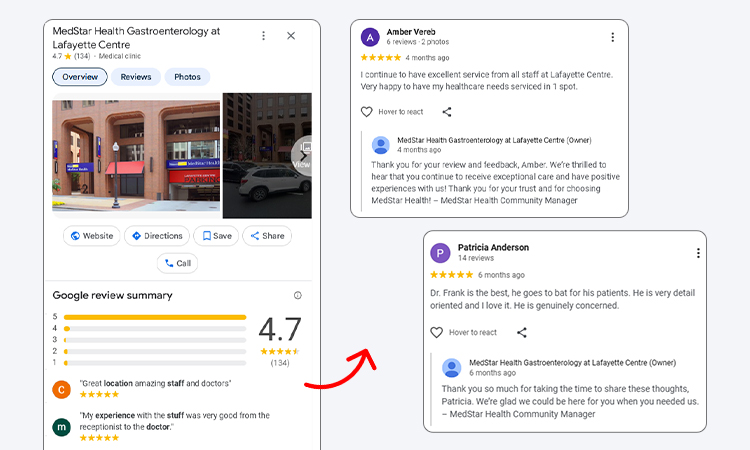
Ignoring local SEO means missing out on patients who are looking for gastroenterology solutions in the close proximity of your clinic. By prioritizing local SEO, gastroenterology clinics can not only increase website traffic but also boost foot traffic and conversion rates.
This SEO approach can help improve visibility in the “near me” searches and local maps, allowing small-scale gastroenterology practices to compete effectively.
- Why is Local SEO So Important for Gastroenterologists?
The benefits of optimizing your practice for local SEO are not limited to higher foot traffic and website traffic; there’s more to it. So, let’s discuss some of the major reasons why gastroenterology practices must invest in local SEO:
- Higher Conversion Rates: Local searches often indicate high intent, as they come from people who are looking for gastroenterology practices near them. According to a study, 88% of searches for local businesses call or visit a business within 24 hours. People searching locally are often ready to buy. By optimizing for local SEO, gastroenterology practices can attract more potential patients, ultimately leading to higher conversion rates.
- Target Audience Reach: Local SEO filters out irrelevant traffic, ensuring your gastroenterology practice is clearly visible only to users in your specific service area, saving time and money on unqualified leads.
- Increased Traffic and Visibility: The majority of patients look for local information, appearing in the top 3 results, significantly enhancing online visibility and driving more foot traffic and website clicks.
- Establishes Trust and Reputation: A powerful, updated Google Business Profile with positive reviews can make your gastroenterology practice appear more credible and trustworthy to local customers.
- Captures Mobile Users Easily: As mobile searches continue to grow, optimizing your practice for local SEO is crucial for bagging users on the go who are looking for immediate, local solutions.
- Cost-Effective Marketing: In order to compare to broader, traditional advertising, local SEO is a budget-friendly, long-term option that can drive consistent organic traffic.
- Tips to Do Effective Local SEO for Gastroenterologists
Here are some of the effective strategies for local SEO for gastroenterologists to implement:
Tip 1 : Optimize Your Google Business Profile
This is one of the most crucial components of local search. Here’s how gastroenterology practices can optimize their Google Business Profile:
- Claim and Verify: Gastroenterologists must claim their practice profile and verify all the information provided.
- Accurate NAP Information: Make sure the NAP information (Name, Address, Phone Number) is consistent across all platforms.
- Choose Specific Categories: Choose “Gastroenterologist” as your primary category and add 2-3 relevant secondary categories, such as “Medical Clinic” or specialized digestive clinics.
- Use Google Posts: Make sure to post weekly with healthcare tips, community involvement, and new services. This keeps your profile active and updated for visitors.
- Include High-Quality Photos: By uploading photos of the waiting room, exterior, and staff, gastroenterology practices can foster trust.
Tip 2 : Generate and Manage Patient Reviews
Reviews heavily influence local search rankings and patient decisions. In order to generate and manage patient reviews effectively, here’s what needs to be done:
- Ask for Reviews: By providing necessary training to front-desk staff to ask patients to leave their reviews upon checkout, gastroenterologists can help collect more reviews. Use automated text reminders or emails to ask for patient reviews.
- Respond Promptly: Make sure to reply to all reviews, be it positive or negative, within 24-48 hours to show that you are attentive and value your patients.
- HIPAA Compliance: Never confirm a patient’s identity in your response to a review.
- Track Niche Sites: Maintaining profiles on healthcare-specific platforms like Zocdoc, Vitals, Healthgrades, and Yelp.
Tip 3: Develop Locally Focused Content
- Location-Specific Pages: If you operate in multiple branches, develop a unique landing page for every website with local keywords, embedded maps, and specific staff bios.
- Target Local Keywords: By leveraging phrases such as “best gastroenterologist in Singapore” or “colonoscopy in Boston” in your website’s meta titles, descriptions, and H1 tags, gastroenterology practices can make sure their content gets noticed by the local patients.
- Educational Blogging: Develop blog posts that successfully answer common queries, such as “Tips for managing IBS in Manhattan”
Tip 4 : Create Specialized Content for Gastroenterology Conditions
- Procedure Pages: Make sure to create dedicated pages for common procedures, such as Endoscopy and Colonoscopy and link them directly to your location pages.
- Clearly Explain “What to Expect”: Include FAQs that directly address patient anxiety about various procedures to establish trust. This boosts engagement time, which is a crucial SEO signal.
Strategy 6 : Voice Search Optimization is a Must

With more and more patients shifting to voice search rather than text-based search, optimizing your gastroenterology practice for voice search optimization has never been so crucial.
Do you know that more than 1 billion voice searches are performed every month?
- 5 Effective Ways to Optimize Your Gastroenterology Practice for Voice Search
Here is a comprehensive guide to optimizing your Gastroenterology website for voice search for effective SEO:
- Optimize for Local “Near Me” Searches
The majority of voice searches are done with the intention of searching for local gastroenterology practices, with patients often seeking local care.
- Update Google Business Profile: To successfully optimize your gastroenterology website for voice search, the first step is to claim and complete your GBP. Make sure the Name, Address, and Phone Number are consistent across the web.
- Make Use of Hyper Local Keywords: By incorporating the name of the city and neighbourhoods your clinic operates in and using terms like “best GI in Boston” or “Urgent gastroenterology care near me”, you can easily appear in prominent positions for voice searches.
- Encourage Reviews: High or decently-rated gastroenterology practices are often preferred and prioritized by voice assistants.
- Implement Conversational Content Strategy
Patients speak differently from how they type. When they are typing in a search query, they are likely to write, “Gastroenterology Dallas, “ but when they are searching through voice assistants, they are likely to say, “Who is the best Gastroenterologist in Dallas?”
- Develop Dedicated FAQ Pages: Gastroenterologists must create dedicated FAQ sections that directly address common patient queries related to gastric problems in a question-and-answer format. For example, “What to expect during a colonoscopy?”
- Target Long-Tail Keywords: Rather than focusing on short and fragmented search terms, focus on full-sentence queries that people are likely to ask when they speak.
- Use Natural Language: Make sure to create content that sounds conversational and avoid including heavy medical jargon. This will make it easier for AI to understand your content and read it out loud.
- Structure Data for Featured Snippets
Voice assistants often derive answers from “position ZERO” which is the featured snippet on Google.
- Incorporate Schema Markup: By implementing schema markups such as LocalBusiness and FAQ, gastroenterology practices can help search engines better understand the type of services they offer, their location, and content, boosting the chances of getting featured in the snippets.
- Provide Clear, Concise Answers: Make sure to frame your content in a way that it gives clear, direct answers to search queries. Keep the answers within 40-60 words, directly under a question-based heading.
- Enhance Technical SEO and Mobile Experience
Voice searches are ideally performed on mobile devices as they are the most convenient. This makes mobile-friendliness crucial to ensure your website or content appears for voice searches. So, let’s take a look at how to improve mobile experience and technical SEO for gastroenterologists:
- Optimize Mobile Speed: Gastroenterologists must make sure their website does not take more than 3 seconds to load. Slow-loading sites are often ignored or passed over by voice assistants.
- Implement Mobile-Friendly Design: Using a responsive layout that can easily adapt to smaller screens and ensures easy navigation is often preferred by voice assistants, lowering the chances of your website appearing for voice search queries.
- Ensure HTTPS Security: A secure website is very important to foster trust among patients and improve rankings in the search results.
- Focus on Patient Intent
Gastroenterology is a “Your Money or Your Life” topic that demands the highest quality standards and trustworthy content that clearly reflects authority and experience.
- Answer “What” and “How” Questions Clearly: Make sure to create content that revolves around common patient queries, such as symptoms and procedures. For example, “What are the common symptoms of Crohn’s disease?” or “How to prepare for Upper GI Endoscopy?”
- Create Authoritative Content: Make sure all the medical content you are writing and publishing is accurate and easy to read.
Strategy 7 : Prioritize Technical SEO
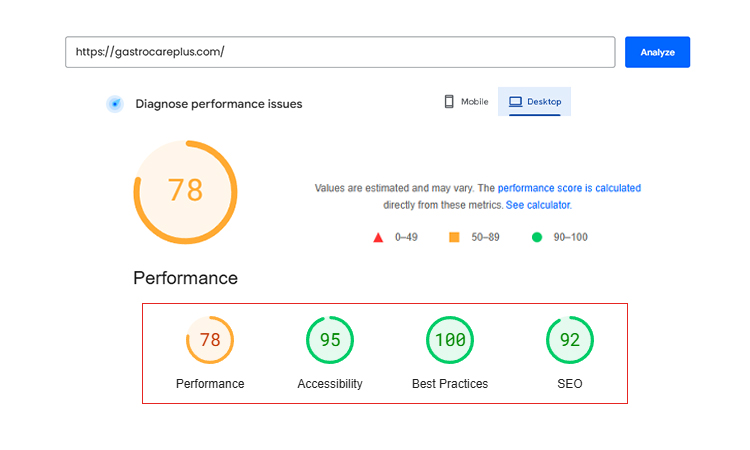
This is one of the most crucial aspects of SEO, but it is ignored by the majority of healthcare practices. It is the process of optimizing a website’s framework so that search engines like Google can easily crawl, index, and rank your website in the search results.
Optimizing technical elements of your gastroenterology website is essential to boost search engine visibility. So, here are 6 key technical elements gastroenterology practices must optimize to ensure better search engine rankings:
- Indexing and Crawlability
To optimize this element, gastroenterologists must use a robots.txt file in order to manage bot access and an XML sitemap to make sure all the crucial pages are easily discovered.
- Performance and Site Speed
Core Web Vitals are crucial for successful technical SEO. They are a set of Google-defined, user-centric metrics that determine the loading speed, interactivity, and visual stability of a page. They are one of the major ranking factors in Google’s Search Algorithms. Optimizing loading speed is crucial to meet the overall standards of Core Web Vitals. This is because fast-loading websites enhance user experiences as well as rankings.
- HTTPS Security
Make sure to incorporate SSL/TLS certificates in order to secure user data, which is a vital ranking signal.
- Site and URL Structure
A website without a clear structure heavily contributes to a negative user experience. In fact, 94% of first impressions about a website are related to design rather than content. So, for successful technical SEO, gastroenterology practices must maintain a logical, shallow hierarchy and clear URL structures.
- Structured Data (Schema Markup)
Using JSON-LD code, gastroenterology practices can make it easier for search engines to understand content better, often leading to rich snippets.
- Canonicalization & Duplication
By leveraging canonical tags, you can prevent issues such as duplicate content by informing search engines which version of a page they must prioritize.
Strategy 8 : Consider On-Page SEO for Your Gastroenterology Website
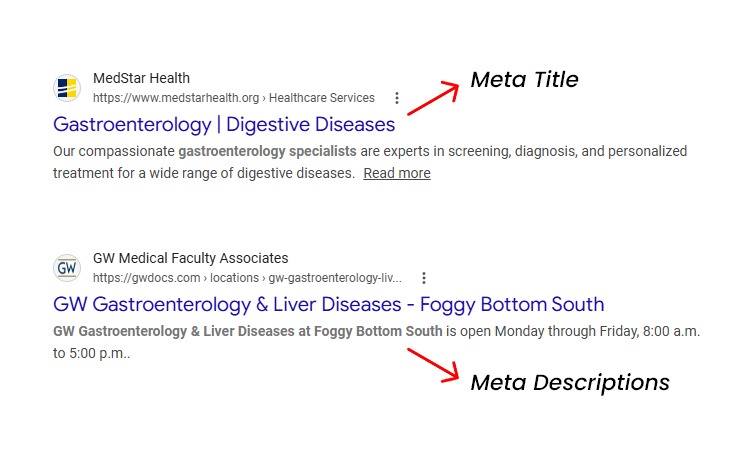
On-page optimization is one of the most important aspects of SEO. So, here are some of the major reasons why on-page SEO for gastroenterologists is crucial for their websites:
- Improves Search Engine Rankings: By optimizing HTML tags, structure, and content, gastroenterology practices can help search engines to better understand their website, making it easier to be ranked in a prominent position for relevant searches.
- Boosts Organic Traffic: Higher rankings in search engine results pages make your website easily discoverable in the search engine results, bringing in more traffic.
- Enhances User Experience: Effective on-page SEO includes improving site speed, using clear headings, and organizing content, all of which can keep visitors engaged on your website for a longer time.
- Matches User Intent: It ensures that the content of your website provides the exact answers or solutions that your patients are looking for, increasing the chances of ranking higher in the SERPs.
- Offers a Competitive Edge: A well-optimized gastroenterology website is more likely to outperform competitors by appearing more relevant in algorithms and to users.
- Increases Click-Through Rates: Engaging, properly optimized title tags and meta descriptions can attract more clicks from the search engine results pages.
- Major On-Page Elements Gastroenterologists Must Optimize?
Now that you know the benefits of on-page optimization, let’s take a quick look at some of the crucial on-page elements that gastroenterology practices must optimize:
- Title Tags: When optimizing title tags, gastroenterologists must incorporate the primary keyword near the beginning and make sure to keep it under 60 characters.
- Header Tags (H1, H2): Make sure to use one H1 tag for the main title along with the keyword, and H2/H3 for developing content into sections.
- Meta Descriptions: By developing engaging and unique meta descriptions, keeping them under 160 characters, and including relevant keywords, gastroenterology practices can boost click-through rates.
- Content and Keyword Placement: Gastroenterologists must make sure their content is authentic, high-quality, and satisfies patient intent. Make sure to incorporate your primary keyword in the first paragraph and organically include other relevant keywords throughout your website content.
- URL Structure: The optimization of this element includes creating short, easily readable, keyword-rich URL slugs.
- Image Optimization: When optimizing images of your gastroenterology website, make sure to use descriptive and keyword-rich file names. Compress file sizes to boost website loading speed and add relevant alt texts to offer viewers a clear idea of what the picture is about.
- Internal Linking: Optimizing this on-page element means linking to other relevant pages on your gastroenterology website to enhance navigation, share ranking power, and boost user engagement.
Strategy 9 : Leverage Effective Off-Page Practices

The internet is getting highly competitive over time. So, in order to get easily discovered by search engines as well as target patients, backlinks, search engine rankings, and brand mentions have become more important than ever.
- How can Off-Page SEO Help Gastroenterologists Drive Organic Traffic?
Here are 5 ways in which off-page SEO can be beneficial for gastroenterology practices:
- Building Authority With High-Quality Backlinks
Backlinks matter a lot for effective SEO for gastroenterologists. They act as “votes of confidence,” signalling Google that your gastroenterology practice is authoritative.
- Medical Content Authority: Earning links from highly reputed healthcare organizations, academic sites (.org, .edu, .gov), and gastroenterology clinics can heavily boost your domain authority.
- Article Submission/ Guest Blogging: By contributing articles on GI-related topics such as “The Link Between Diet and Crohn’s Disease” to authoritative health blogs or local news sites, gastroenterologists can bring in targeted referral traffic.
- Unlinked Mentions: Tracking for when your practice is mentioned online without a link, and requesting that the publisher add a link to your website.
- Improving Local Visibility
As patients usually look for gastroenterologists locally, local off-page SEO is a must.
- Google Business Profile (GBP) Optimization: A complete and active Google Business Profile can make your gastroenterology practice more likely to appear in the “Local Map Pack”
- Citations in Medical Directories: Listing your medical practice in relevant online directories such as Yelp, WebMD, Vitals, and Healthgrades can not only enhance local search rankings but also improve visibility.
- Improving Reputation and E-E-A-T
Google uses E-E-A-T (Experience, Expertise, Authoritativeness, and Trustworthiness) in order to rank health websites, making positive reputation management even more crucial.
- Patient Reviews: By actively encouraging positive reviews on platforms such as Google and Trustpilot, gastroenterology practices can enhance trust and search visibility.
- Online Reputation Management: Responding to patient reviews showcases that you care for your patients and can manage reviews effectively. This can influence potential patients who are searching for gastroenterologists.
- Creating Engaging Content for Social Media
While social media links are often “no-follow,” they can immensely help drive traffic and boost brand awareness.
- Social Media Marketing: Gastroenterology practices must share high-quality, informative content, such as videos that clearly explain endoscopy procedures or infographics on diet for gastric problems, on social media platforms like LinkedIn, Instagram, and Facebook. This can lead to higher engagement, generate more shares, and drive higher referral traffic.
- Video Submission: Developing and submitting video content on platforms like YouTube about digestive health can lead to high-quality visibility and backlinks.
- Digital PR and Collaboration
- Expert Interviews: Participating in podcasts that cover gastroenterology or acting as an expert source for journalists can help you earn more mentions from reputable media outlets.
- Partnering with Primary Care Doctors/Nutritionists: Fostering powerful partnerships and getting listed on the website of a complementary healthcare provider can help gastroenterology practices gain highly relevant traffic.
- 8 Best Tips and Tricks to Do Off-Page SEO Right
- Focus on High-Quality Backlinks: Rather than focusing on quantity, gastroenterology practices must focus on quality. A few links from authoritative sites within your industry is more valuable than multiple low-quality links.
- Guest Posting on Authoritative Sites: Guest posting is essential for SEO for gastroenterologists. By publishing high-quality blog posts or articles on reputable, industry-specific sites, gastroenterologists can earn high-quality backlinks that can help boost authority.
- Influencer Partnership and Media Outreach: Consider collaborating with niche-specific industry influencers for testimonials, product reviews, or social media shares.
- Broken Link Building: By identifying broken links on other websites and suggesting your content as a replacement, you can easily gain high-quality backlinks.
- Engage in Communities and Forums: By participating in discussions on Quora, Reddit, and industry-specific forums, gastroenterology practices can provide relevant answers that can generate traffic and foster brand awareness.
- Develop Linkable Assets: Gastroenterologists must create original research, infographics, or in-depth, valuable content that others would organically want to cite or link to.
- Optimize Local SEO and Reviews: Gastroenterology practices must list their brand on famous local directories such as Yelp and Google Business Profile in order to encourage positive reviews.
- Track and Disavow Spammy Links: By regularly auditing the backlink profile by leveraging tools like SEMrush or Google Search Console, gastroenterology practices can figure out and disavow harmful links.
5 Common SEO Mistakes and How Gastroenterologists Can Avoid Them
In today’s digital-first world, having a robust online presence is crucial for businesses that are looking to stay competitive. One of the most crucial components of a successful online strategy is search engine optimization.
However, a lot of businesses make certain common SEO mistakes that can hamper their efforts to rank higher in search engines and drive more traffic to their websites. In this section of the blog, we will discuss some of the common SEO mistakes that gastroenterology practices must avoid:
- Keyword Stuffing and Ignoring Patient Intent
Keyword stuffing includes repeating terms like “Gastroenterologist in Canada” or “colonscopy” too many times, unnaturally. Google views this type of content as spam, leading to penalties.
- How to Avoid This Mistake
Gastroenterology practices must leverage keywords organically in their content rather than forcing them. By focusing on search intent that includes understanding what the patient actually needs (e.g., information on symptoms vs booking an appointment). Use semantic variations and related terms such as “digestive health specialist” in order to widen your relevance.
- Creating and Publishing Poor-Quality Content
This is one of the major mistakes of SEO for gastroenterologists. If you publish irrelevant, duplicate, and overly technical content that does not answer common patient queries, it might lead to higher bounce rates and lower rankings. Patients often look for answers in simple, conversational language and not just clinical jargon.
- How to Avoid This Mistake
Gastroenterology practices must create high-quality, patient-focused content that clearly addresses their concerns, their “What to expect during a polyp removal” and “Cause of GERD.” Make sure the content you create is helpful, authoritative, and regularly updated.
- Building Backlinks the Wrong Way
Engaging in link exchanges, purchasing links, or gaining links from low-quality, irrelevant, or non-authoritative sites can severely hurt your SEO and damage the reputation of your gastroenterology practice.
- How to Avoid This Mistake
Rather than focusing on quantity, gastroenterology practices must focus on the quality of content. Make sure to build links organically through high-quality, authoritative sources such as health directories or partnering with local primary care doctors.
By creating link-worthy content such as specialized guides, original research, and helpful patient resources, gastroenterology practices can build high-quality backlinks.
Ignoring local SEO means not appearing in local search results, missing out on patients who are looking for gastroenterologists by using keywords like “gastroenterologist near me” or “endoscopy centre in Norway.”
- What to do Instead?
- Optimize Google Business Profile: For effective local SEO, gastroenterology practices must claim, verify, and fill out their Google Business Profile completely, including a consistent Name, Address, Phone Number (NAP).
- Get More Local Reviews: Actively encourage patient reviews and respond to them professionally, keeping HIPAA compliance in mind.
- Leverage Local Keywords: Include your city and service areas in page titles, content, and headers.
- Not Keeping Up With Algorithm Updates
Google constantly updates its algorithms (such as Core Updates) to prioritize user experience and accuracy. Gastroenterology practices that ignore these changes often witness a major drop in rankings.
- What to do Instead?
- Focus on Medical Credibility: Make sure all the medical content is written or reviewed by a qualified gastroenterologist and includes clear author credentials.
- Focus on Patient Safety: Gastroenterologists must make sure all the information they are providing is backed by proper information and are easy to find. This is crucial because Google prioritizes high-quality, safe information for “Your Money or Your Life” topics like healthcare.
- Leverage Technical SEO Tools: Regularly audit the site speed, mobile-responsiveness, and use of schema markup in your gastroenterology website to boost visibility.
FAQs
Ans. Gastroenterology practices need specialized SEO as their patient base often searches for high-intent, sensitive, local, and symptom-driven healthcare solutions.
Ans. By measuring crucial metrics like keyword rankings, organic traffic, conversion rates, patient engagement, and click-through rate, gastroenterologists can measure the success of their SEO campaigns.
Ans. Yes, social media positively affects search engine optimization by enhancing brand visibility, driving high-quality traffic, and establishing credibility, which are crucial for attracting patients.
Ans. Ranking for gastroenterology treatments on Google requires a personalized medical SEO strategy that focuses on building patient trust, improving local visibility, and developing high-quality, authoritative content.
Ans. Effective search engine optimization results usually take 4 to 12 months to materialize, with initial results often appearing around 3-6 months.
Conclusion
SEO for gastroenterologists, when done right, can not only help them establish a robust online presence but also enhance their organic performance and help them outperform competitors in the search engine results page. By following the comprehensive guide mentioned above, gastroenterology practices can easily achieve SEO success. However, gastroenterologists must be aware of the major SEO pitfalls that a lot of healthcare practices often make. In case you are just starting out and have no idea how to proceed with SEO, you can perhaps consider hiring a professional SEO agency.

