


If you are in the pharmaceutical industry, then you are well aware that most of your target audience requires immediate results. To make your products and services easy to find for your target audience, PPC advertising is the best option. Do you know that the average conversion rate of pharmaceutical PPC advertising is 1.4%?
We already know about the level of competition in the pharma industry. Each company promotes similar products and services in their own unique way. The competition is about convincing the target audience to provide them the best products and services. PPC makes this easy for you! When your brand is placed at the top of the search results, it automatically signals its authority and trustworthiness.
PPC positions your brand at the top of the search results, encouraging your target audience to click on your website link. It empowers your brand’s online presence and gives you a competitive advantage.
What is PPC for a pharmaceutical company?
PPC or Pay-per-click advertising is the most convenient way for you to earn visibility and drive qualified traffic to your pharma website. PPC for pharmaceutical companies is a digital marketing approach for them to promote their products to the right clients.
The pharma companies hire digital marketing agencies to develop compelling PPC advertisement campaigns and display them on search engines and several ad platforms. This is the most efficient way to drive prospective clients who are actively looking for your products. Basically, PPC enables you to generate qualified leads for your pharma company, promoting your products and attracting a wide range of new patients.
If you are new to the pharmaceutical industry and struggling to find a place for your company, then hiring an expert pharmaceutical marketing agency is the best option you have.
What are the benefits of PPC for pharma companies?
Previously in this blog, we have learned what PPC for a pharma company is. As a pharma company owner, you want your products and services to reach out your target audience, and by leveraging PPC, you are able to achieve the desired results. But there are several other benefits of leveraging PPC for your pharmaceutical ad campaign. Let’s learn in detail about them:
- Brings instant visibility
One of the best advantages of leveraging PPC for your ad campaign is that it gives your products and services instant exposure. Unlike traditional methods, PPC puts your product on top of the search engine results instantly, making it easy to target the prospective client. PPC ensures that when a client searches with relevant keywords, they easily find your website.
- Immediate brand recognition
Hiring an agency that leverages both SEO and PPC can help your pharma company to earn instant recognition. It places your ad at the top of the search results. But, where the organic methods that take months to show effective results, PPC immediately targets potential clients who are actively looking for the pharma products and services that you are providing. PPC ad campaigns make your pharma brand earn immediate high visibility and targeted exposure that is necessary to make your brand instantly recognized by your target audience.
- High-quality leads
PPC ad campaigns help generate qualified leads by placing your ads directly in front of the target audience who are actively searching for the products and services that your pharma company offers.
- Increased sales
Healthcare PPC agencies have a content marketing team that allows you to dominate Google and other search engines, by placing your order in front of the target audience. This allows precise intent-based targeting that reaches customers ready to take action, such as booking or buying something. It drives targeted traffic to your optimized landing page. It also uses remarketing to engage previous visitors, leading to increased sales.
- Cost effective
PPC advertisements are extremely cost-effective, as you only have to pay when someone clicks on them. It saves you from investing in campaigns that do not bring any results to your website. Another reason why it is budget-friendly is that it allows you to set a cap so that you do not have to go over the budget.
- Measurable Results
It allows you to track whether your advertisements are working or not. It shows you the cost-effective keywords, which ones are generating more clicks, and which ones are generating more conversions. This makes it easy for you to allocate your budget.
Most effective PPC strategies to boost pharma advertising
Till now, in this blog, we have learned about what PPC is for pharma brands and about its benefits. Pharmaceutical PPC is a major part of the effective plan of PPC for Healthcare.
Now, let’s learn in detail about the most effective PPC strategy to boost your pharma brands’ reach and revenue:
- Pharmaceutical-Focused Keyword Research Strategy
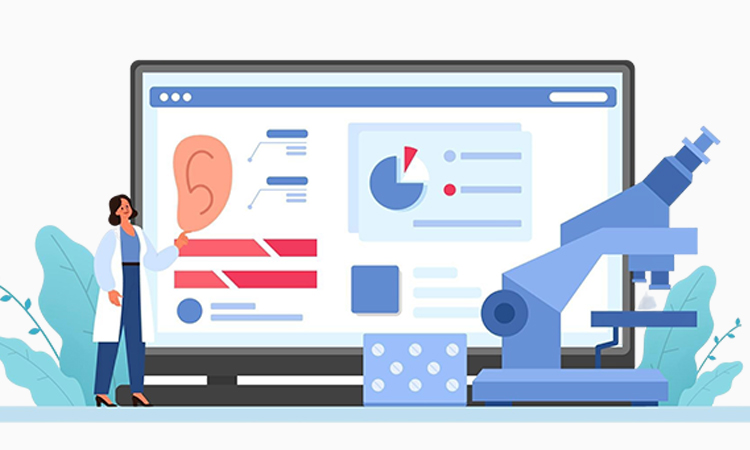
Keyword research is the starting point for an effective PPC advertising campaign. Finding the perfect keyword for your website that resonates with your business is essential to gain your target audience’s trust.
If there is a potential patient searching for health-related information, such as disease awareness, diabetes medication, or treatment options for any other disease, advertisers can direct them to exactly where they need to be. Now, how do you make your products appear in their search results? Keyword selection and strategically incorporating them into your website is the best way to achieve your desired results.
In pharma PPC, you can utilize effective keyword research tools like Semrush, Ahrefs, Moz, Google Analytics, and Google Keyword Planner, to name a few. It is important to focus on the local intent and long-term keywords in your keyword research process.
- Local intent keywords – Local intent keywords are used by patients when they are looking for services in a specific geographical location.
- Long-term keywords – Long-term keywords are mostly used by qualified leads, who are more likely to make a purchase. Some examples of long-term keywords are ” XYZ medicines near me” “, New FDA-approved medicine for gastro”, etc. By utilizing these, you ensure your ads are visible to potential clients with better conversion chances.
- Here is a step-by-step guide to perform keyword research for your PPC advertising campaign:
Step 1: Define your goals –
Before you start investing in keyword research, you need to figure out what you are expecting out of it. Determine what you are expecting out of your campaign, whether you want to increase traffic or to boost sales.
Step 2: Brainstorming seed keywords –
The next step of an effective strategy is to conduct successful keyword research and make a list of basic and relevant terms that are related to your products and services.
Step 3: Utilize keyword research tools –
Once you have figured out the right keywords, you need to put them in keyword research tools to find out the exact phrases the target audience uses. In addition, these tools provide you with data on search volume, user intent, and competition level.
Step 4: Understand search intent for keyword research –
Once you have a clear idea about what your target audience is searching for, it becomes easy for you to use keywords for maximum results. Categorizing your keywords based on search intent to align with the buying cycle.
Step 5: Analyze your competitors –
You can use tools to find out keywords that your competitors are using. It gives you an understanding of the success of their keywords and helps your keyword research process.
Step 6: Remove negative keywords –
You also need to identify the negative keywords and get them removed to prevent wasted clicks.
Step 7: Organizing into ad groups –
You can organize your keywords into ad groups to ensure that they stay relevant to your landing pages. It is also necessary to improve the quality of the store.
Step 8: Monitor and refine –
When you are running PPC advertising content, you need to keep it in check regularly. It helps you to adjust the keywords strategically for better results.
- Best keyword research tools –
Here is a list of the most preferred keyword research tools for a successful PPC campaign
- Semrush
Semrush is an AI-powered, comprehensive keyword research tool. It is specifically designed for digital marketing. It primarily focuses on competitor analysis, online visibility and SEO. It offers over 55+ tools for keyword research, backlink tracking and paid analysis. It helps you to optimize your website and gain a competitive advantage.
Some of its key features include –
- Competitor analysis – It allows you to check your competitor’s website for traffic sources, keywords and backlink profiles.
- Comprehensive keyword analysis – Its keyword research tools provide you with data on search volume, keyword difficulty, and intent, along with continuous tracking and monitoring
- Backlink management – It offers you tools to perform backlink tracking to check for analyzing sites’ backlink network, new or lost links, and find backlink gaps.
- Keyword gap analysis – it helps acquire a detailed comparison of keyword profiles of your top 5 competitors. It also allows you to identify keywords that the website from your business domain uses.
- Google keyword planner
It is a free Google Ad tool that is designed to help you in keyword research. It provides you with insights into search volume. It provides you with direct and relevant data directly from Google so that you can identify search terms related to your product and services. It also helps you to understand the competition level and estimate costs.
Some of its key features include –
- Discovering relevant keywords – It allows you to generate keyword ideas by entering phrases or website links. It allows competitor analysis to check for the keywords they are targeting.
- Search volume – You can check a keyword’s previous data to check the search volume of that particular keyword.
- Keyword competition and bid metrics – Determine how competitive a keyword is and check for the cost per click to bid on that keyword
- Forecast performance – It forecasts the performance of your selected keywords in order to predict potential conversion and impressions. It is required for setting a budget campaign.
- Ahrefs
It is an AI-powered tool that you can utilize for keyword research purposes. It is designed for keyword research, link building, site auditing and so on. It functions seamlessly due to its proprietary web crawler. It also allows you to perform competitor analysis, identifying link-building opportunities and content gaps.
Some of its key features include:
- Keyword research – It is an effective keyword research tool. Here you can check search volume, difficulty and click-through potential. It gives you fresh keyword ideas, clusters by topic and identifies search intent.
- Competitor analysis – It gives you insight into the keywords your competitors are using, the traffic they can generate and their content gaps.
- Rank tracking –Allows you to check for ranks over time and track position across different online platforms.
- Site audit – It crawls through your entire site to check for the technical SEO issues such as broken links, slow loading pages and duplicate content.
- Content gap analysis – It allows you for content gap analysis to outpace your competitors in content gap analysis.
- Moz
It is one of the most effective tools for keyword research. It is designed to boost your site’s search engine ranking, provide local listings and provide actionable insights into site performance. It offers a suite of products that are developed to assist you in keyword research.
Some of its key features include –
- Keyword Explorer – It offers a free and intuitive tool that helps you to identify the most effective keywords relevant to your business domain.
- Site crawl – Its web crawler that analyses your website thoroughly to check for technical errors
- Rank tracking – it sends you regular reports on where you are ranking for your selected keywords
- Link Explorer – Its link explorer features allow you to check your competitors’ backlink profiles.
- KWfinder
It is a user-friendly tool designed to help the user find low difficulty, high volume, long tail keywords. It specializes in finding niche opportunities, competitor keyword analysis and providing keyword local search data.
Some of its key features include –
- Long tail keyword research -It helps your website to rank faster by identifying low-volume long tail keywords.
- Search volume and trends – It also provides you report on the search volume of the keywords
- Competitor keyword analysis – it allows you to check your competitors’ keyword strategy. This way, you can identify the opportunity that they are missing and act on it.
- Keyword management – Its keyword management strategy allows you to organize, save, and export keywords into lists for content planning.
- Developing a relevant landing page
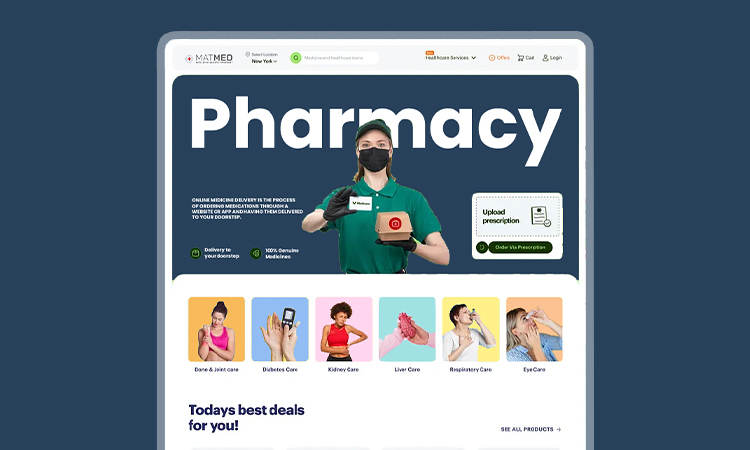
If you want to prevent your ad campaigns from wasted clicks and deliver your target audience exactly what they are looking for, it is necessary to develop a relevant landing page. A relevant landing page you just can not ignore. A relevant landing page is able to encourage your target audience to take action.
To design a relevant landing page, you need to keep certain things in mind, which are that a relevant landing page must be clear, informative and easy to navigate through. Its purpose is to enhance user experience as well as boost your sales.
The key principles of developing a relevant landing page are
- Make sure the title and the content align with the ad and users’ search intent. It maintains a seamless yet sturdy progression from ad click to landing page
- Keep the landing page clear, and make sure the visitor finds what they are looking for without causing any distractions.
- Limit the landing page to one specific action so that your audience understands your content immediately.
- Optimize your landing page for mobile devices, as it is one of the main sources of most of your traffic.
- Keep your landing page concise and clear by using bullet points and visuals. It not only looks compelling but also enhances the user experience.
- Build trust with your target audience by adding client testimonials, reviews, and logos.
- Place your CTA strategically to increase its visibility. By doing so, you are encouraging your target audience to purchase or book something.
- Separate audience targeting

Separate audience targeting, or commonly known as audience segmentation, is the process of dividing a broad client base into smaller groups. It is mostly based on certain criteria such as demographic, interest, behavioral, characteristics, user intent and past interactions.
See, when you are running a pharma PPC ad campaign most of your target audience are either medical professionals or patients. It allows you to identify your user based on similar purchase patterns. It is an effective way to generate more conversions and engagement.
Here is a list of core aspects of audience segmentation:
- Demographics – Audience demographic is basic quantifiable data such as their age, gender, occupation, income, education and so on.
- Geographic – It is based on the physical location of your target audience. It includes a city, region, country etc.
- User behavior – It depends on the action taken by the user, such as their purchasing history, website browsing pattern, engagement level and product usage.
- Transactional – This division mostly depends on the position of the customer journey.
The main reason why audience segregation is required is that it transforms your PPC campaigns from broad and inefficient outreach to precise and personalized communications.
- A list of key benefits of separating the audience:
- Enhanced target marketing – Audience segmentation is an effective tool to laser focus your marketing campaigns with the help of tailored messages. It effectively boosts your engagement and conversion rate.
- Enhanced customer experience – Audience segmentation involves developing relevant ad campaigns. This allows you to develop relevant ad campaigns. It helps you to build a strong bond with your core audience by projecting that you have a deep understanding of their needs.
- Better resource allocation – Audience segmentation is the most effective way for you to generate better ROI in your PPC ad campaign. It eliminates guesswork and gives you a clear understanding of the needs of your target audience.
- Improved product development -As most of your target audience are healthcare professionals or patients, it enhances your marketing campaign. You can create a more accurate customer profile and align your offerings with their needs to deliver a better user experience
- Competitive advantage – To stay ahead in this market, you can divide your audience and identify their unique needs.
- Utilizing Multiple PPC Ad Platforms Strategically
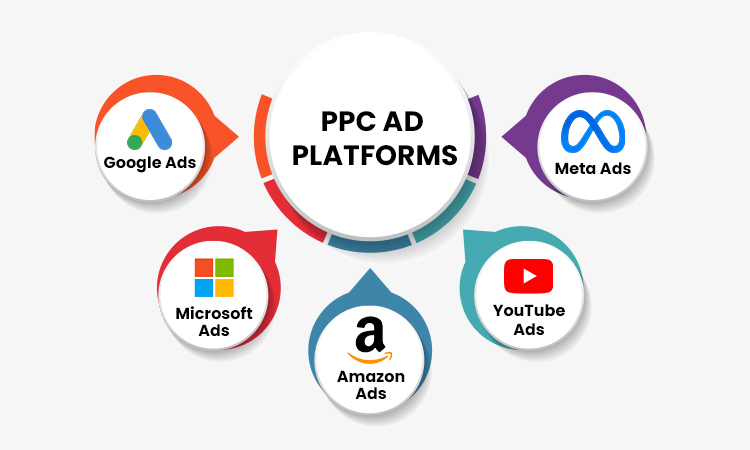
For successful ad campaigns, you can also try to run your ads on various ad spaces such as Google Ads, Microsoft Ads, Meta Ads, and YouTube Ads, to name a few. Running your PPC campaign on these advertising platforms allows you to connect with a wider range of qualified audiences.
You can leverage these platforms to run sponsored content, audio ads, massage ads, dynamic ads, video ads, etc. It also diversifies your target audience and optimizes your ad spend by engaging different audiences.
Let’s discuss these advertising platforms briefly:
| Ad platforms | Key features |
| Google Ads | ● Allows you to display your advertisement across platforms. ● You can cap your PPC budget. ● Allows audience targeting based on keywords, features, interests, and location. ● Provides rapid visibility. ● You can scale your ROI and modify ads anytime you want. |
| Microsoft Ads | ● It is a Microsoft based paid advertising platform. ● It allows you to place your ads on search engines such as Bing, Yahoo, and various other partner sites. ● Enables your pharma brand to reach its target audience through search, display, video and text ads. ● Allows you to import Google Ad campaigns easily. ● You can even run your ad campaigns on retail sites and reach viewers on streaming platforms. ● It gives you access to Microsoft Ads and diversifies your advertisement efforts across different platforms. |
| Amazon ads | ● It runs on the pay-per-click model smoothly by placing them on and off Amazon. ● Equipped with various ad formats such as sponsored products, sponsored brands and sponsored display. ● It increases your visibility, drives sales and reaches customers at different levels of their customer journey. ● Here you can set your budget and bids, and only pay when someone clicks on the link. ● Increases your reach to the audience on the basis of target keywords, products and shopping behavior. |
| Meta ads | ● It allows you to run ads on Facebook, Instagram and other Meta platforms. ● Allows your product to reach a wider range of audience across different public platforms. ● You can leverage their advanced AI, audience targeting, and diverse formats such as reels and stories to promote your brand. ● It increases brand awareness and enables you to generate maximum revenue. |
| YouTube ads | ● YouTube ads are a highly targeted ad format. ● Display your ad in skippable or non-skippable formats. ● It runs your advertisement before, in between or alongside the content. ● It gives your online advertising more exposure, expanding your reach to a wider range of potential customers. |
- Using Advanced Ad Extensions to Improve CTR
For better conversion, you have to make sure your website appears at the top of the search results. A 2025 study shows that the #1 result on SERP has a CTR rate of 27.6%. It shows the importance of earning the top spot for your pharmaceutical brand.
We are very well aware that the pharmaceutical industry is extremely competitive. Earning the top spot is not going to be a cakewalk at all. To outrun your competitors, you can leverage ad extensions for your pharmaceutical marketing. These are proven to be beneficial for PPC ad campaigns, as they help you to position your website in the top spot.
It increases your engagement as it directs users straight to your website.
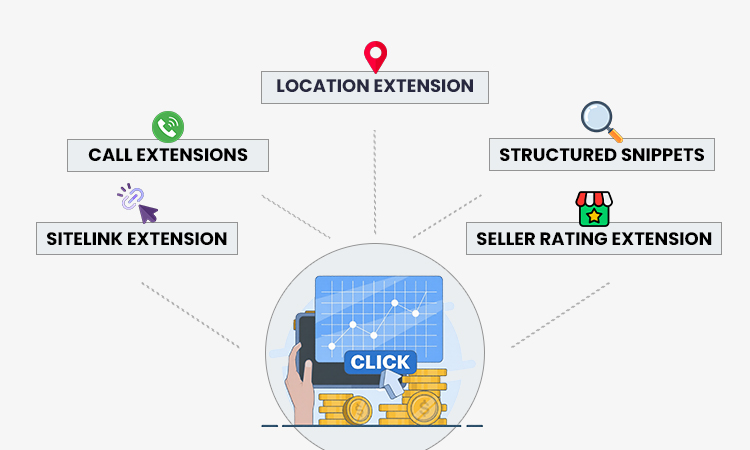
Here is a list of some of the ad extensions that you can use for your ad campaign.
- Sitelink extension – These extensions direct users to specific pages on your website by providing the links on the website. It eases the navigation for the visitors.
- Call extensions – This allows the users to contact the service provider directly by incorporating the phone number into the advertisement.
- Location extension – It allows you to display the business address, distance to the store, and a map beside the address. It is the most effective way to increase foot traffic if you have a physical store.
- Structured snippets – Structured snippets allow you to help the visitor understand what the website is about.
- Seller rating extension – This allows you to show your ratings and reviews on the display. This strengthens your bond with your client.
- Geo-targeting for better Local reach

Geo-targeting plays a pivotal role in the success of your PPC campaign. See if you want to stay ahead in your domain, you need to be able to adapt to changes.
By developing geo-targeted ads, you can easily and successfully lead to local customers. It boosts your engagement as well as your conversion. See, most of the searches nowadays take place on mobile devices, so developing geo-targeted ads can easily bring the users directly to your site.
Geo-targeted ads give your website instant visibility by appearing in the location based mobile ads. It is an effective tool for increasing foot traffic to your physical store and boosting appointment bookings.
Here is a step-by-step process for developing geo-targeted ads
Step 1: Defining clear goals – Before starting with geo-targeted ads, you need to be clear about what you are expecting out of them. Whether you want to increase brand awareness, website traffic or foot traffic, you need to use keywords according to your marketing objectives.
Step 2: Pinpoint your target audience – It is the process of delivering tailored advertisements to your target audience. You can do it by evaluating data based on age, gender, and location. This gives you insights into your audience’s understanding, preferences and needs.
Step 3: Mobile optimized ads – As most of the geo-targeted ads are going to take place on mobile devices, it is important to ensure the landing pages are mobile optimized. When you optimize your landing page for mobile screens, make sure it loads fast, contains a clear CTA, and that the user can seamlessly navigate through it for a seamless experience
Step 4: Incorporate local keywords – You can also include local keywords in your ad copy to make it more relevant. This allows users near you who are in urgent need of your products and services.
There are certain benefits to developing geo-targeted ads, and those are,
- It enhances click-through rates and conversion rates
- It benefits your marketing efforts by reducing costs and improving ROI.
- It allows you to target a certain demographics
- gives you informative insights on your audience.
Common mistakes pharma companies make in their PPC ad campaigns
Till now, in this blog, what we have learned is mostly what you must do to run an effective and successful PPC ad campaign. Now it is time to learn about the most common mistakes that pharma companies make so that you can avoid making the same mistakes.
- Ignoring mobile users
Ignoring mobile users is the most common mistake, and it is something that you must refrain from doing. See, a majority of your people use mobile to search for their needs. Not optimizing your website for mobile devices has repercussions like a higher bounce rate, low conversion, and giving the lead to your competitors.
- Irrelevant landing page
Designing irrelevant landing pages is a mistake that drains all your PPC advertising efforts. If the landing page does not match the search intent or the promise of an advertisement, it leads to user frustration, leading them to abandon your site and move to your competitor’s site.
- Poor keyword strategy
A poor keyword strategy leads your ppc advertising to not appear in the search results of your target audience. This generally involves using irrelevant, low-volume or overly competitive search terms. It is often driven by keyword stuffing, neglecting users’ intent or ignoring buyers’ journeys. It results in low traffic, and even if you manage to generate traffic, it won’t result in any conversions. It will only drain your investment and efforts.
- Ignoring Local targeting
The reason why ignoring local targeting is a mistake is that by doing so, you won’t be able to generate traffic from a specific geographical location. It leads you to invest money in targeting an audience with low conversion chances, and your ad will face lower ROI. Ignoring local intent leads to you missing out on a large number of potential customers.
- Failed regulatory monitoring
See, regulatory monitoring is the systematic process to ensure compliance. It is done so that your online advertisement, landing pages and targeting methods are aligning with the legal regulations, ad platform policies and industry-specific standards and failing at it can lead to reputation damage, ad disapprovals, penalties from ad platforms, privacy law penalties and so on.
- Not using enough ad extensions
Ad extensions are used for enhancing user experience, it makes your ppc ad campaigns more successful. By adding call extension, site extension, review extension, and location extension, you make your landing page more engaging and drive more qualified leads. Not using enough of them can cause issues such as reduced visibility, lower quality score, missed opportunities and reduced conversion.
Now let’s talk about some of the common repercussions that you might have to face by making these mistakes.
- Higher bounce rate – These mistakes result in your visitors instantly abandoning your website due to user frustration.
- Lost traffic – Not developing a mobile optimized landing page, ignoring local targeting, poor keyword strategy and other mistakes cause you to lose a large portion of your target audience.
- Poor revenue and conversion – These mistakes cause low traffic, which chronologically results in poor revenue and conversion rate.
- Damaged brand reputation – These all damage your brand’s online reputation and weaken the bond between you and your target audience.
FAQs
Ans – PPC is important for pharmaceutical companies because it enables them to secure immediate visibility on the first page of the search results. Through PPC, you can perform targeted marketing to ensure your ad reaches the right audience. It also allows you to stand out from the rest of the competing brands, and you can measure the effectiveness of your ad campaign.
Ans – The reason why PPC is so popular is that it delivers results within hours. PPC goes through several iterations before it reaches its peak performance. In general, it takes nearly 3 months to show successful results. The time taken by the ad campaign to show results depends on several factors such as industry, competition, budget, ad quality and the complexity of the campaign.
Ans – Running PPC advertising campaigns for pharmaceutical companies can be a little costly. According to the reports, the cost of running a ppc ad campaign for a pharma company depends on the size of the industry. For example, if it is a mid-size company, it can cost you $51,000 per month.
Ans – The best platforms for a successful PPC campaign are Google Ads, LinkedIn Ads, and Meta ads to name a few. These platforms allow you to attract high-intent traffic across search and public platforms. They allow you a massive audience by allowing products to directly appear in the search results of the target audience.
Ans – PPC advertisement allows you to shift from generating clicks to driving high-intent conversions to your landing page. It saves you from investing in wasted ad campaigns and optimizes your campaign on the basis of data.
Conclusion
To sum up, if you want your pharma brand to receive instant visibility and generate better revenue, hiring a reliable ppc agency is the best option you have. It gives you more exposure to your target audience in this highly competitive market. In this blog, we have tried to guide you to implement the best of the PPC strategies for quick and successful results.
We have discussed in detail the most effective keyword research tools, the best ad platforms to generate an audience with high intent and to increase brand awareness. We have also learned about the most common mistakes that most pharma companies make and how they can affect your business. If you are someone who is new to this industry and wants a successful result out of your PPC campaigns, then it is important to hire professional PPC services for healthcare businesses with years of experience and expertise in pharmaceutical paid search management for better results.

