


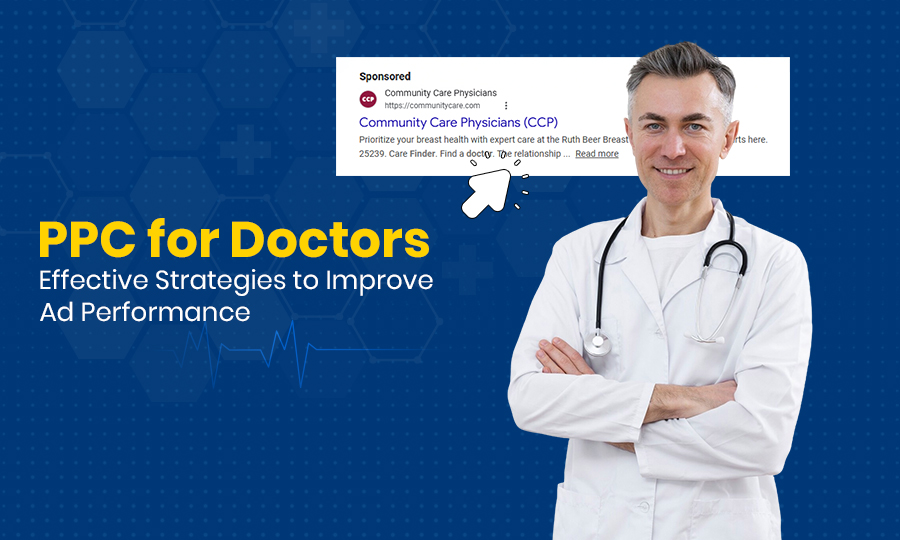
Imagine a person searching for orthopedic doctors near them, and your ad campaign pops up in the top position in the search engine results pages. Cool, right? This is a dream for every doctor and healthcare professional. But how is it possible? By incorporating PPC for doctors.
In comparison to other digital marketing strategies like social media and SEO, pay-per-click advertising can help doctors gain instant visibility on search engines and successfully target patients who are actively looking for specific medical services. In fact, 74% of business owners have agreed that PPC is a huge driver for their business.
And the best part about PPC? You have to pay a fee only when your ad gets clicked on. If you are someone who is looking to achieve online visibility and precisely target patients, then this blog is for you. It will discuss what PPC is for healthcare professionals, why it is crucial for them, step by step guide on how to get started with pay-per-click advertising, and the major do’s and don’ts of PPC. So, let’s get started.
What is PPC for Healthcare Professionals
Pay-per-click advertising for doctors is an effective digital marketing strategy where doctors have to pay a fee to place their ads on search engines and social media, and only have to pay a fee when users click on their ads.
PPC enables immediate and targeted visibility, allowing healthcare providers to attract patients who are actively searching for particular healthcare services (e.g., orthopedic, pediatric, or gynecologic) in specific areas.
Now, how does PPC work?
- Targeted Bidding: Doctors choose specific keywords, such as “knee surgeon” or “best orthopedist near me”, and bid on them. When a user searches for healthcare services using these terms or phrases, the ads appear at the top of the search engine results.
- Budget Control: Healthcare providers set up daily or monthly budgets, ensuring they only pay for engaged traffic.
- Ad Placement: Ads appear on search engines like Google, Bing, and social media platforms like Facebook, often targeting by age, location, and specific health interests.
- The Click Action: When a prospective patient clicks on the ad, they are guided to a dedicated landing page (e.g., appointment booking page) especially designed to convert them into loyal patients.
- Relevance and Quality Score: Search engines often reward ads that are relevant and highly compliant with lower costs per click and better positioning.
5 Key Reasons Doctors Must Prioritize Pay-Per-Click Advertising
Now that you have a clear idea of what PPC is and how it works for healthcare providers, let us discuss the major reasons why doctors must invest in pay-per-click advertising:
- Highly Targeted Reach
By incorporating effective PPC strategies, doctors can target specific demographics, search behaviours, and locations. For example, “Gynecologist in California” to ensure their ad campaigns reach the right audience, minimizing wasted advertising spend.
- Instant Visibility and Patient Acquisition
Unlike other digital marketing strategies like SEO, which takes months to provide satisfying results, pay-per-click advertising can place your healthcare practice at the top of the search engine results instantly. This allows doctors to attract patients immediately when they are searching for specific medical treatments or “near me” searches.
- Better Local Presence
For medical professionals, geographic targeting ads guarantee that their ads reach nearby patients, which increases the chances of booking, as patients often seek medical services in convenient locations.
- Budget Control and Higher ROI
With effective PPC for doctors, they only have to pay a fee when a prospective patient clicks on their ad. They can set up daily and monthly budgets, offering control over costs while delivering easily measurable outcomes on patient conversions.
- Offers Competitive Edge
Small-scale healthcare practices can leverage PPC to compete for the same keywords as large-scale hospitals and clinics, appearing in the top positions regardless of the practice’s size.
How to Get Started with PPC Campaigns for Doctors
PPC does offer instant results, but the process of developing a PPC ad campaign is quite complicated. But don’t worry, we have got you. This section of the blog will offer a comprehensive guide on how doctors can develop and run successful PPC ad campaigns.
- Get Verified by Google
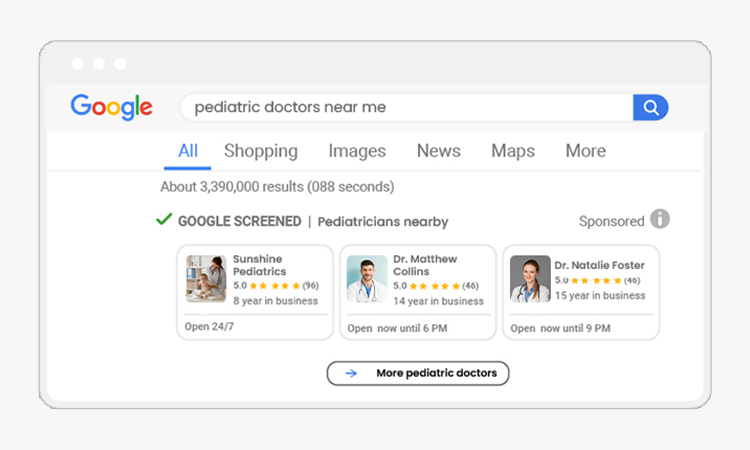
The basic step before setting up a PPC campaign is to get verified by Google. How can you do this? By applying for the Google Screened Program.
The Google Screened badge is very effective for professional service providers as well as firms to establish trusted reputations online. In simple words, it is a verification program that is especially designed by Google for certain service-based businesses, such as medical services. Although it is not mandatory, this step can help doctors establish credibility for their ads and Google listing among prospective patients.
Here’s a brief overview of the Google Screened program for doctors:
To earn the Google Screened badge, healthcare professionals need to undergo a thorough process, which may include checks on:
- Professional Licenses
- Business Registration
- The background of the practice’s owner
- Insurance
NOTE: The extent of the verification process heavily depends on the category and location of the business.
Steps doctors must follow to get the Google Screened badge:
- Verify your Practice: The first step to claim and verify your Google Business Profile ensuring NAP consistency (Name, Address, Phone number).
- Sign Up for Local Services Ads: Now, access the Local Services Ads portal to successfully initiate the screening process.
- Pass the Background Check: In the next step, doctors need to complete the screening check that is handled by a third-party partner like Evident.
- Submit Insurance/License: Provide necessary board certifications, medical licenses, and, depending on the proof of insurance and service category.
- Maintain the Health of Profile: Guarantee high-quality ratings and reviews to maintain the badge.
- Clearly Define your Campaign Goals

When you are done getting verified by Google, you need to determine your campaign goals. This step is very important to ensure a successful PPC campaign.
Before launching your campaign, it is crucial to determine what you want to achieve through your PPC campaign.
Here are some common PPC objectives for doctors:
- Showcasing newly launched/specialized medical services
- Patient Acquisition
- Higher website traffic
- Expanding to new geographical locations
- Boosting awareness of your medical practice
If you have a clear idea of what you want to achieve through your PPC campaign, it will be easier for you to develop effective ad campaigns for your medical practice.
- Choose the Right Platform for your Ads
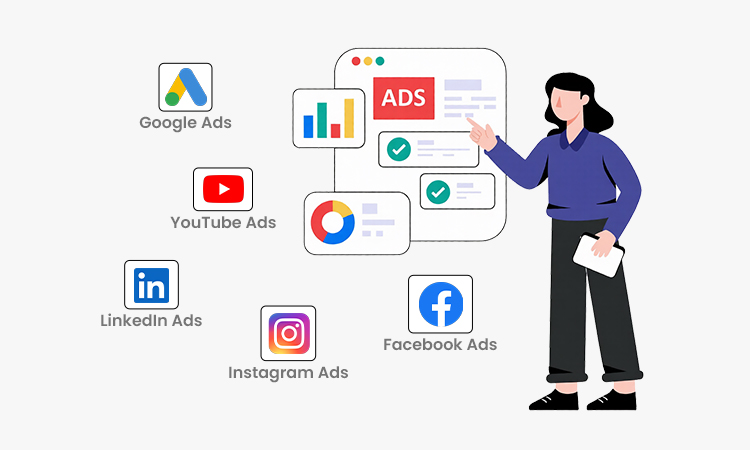
Another crucial aspect to consider when doing PPC for doctors is choosing the right platform to run the ad on. Choosing the right ad platform is very important to ensure that your ads are reaching the right audience.
Here are a few top ad platforms where doctors can run their ad campaigns:
- Google Ads: This is crucial for reaching patients with immediate and high-intent needs (e.g., “pediatric doctors near me”). Display ads can be leveraged by doctors for brand awareness on health-related websites.
- YouTube Ads: This platform is very effective for sharing procedure explanations, patient testimonials, and establishing trust through video.
- Facebook and Instagram Ads: Social media ads are very effective for targeting local patients on the basis of location, demographics, and unique interests. This platform is great for doctors to showcase medical procedures, before-and-after images, and run awareness campaigns.
- LinkedIn Ads: If you are a B2B healthcare practice, then this is the ideal ad platform for you. LinkedIn ads can help doctors reach industry professionals, connect with fellow doctors, and promote specialized and premium healthcare services.
But with so many options available, how can doctors choose the right platform for their practice? To make the process easier for you, we will discuss the major steps that doctors must follow to choose the right platform to run their ad campaigns.
- Understand your Objectives and Target Audience
Even before you select a platform, you need to decide what you want to achieve through your PPC ads.
- For High-Intent Patients: If you are a specialist (e.g., ENT, pulmonologist) who is willing to get immediate appointments, Google ads can be a great choice in this case. This platform can make healthcare providers appear when patients search for “doctors near me.”
- For Education and Brand Awareness: If you are launching a new clinic or promoting preventive care services, platforms like Facebook and Instagram are effective for reaching a wider demographic.
- For Specific Demographic Targeting: Leverage Meta (Facebook/Instagram) to target patients on the basis of age, location, and specific health interests.
- Align Content to Platform
- Visuals and Stories: Leverage Instagram Reels and Facebook to showcase the human side of their practice.
- Detailed Information: Doctors can use LinkedIn for sharing detailed articles and professional expertise.
- Educational Videos: Healthcare professionals can leverage YouTube to share long-form and in-depth content.
- Major Factors to Consider
- Location-Based Targeting: Doctors must make sure the platform they are choosing allows them to leverage strong local SEO in order to attract local patients.
- Budget and ROI: Healthcare providers must understand their daily ad spend. Facebook requires enough budget to achieve traction, and in the highly competitive market, it is recommended to allocate a significant part of your budget to it.
- Compliance: Doctors must ensure that the ad platforms you are choosing strictly adhere to local medical guidelines, such as HIPAA and ASCI.
- Especially Emphasize on Landing Pages
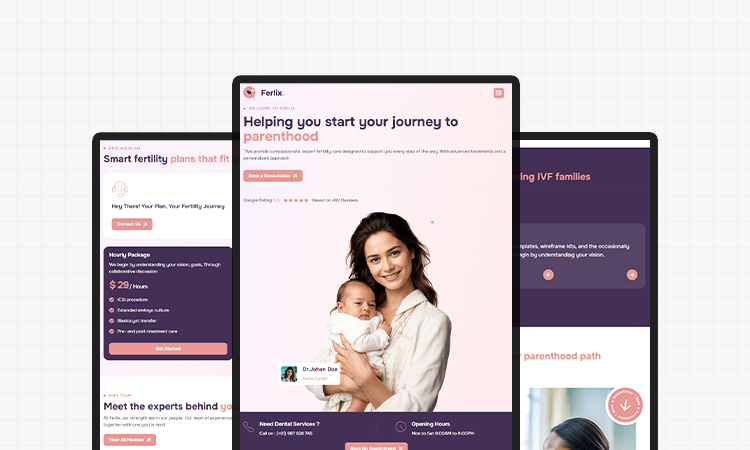
Like most industries that run ad campaigns on Google, it is very important that the content on the landing page clearly reflects the message on your ad.
For example, if you are looking to promote your newly launched OB-GYN service through your ad campaign, then the corresponding landing page should contain information specifically about OB-GYN therapy procedures and the benefits of seeking the treatment.
Google’s strategic algorithm can quickly detect any inconsistencies. If this is the case, then your ads will be seen as irrelevant and will not appear in the search queries.
- How can Doctors Develop Engaging and Dedicated Landing Pages
Here’s a comprehensive guide on how to develop dedicated landing pages for effective PPC for doctors.
- Structure for Achieving Higher Conversions
- Create Compelling, Benefit-Driven Headline: Doctors must instantly convey the value of their service, strictly focusing on what the patient gains. (For example, “Your Partner in your Child’s Healthy Growth” rather than “Child care services”)
- Keep the Design Minimal and Focused: Doctors must eliminate any unnecessary navigation links to maintain a focus on a single and clear goal, such as subscribing to a newsletter or scheduling an appointment and avoid patients from getting diverted by unrelated information.
- Develop a Short and Clear Ad Copy: When creating an ad copy for your ad campaign, you must keep it short, clear, and easily understandable. Incorporate bullet points and short paragraphs rather than writing big chunks of paragraphs so that the information is easy to digest for patients who may be anxious in an emergency situation or in a rush.
- Leverage Patient-Centric Approach: Directly address common patient concerns in an FAQ section, such as insurance acceptance and what to expect during a visit.
- Showcase Real-Patient Testimonials: This is a very important aspect that doctors must incorporate in their landing pages. By including quotes and especially video testimonials from satisfied patients, doctors can build trust among potential patients.
- Position Vital Elements “Above the Fold”: Make sure the headline, a brief description of the benefits, the form, and the CTA are visible even without scrolling.
- Incorporate Click-to-Call: When developing landing pages, doctors must make phone numbers easily clickable, especially for mobile users, in order to make it easier for patients to contact your practice.
- Develop Interactive Content
- Create Engaging Headings and Subheadings: Doctors must leverage clear and concise headlines that clearly convey the benefit of taking up a particular medical service or the problem they solve.
- Showcase Benefits and Not Just Features: Rather than simply listing technical specifications, doctors must clearly explain how their services enhance the patient’s quality of life.
- Leverage Patient-Friendly Language: Remember, patients come from various backgrounds, and not everyone’s first language is English. So, doctors must avoid incorporating medical jargon and use clear and simple language that patients can easily understand.
- Implement Storytelling: Share patient success stories and testimonials in order to foster an emotional trust and connection.
- Foster Trust and Credibility
- Show Authority: Doctors must include board certifications, awards and recognitions, professional affiliations, and years of experience in their landing pages to showcase authority.
- Highlight Social Proof: Include patient testimonials, reviews, and star ratings from platforms like Google and Yelp on your landing pages to build trust.
- Include Security Badges: Include relevant security badges, such as HIPAA compliance or security symbols, to assure patients that their personal health-related information is safe with you.
- Optimize for User Experience
- Prioritize Mobile-Friendly Design: Doctors must make sure that the layout of their landing page is well-responsive and performs effectively even on smaller screens like mobile devices. Ensuring a mobile-friendly landing page is vital as the majority of users search for health-related information on mobile.
- Use Simplified Forms: Keep the forms on your healthcare landing page short and easy to fill out for patients. Doctors must avoid asking for unnecessary information in order to minimize friction.
- Boost Load Speed: 47% of customers expect a web page to load in less than 2 seconds or less. Loading time more than that might frustrate them, driving them away. So, doctors must optimize their image sizes and shorten the code to make sure their landing page loads quickly, reducing bounce rates.
- Call-to-Action Strategy
- Leverage Powerful Action-Oriented Language: Doctors must use clear and powerful phrases like “Schedule your Appointment” or “Get a Free Consultation” to encourage actions.
- Create Prominently Visible Buttons: Try using contrasting colours for your CTA buttons, so that it is easier for patients to spot them and click on them.
- Leverage Multiple CTAs: Doctors must position the CTA at the top and bottom of the page, guaranteeing it remains consistent throughout.
- Constant Optimization
- A/B Test Elements: Experiment with different headlines, button colours, images, and layouts to determine what resonates the best with their audience.
- Monitor Performance Metrics: Doctors can leverage analytics tools such as Google Analytics in order to track bounce rates, traffic sources, and conversion rates in order to refine their approach.
- Create a High-Converting Ad Copy and Design
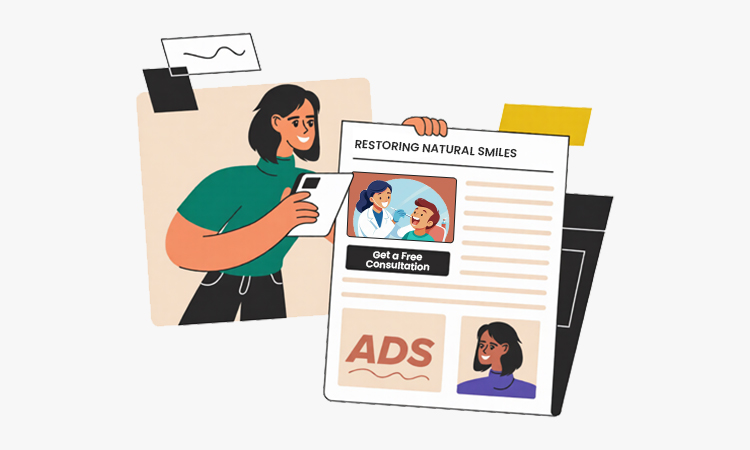
You can do everything right, but if your ad copy is not appropriate, all your PPC efforts will go in vain. To ensure effective PPC for doctors, they need to develop a catchy and relevant ad copy that converts.
Nowadays, people are always on the go. They will stop scrolling only when something catches their eye. Creating compelling ad copy with clear content can encourage target audiences to take a desired action, like signing up for a newsletter or making a phone call.
A good ad copy must be short, clear, and to the point on the specific interests and concerns of its target audience. In order to create an effective ad copy, doctors must highlight the value of their services by directly addressing common pain points and highlighting what sets their healthcare practice apart from others.
Key Characteristics of a High-Converting Ad Copy:
- Compelling Design: Your ad copy is the first thing that audiences will see when they come across your ad campaign. So, keep it short, simple, informative, but engaging at the same time to encourage clicks.
- Emotionally Appealing: An effective ad copy must have the ability to connect with your audience on an emotional level in order to make your ad campaign more memorable and impactful.
- Emphasize on Common Patient Concerns: Doctors must develop their ad copy in a way that it directly addresses the common pain points of their potential patients as well as answers all their queries.
- Use Simple Language: The language of your ad copy must be simple. Avoid using medical jargon and include words or phrases that are easily understandable for your target audience.
- Leverage Clear Call-to-Action: Including a compelling CTA in your healthcare ad copy is vital as it can seamlessly guide users to the next step.
- Benefits, Benefits, and Benefits: Instead of focusing on the special features or what the service does, doctors must showcase how their services can benefit patients. For example, if you are running an ad campaign on dental implant surgery, the sole focus of your ad copy must be on “restoring natural smiles” or “making chewing easier” rather than simply what it is and what the procedure contains.
- Set up your Google Ads Account
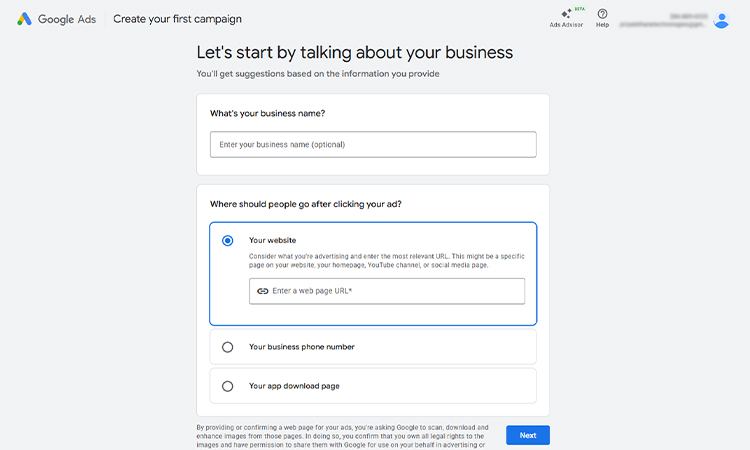
If this is your first ad campaign, then you need to set up your Google Ads account in order to get started. And the good news? It is completely free.
Creating a Google Ads account requires just a few steps, and then you can start your campaign and run your ads.
Step 1: Sign Up and Set Up
In order to create a Google Ads account, doctors must first navigate to Google Ads and use a professional email to sign up. It is recommended to select the “Switch to Expert Mode” in order to gain complete control over campaign settings and targeting.
Step 2: Decide on Billing
After setting up a Google Ads account, doctors need to add payment information, guaranteeing that the country, currency, and time zone of their location are accurate.
Step 3: Define your Goals
Now, doctors need to determine what they want to achieve through their ad campaigns; is it to get more appointments, promote newly launched medical services, or enhance brand awareness?
Step 4: Structure Local Targeting
When you know what you want to achieve by running ad campaigns, you need to now set up radius targeting in order to reach the patients who are looking for healthcare services that your practice offers, and leverage local keywords like “Heart specialist near me.”
Step 5: Create your Campaigns
In order to develop healthcare ad campaigns in Google Ads, doctors need to select the “Search” or “Local Services Ads” campaign types, which are very effective for healthcare professionals.
Step 6: Incorporate Conversion Tracking
Doctors must set up conversion tracking for phone calls, booking actions, and submissions on their website to track the return on investment.
Step 7: Make Sure to Maintain Compliance
Doctors must adhere to Google’s strict advertising policies that are especially designed for healthcare services. This might include avoiding guaranteed treatment, which might breach media council guidelines.
- Choose and Incorporate the Right Keywords
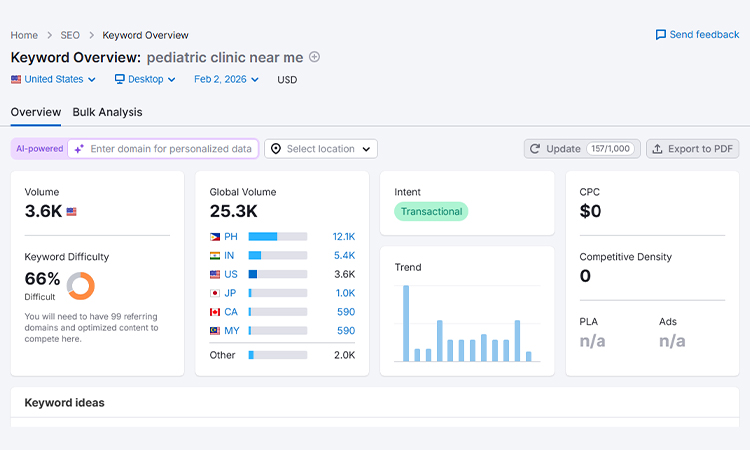
Keywords are vital for effective PPC for doctors. Identifying and implementing the right keywords is crucial to ensuring your ad campaign reaches the right audience. So, doctors must now focus on words or phrases that their ideal patients are likely to search on Google.
Now you must be wondering, but how can I identify the right keywords for my ad campaign?
You can either leverage Google’s Autocomplete feature or Google’s “People Also Ask” and tools like Ahrefs, Google Keywords Planner, and SEMrush.
Doctors need to find relevant keywords that:
- Are relevant to what their medical practice offers
- Showcase strong buyer intent
- Are pocket-friendly
- Gets a significant amount of traffic or volume.
- Does not have a high competition rate.
How can doctors perform thorough keyword research for their ad campaign?
- Focus on Intent and Specificity: Leverage long-tail keywords as they are highly specific, such as “best dentist in Norway” or “pediatric clinic near me”, which often have a lower search rate but a very high conversion rate in comparison to broad search terms.
- Leverage Location-based Targeting: Implement geographic modifiers, such as city or area, in order to attract local patients, such as “urgent orthopedic care in Boston.”
- Use Patient Concerns: Doctors need to search for keywords that clearly describe specific conditions or solutions. For example, “flu shot in Delhi” or “chronic pain treatment.”
- Implement Advanced Keyword Tools: Healthcare professionals can implement effective keyword tools, such as Google Keyword Planner, SEMrush, and Ahrefs, to explore relevant keywords and determine the right balance between traffic and competition.
- Add Brand Keywords: Target searches for specific doctor or practice names, e.g., “Dr John Doe”, to capture patients who are looking directly for your services.
- Use Match Types: Doctors must incorporate various keyword match types (broad, exact, and phrase) to manage how closely patient search queries must align with the keywords they are considering.
- Consider Patient Queries: Implement frequently asked questions from patients into your keyword strategy.
- Set a Budget for your Ad Campaign

In the next step, medical practices need to allocate a specific budget for their ad campaigns and decide how much they are willing to spend per click with their PPC campaigns.
Here is a step-by-step guide to setting an effective ad budget:
- Define Goals and Objectives: In order to set an effective budget for a healthcare ad campaign, doctors must first determine what they want to achieve through the ad campaign. Is it to get more traffic, conversions, or brand awareness? This showcases how aggressively you spend.
- Identify your Total Budget Constraint: Set up a maximum spend amount as a boundary to keep, based on the total funds available.
- Calculate Daily Vs Monthly Budget: In platforms like Google Ads, doctors must set up a daily budget or calculate it by dividing the total budget by 30.4 days.
- Leverage Shared Budget: For multiple campaigns, doctors must use a shared budget to allow the platform to optimize spending across them.
- Monitor and Adjust: Doctors must track the performance of their ad campaigns regularly. In case a campaign is limited by budget, consider increasing it; otherwise, shift funds from underperforming to high-performing advertising campaigns.
- Leverage Ad Extensions and Add a Call-to-Action
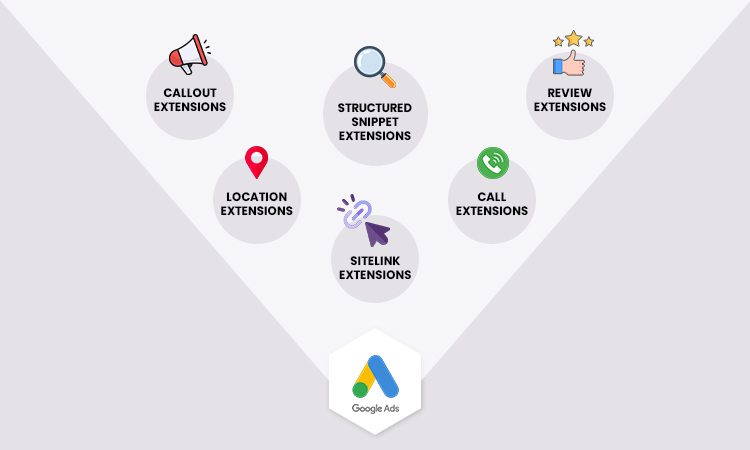
Ad extensions are additional or actionable pieces of information that are added to search ads. This information might include phone numbers, site links, and location details that expand the campaign’s size and functionality.
Doctors must leverage ad extensions in their ad campaigns, as this additional information can enhance visibility, enhance their ad’s Quality Score, and boost click-through rates. In fact, according to this statistic, implementing ad extensions can increase CTR by 10-15% on average.
Now, if you are wondering what type of ad extensions to leverage in your healthcare ad, then this section of the blog can help you out.
Here are a few ad extensions to implement for effective PPC for doctors:
- Location Extensions
The location extension can help doctors easily display their clinic’s address, phone number, and map marker beside their ad.
By offering this information in ads, doctors can make it easier for potential patients to locate their practice, leading to higher foot traffic.
- Callout Extensions
By implementing a callout ad extension, doctors can include additional descriptive text right below their ad copy. This information can include their USPs, such as “Free Consultation” or “24/7 availability.”
- Sitelink Extensions
Doctors can incorporate this extension to add direct links to crucial pages, such as “About the Doctor” or “Patient Testimonials”, in order to help patients seamlessly navigate crucial actions instantly.
- Call Extensions
This ad extension can allow healthcare providers to enable one-click calling, making it easier for patients who are looking for urgent services to quickly schedule appointments.
- Structured Snippet Extensions
This extension showcases specific services, such as the types of treatments your healthcare clinic offers. For example, if you are an orthopedist, you can add (e.g., “Orthopedic”) to help patients instantly determine what your practice is about.
- Review Extensions
Doctors can incorporate this ad extension to showcase third-party and trustworthy patient reviews to foster credibility.
Another most important thing that doctors must leverage in their ads is engaging call-to-actions (CTAs). In fact, using a specific, clear CTA can increase conversion rates by 161%. Amazing, right?
CTAs are basically a prompt, usually a text, a button, or a link, especially designed to encourage an immediate response or desired action from an audience. For example, “Book an Appointment,” “Learn more,” or “Contact Us.”
Doctors must incorporate them in the ad campaigns as they can immensely help increase conversions and ROI, as well as improve user experience.
Major elements that doctors must consider when creating CTAs for their ad campaigns:
- Careful Crafting and Messaging
- Add a Clear Value Proposition: Instead of asking for a commitment, doctors must offer a benefit. Focus on clearly conveying why patients should choose your healthcare service over others. You can leverage engaging USPs such as “Get a Personalized Treatment Plan” rather than simply using “Submit.”
- Use Action-Oriented Language: Leverage powerful verbs that clearly define the next step, i.e., how users must proceed further. For example, include “Call,” “Schedule,” and “Download.”
- Leverage Patient-Centric Messaging: Using first-person language such as “me” and “I” in CTA buttons can not only boost engagement but also give patients a sense of control. For example, “Book My Appointment” can be much more effective than “Book an Appointment.”
- Design and Visibility
- High Contrast and Colour Psychology: When developing CTAs for their ad campaigns, doctors must use colours that stand out against the background and align perfectly with medical trust. For example, green can be used for tranquillity or health, while blue can be used to signify trust.
- Button Design: Doctors must make sure the CTA is formatted as a button, which makes it more clickable than hyperlinked text.
- “Above the Fold” Placement: Place the primary CTA where it is prominently visible even without scrolling, especially on smaller screens like mobile phones.
- Whitespace: Make sure to surround the CTA button with enough space to make it visually pop and prevent any accidental clicks.
- Patient-Focused Technical Considerations
- Focus on Mobile-First Optimization: A landing page that is well-optimized for mobile devices is vital for effective PPC for doctors. With 88% of healthcare appointments scheduled by phone, doctors must make sure to optimize their CTAs in a way that they are easily tap-able on mobile devices.
- Click-to-Call Functionality: For mobile ads, doctors must make sure the phone number on the ad campaign is easily tappable to initiate a call immediately.
- Low Friction: If the CTA leads to a form, doctors must consider decreasing the number of fields to avoid discouraging users.
- Relevant Landing Pages: The call-to-action in your healthcare ad campaign can directly lead to dedicated pages and not the homepage. For example, if an individual taps into “Book a Total Knee Replacement Surgery”, it must lead them to the ortho booking page and not the homepage.
- Track and Adjust your Healthcare PPC Campaigns

Pay-per-click is not a set-it-and-forget-about-it approach; it needs constant monitoring and modifications from time to time. Once your healthcare campaign is launched and running, doctors need to track it closely to determine how it is performing.
Keeping tabs on their PPC campaigns can help doctors to identify if there are any gaps and make necessary modifications accordingly.
- Analysing and Tracking Performance
In order to know whether or not the ad campaign is functioning properly, doctors must monitor specific metrics that can directly impact patient acquisition.
- Conversions: This is the most vital metric that needs to be tracked. Instead of just tracking clicks, doctors must set up tracking for actions like phone calls, appointment bookings, and, if applicable, virtual consultation sign-ups.
- Click-through Rate: Through this metric, doctors can measure how engaging their ad campaign is.
- Cost-Per-Click: This is the metric that tells how much you are paying for each click.
- Cost-Per-Acquisition: Doctors can leverage this metric to determine how much they are spending to acquire one booking.
- Return on Ad Spend: This metric shows the revenue generated in comparison to ad spend.
- Quality Score: This metric measures Google’s rating (1-10) of advertising campaigns, the quality of the landing page, and the keyword. The higher the quality score of your ad, the lower the costs.
- Impressions: This metric shows the total views and the percentage of total views that your ad received, measuring competitiveness and brand visibility.
- Adjusting and Optimizing your Medical PPC Campaign
Once the data is gathered from tracking, doctors need to make adjustments to boost their ROI. How? Let’s discuss them in detail.
- Incorporate Negative Keywords: Now you must be thinking, what? Did I read it right? Yes, incorporating negative keywords is very important in order to ensure successful PPC for doctors. By including these keywords, doctors can avoid wasted budgets. For example, as a doctor, you must incorporate negative keywords like “free” “, coupon”, and “cheap” in order to prevent your ad from reaching irrelevant searches, minimizing wasted spend and targeting high-intent patients.
- A/B Testing: Run two variations of an ad (e.g., different CTAs and headlines) to determine which drives better patient interactions.
- Enhance Geo-Targeting: If your medical clinic is located in a specific city, restrict ads to a 5-10KM radius in order to avoid paying for clicks from patients who are located far away from you and need to travel a significant amount of time to travel to you.
- Adjust Bids and High-Intent Keywords: Doctors must shift their budget toward high-conversion keywords, such as “best cardiologist near me” or “emergency Catheter Ablation”
- Optimize Landing Pages: Doctors must make sure that their ads lead to a specific, mobile-friendly service page instead of a homepage. The landing page must have a clear “Book Now” or “Contact Now” button.
- Ad Scheduling: Evaluate when you are getting the most inquiries and adjust the display time of your display ad to match, such as focusing on or avoiding weekend hours if your clinic remains closed.
- Use Automated Bidding: Doctors can leverage Google’s “Maximize Conversions” or “Target CPA” to allow AI to easily optimize bids to achieve better results based on their budget, especially if they have a high volume.
Do’s and Don’ts of Pay-Per-Click Advertising for Healthcare
PPC for doctors is a very effective way to connect patients with relevant medical services; however, it requires strict adherence to guidelines and a strong focus on high-intent searchers.
So, here is a comprehensive breakdown of the Do’s and Don’ts for healthcare online advertising on the basis of the industry best practices.
- Optimize your Ad Campaigns for Mobile Devices
With over 60% of searches occurring on mobile devices in the U.S, optimizing your healthcare ad campaigns has never been so crucial. Doctors must ensure their ad campaigns, as well as landing pages, are well-responsive on smaller screens like mobile devices and load in less than 3 seconds. Feature “click-to-call” buttons, and have a clear, easy-to-use “Book Appointment” button.
- Leverage Negative Keywords to Avoid Irrelevant Clicks
Doctors must incorporate negative keywords to exclude searches for “jobs”, “free”, and “home remedies” to avoid wasting their marketing budget on low-intent and non-converting traffic.
- Avoid Sending Ad Traffic to the Homepage
Directing your ad traffic to a generic homepage rather than a dedicated landing page might lead to higher bounce rates. Instead, doctors must guide them to personalized landing pages so that patients can easily find the information they are looking for that resolves their queries.
- Focus on Incorporating Long Tail Keywords
These are specific, high-intent search terms that have low search volume but a very high conversion rate and low competition. Doctors must include keywords like “knee replacement surgery in Canada” rather than broad and competitive terms like “doctor” to lower costs and boost conversion rates.
- Use Geotargeting for Specific Locations
Since the majority of patients prefer seeking healthcare services near them, doctors must leverage radius targeting to focus on patients within a specific distance of their clinic. For effective geo-targeting, doctors must incorporate city-specific keywords (e.g., “dermatologist in Orlando”)
- Do Not Use Shady PPC Tactics
Healthcare providers must avoid using unethical paid search tactics as they violate ethical guidelines, erode patient trust, and risk legal penalties, which is the core of the healthcare sector. Using exaggerated or misleading claims can lead to severe consequences for a doctor’s reputation and career.
- Avoid Creating Generic Ad Copies
Your ad copy is the biggest chance of engaging patients. If you fail to create an effective ad copy, then you are missing out on conversion opportunities. Doctors must avoid using generic, irrelevant, and vague ad copies as they are less likely to catch the attention of their potential patients. Doctors must focus on solving the patient’s problem. For example, instead of showcasing that you are the best, focus on what benefits your services offer and why patients should choose your practice over others.
- Do Not Ignore Compliance
This is one of the most common mistakes when doing PPC for doctors. Compliance in the healthcare sector is the most important thing. Never make use of private health-related patient data for remarketing purposes, as it severely violates privacy rules. Doctors must ensure all their ad campaigns are compliant with security guidelines, avoid misleading medical claims, and respect patient privacy.
FAQs
Ans. As a healthcare professional, you must typically spend between $1,000 to $10,000 per month on pay-per-click advertising.
Ans. Google Ads is usually considered the best platform for doctors to run PPC ads, as they can capture high-intent patients actively searching for specific healthcare services or conditions.
Ans. Yes, you can expect instant visibility and traffic flow with pay-per-click ads. However, one must not expect high-conversion results or instant profitability.
Ans. Yes, PPC advertising is very effective for small-scale medical practices, offering instant, targeted visibility to patients who are actively seeking healthcare services.
Ans. A high-converting healthcare landing page must balance patient empathy with clear, actionable information, especially designed to guide website visitors from the searching process to booking an appointment.
Conclusion
With the competition in the healthcare sector getting fiercer with time, incorporating PPC for doctors is non-negotiable. In the digital world, offering high-quality medical care is not enough; if your healthcare practice has zero online visibility, you are missing out on a lot of conversion opportunities. By leveraging the PPC strategies mentioned above, doctors can not only enhance their visibility in the search results but also maximize their ROI. However, when doing PPC, doctors must make sure to consider the common do’s and don’ts of pay-per-click advertising to avoid making any serious mistakes. In case you are just starting out and are not familiar with the concept of PPC, we recommend partnering with an experienced PPC agency that offers personalized PPC solutions.

