



According to studies, 75% of the UK population turns to the Internet to search for health-related information. So, healthcare professionals, especially chiropractors, must ensure that all their online content is not only relevant and valuable to patients who are looking for chiropractic solutions but also perfectly reflects their brand’s objectives and offerings. This is where effective content marketing for chiropractors comes into play.
Now you must be thinking, does content marketing actually work for chiropractors? The answer is yes. Content marketing, when done right, can build brand trust, loyalty, and authority by offering valuable, relevant information rather than just sales pitches. It can boost website traffic through effective search engine optimization, help with lead generation, and nurture customer relationships.
Although content marketing might be a little daunting for chiropractors, it is a vital digital marketing strategy that can help achieve online success. In this blog post, we will discuss what content marketing is, why it is crucial for chiropractors, effective content marketing tips, and more. So, ready to get started?
What is Content Marketing for Chiropractors
Content marketing for chiropractic practices is a digital marketing approach that includes creating and sharing content that is valuable, educational, and relevant. Chiropractors can develop content such as latest blog posts, social media updates, and videos to enhance visibility, foster trust among patients, and build authority.
When doing content marketing, chiropractors must focus on addressing common patient concerns and educating patients rather than direct selling. When it comes to reaching and attracting potential patients, there is no better way to do it than through a solid content marketing strategy.
8 Key Benefits of Content Marketing for Chiropractors
Content marketing can be beneficial for chiropractors for several reasons. Let’s take a close look at a few of them:
- Enhanced Search Engine Rankings
Do you know that 70,000 health-related searches are happening per minute, every day? With a significant number of patients looking for healthcare problems online, it is crucial to rank at the top in order to get noticed.
Publishing SEO-optimized content can help chiropractic practices rank higher in the search engine results, making them easily discoverable to individuals who are looking for pain relief solutions or chiropractic care.
- Building Trust With the Target Audience
When you offer high-quality and relevant content for your audience, they are more likely to trust your chiropractic clinic. By captivating your patients and providing answers to their common queries through your content, you can foster a close relationship with them.
Developing and publishing high-quality content consistently can help chiropractic services enhance the reputation of their clinic, eventually fostering loyalty, which is crucial for business growth.
- Attract Patients Organically
Effective content marketing can be immensely helpful for chiropractic clinics to reach their prospective patients who may otherwise have a hard time finding the practice through the traditional word-of-mouth approach.
It can allow chiropractors to connect with patients at different stages of their “Patient Journey” by answering common queries and concerns, therefore generating more leads and new appointments.
- Engage and Retain Satisfied Patients
Consistent content through social media or newsletters can help maintain relationships with existing patients, keeping your chiropractic practice at the top-of-the-mind for future needs or referrals. This can help boost patient retention and loyalty over time.
- Showcase Social Proofs
Content marketing offers an exceptional space to share success stories and patient testimonials. Real-life examples of better mobility and pain relief can serve as powerful endorsements. These can influence the decision-making of prospective patients.
- Educate the Community
The majority of people might be unsure about what chiropractic care involves whether or not they can treat their specific condition. Creating and publishing educational content can debunk the myths, explain complex chiropractic procedures, and showcase treatment benefits, making people more confident in seeking care from your chiropractic practice.
- Offers Cost-Effective and Measurable Results
In comparison to other traditional advertising methods, content marketing is more cost-effective in the long run. In fact, content marketing costs 62% less than traditional marketing while generating three times more leads. This allows chiropractic practices to make data-driven decisions and modify their strategies to achieve a better Return on Investment (ROI).
- Strengthens Local Brand Authority
When done right, content marketing for chiropractors can fortify local brand authority by consistently delivering high-quality, authentic, and relevant information that positions your chiropractic clinic as a trusted, expert, and authoritative source within its community.
Types of Content Chiropractors can Create
To do effective content marketing, chiropractors must first have a clear idea of the type of content they can create in order to attract the right patients in the right way.
- Blog Posts
Educational articles that clearly answer common patient queries enhance authority and search visibility.
Topic Ideas: “5 Stretch Exercises to Get Relief From Lower Back Pain,” “What to Expect During your First Chiropractic Visit,” “Debunking Common Myths About Chiropractic Care.”
Pro Tip: Leverage conversational language and be consistent with posting, aiming for at least 1-2 new posts per month to improve SEO.
- Video Testimonials
64% of viewers say that they are most likely to purchase a product after watching a video testimonial. Video testimonials can serve as a powerful social proof, showcasing real-life results to potential patients, fostering trust.
Topic Ideas: Interviews with patients who have recently recovered from injuries from accidents, “Before-and-After” videos showcasing better mobility or movement, and 60-second clips of patient experiences.
Pro Tip: Politely reach out and ask loyal patients to share their testimonials, but only after obtaining a written consent from them.
- Podcasts
Recently, podcasts have been on the rise. This is a great platform for content marketing to establish authority in the field and allow in-depth discussions on crucial chiropractic treatments and techniques.
Topic Ideas: Short interviews with local health experts, “Ask your Chiropractor,” interactive Q&A sessions, or discussing proper research-backed chiropractic techniques.
- eBooks and Whitepapers
Downloadable, long-form guides or eBooks serve as excellent lead magnets to collect email addresses on a specific website.
Topic Ideas: “The Ultimate Guide to Maintain Spinal Health in the Digital Age,” “Daily Habits to Achieve a Better Posture”
- Infographics
Infographics are basically visuals that break down complicated chiropractic topics into digestible concepts. This type of content is highly shareable and great for educating patients.
Topic Ideas: “How Poor Posture can Affect your Overall Health,” “Basics of Spinal Anatomy”
- Interactive Content
Creating engaging content is one of the major aspects of effective content marketing for chiropractors. By developing and publishing compelling content, chiropractors can heavily encourage active participation from the audience.
Topic Ideas: Online postural self-assessment tools, such as “This or That” polls on social media platforms like Instagram or Facebook, on wellness habits.
- Case Studies
Case studies are in-depth, anonymized reports on complicated chiropractic cases that showcase high-level expertise.
Topic Ideas: “How Our Targeted Spinal Care Resolves Chronic Headaches” or “Rehabilitating a Herniated Disc Without Surgery”
- Email Newsletters
Email is an exceptional, budget-friendly tool that can help chiropractors retain existing patients and re-engage inactive ones.
Topic Ideas: Chiropractors can create monthly newsletters with effective seasonal health tips, “Service of the Month” spotlights, and segmented, personalized email campaigns for specific conditions.
- Guest Posting
Yes, guest posting is another crucial aspect of content marketing that chiropractors must not ignore. Write compelling articles for local news websites, fitness blogs, and healthcare websites. This can immensely help chiropractors to rank in a prominent position in the local search results as well as build authoritative backlinks, which are vital for SEO.
- Press Release
Press releases are yet another crucial content type that chiropractors can leverage to announce major events, such as opening a new clinic, adding a new service, or hosting a charity event.
12 Effective Content Marketing Tactics for Chiropractic Care Services
In order to ensure content marketing success, here are some advanced content marketing strategies for chiropractors:
- Set Up Clear Aims and Objectives

The very first step to formulate any content marketing strategy is to set a well-defined goal. Ask yourself, what do you want to achieve from your content?
Your goal is the most important thing that will shape everything about your content marketing strategy. Lack of a defined goal might distract you from the right direction.
Potential goals for chiropractors can include:
- Position yourself as a thought leader in the chiropractic sector
- Boost organic traffic by 30% over the year
- Achieve 50% year-on-year sales growth
- Enhance customer retention by 15%
- Get 1,000 new backlinks in the next six months.
- Identify your Audience

When you have a defined content marketing goal, the next important step is to determine who your target audiences are.
You could develop the best-quality and authentic content in the world, but it would go unnoticed if you do not target the right audience.
In order to identify target patients, chiropractors must answer questions like:
- Who are they? Chiropractors must go beyond just basic demographics to their values, chiropractic concerns, and beliefs.
- What are their biggest pain points, challenges, or problems that are related to your chiropractic service?
- What type of content can actually attract their attention and encourage them to take action?
NOTE: When determining audiences, chiropractors must not solely rely on guesswork. They must gather real-time data from interviews, surveys, and other relevant audience research techniques.
- Create Content Around Common Patient Queries
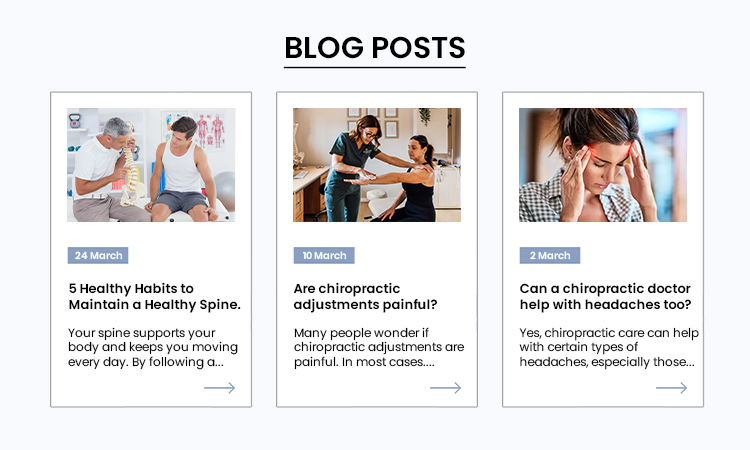
This is one of the most crucial strategies to ensure effective content marketing for chiropractors. Developing content that clearly addresses the common pain points of patients is non-negotiable. Every time a patient asks, “Are chiropractic adjustments painful?” or “Can a chiropractic doctor help with headaches too?” These questions are an exceptional content opportunity.
These are basic queries that chiropractic patients are actively looking for. Answering them clearly in your content, such as blog posts, social posts, or videos, can position your chiropractic practice as an authoritative source, and patients are likely to trust your practice even before their visit.
But if you do not understand the common concerns of your target audiences, then it will be quite difficult for you to create content that aligns with them. So, here are a few tips on how chiropractors can identify common patient concerns:
- Strategy 1: Collect Direct Patient Feedback
Chiropractors can leverage open-ended surveys rather than multiple-choice questions to make patients share the specific, unfiltered challenges they are facing. For example, “What is the most challenging part of your appointment process?”
- Strategy 2: Organize Comprehensive Initial Consultations
Reach out to people who are looking for chiropractic care and conduct detailed interviews during the visit. This is very important to determine their common concerns, past injuries, and lifestyle factors.
- Strategy 3: Active Listening
Allow your patients to describe their major pain points, including how it affects their daily life. This can help chiropractic practices identify the type of physical pain that is stressing them emotionally.
- Strategy 4: Evaluate Search Data
Leverage tools like Google Keyword Planner or SEMrush to determine what exactly prospective patients are searching for. For example, “How to fix neck pain from desk work“
- Strategy 5: Social Media Monitoring
Interacting with followers on platforms like Instagram or TikTok to identify the latest trends and common physical pain related concerns.
- Strategy 6: Website Analytics
Chiropractic practices can use tools such as Google Analytics 4 (GA4) to determine which treatment pages are attracting the most traffic. For example, “Posture Correction” or “Sciatica Treatment”.
- Strategy 7: Online Surveys
Sending or distributing surveys to existing or potential patients in order to achieve direct insights into their needs and preferences.
-> Now that you have a clear idea of how to understand the major pain points of chiropractic patients, let’s take a look at how chiropractors can create content surrounding these pain points to ensure their content reaches the right audience:
- Create Various Content Formats
- Informative Videos: Create short videos (under 3 minutes) showcasing exercises or at-home stretches, clearly defining “What that cracking sound is” or demonstrating proper ergonomic setup.
- Case Studies/ Patient Testimonials: Share success stories with their proper consent, comprehensively explaining a patient’s journey from pain to mobility.
- Develop Interactive Content: Host “Ask the Chiropractors” live sessions on social platforms like Instagram and Facebook to answer specific pain-related queries in real-time.
- Create Informative SEO and Blog Content: For successful content marketing for chiropractors, write educational blog posts or informative articles targeting local searches such as “best chiropractor near me” or “chiropractor in California”
- Leverage Lead Magnets: Offer free, downloadable guides such as “5 Healthy Habits to Follow to Maintain a Healthy Spine.”
- Personalize Your Chiropractic Content by Target Persona
- Office Workers: Clearly highlight ergonomics, addressing posture-related issues, and desk sketches.
- Athletes: Chiropractors must showcase injury prevention, performance enhancement, and faster recovery times.
- Older Patients: For older patients, chiropractic practices must focus on chronic pain management, maintaining independence, and enhancing mobility.
- Effective Distribution Strategies
- Social Media: Make sure to leverage platforms where your target audience spends most of their time, emphasizing on visual content such as before-and-after posture improvements or behind-the-scenes adjustments.
- Google Business Profile: Chiropractors must regularly post photos, updates, and gather reviews in order to enhance local SEO.
- Email Marketing: Sending informative, nurturing email newsletters to current patients can keep your chiropractic practice at the top-of minds.
- Measure and Modify
- Monitor Metrics: Ensure to track new patient queries, website traffic, and social engagement in order to determine which topic aligns with them the most.
- Leverage Patient Feedback: Pain management services must use surveys and in-person conversations to identify new pain points.
In case you are just starting out and have no idea how to develop personalized content, then we recommend you partner with a content marketing expert.
- Develop Localized Content to Attract Local Audiences
This is among the best content marketing ideas for chiropractors. We all must have heard the saying, “Content is the King.” Content that is of high-quality, relevant, and valuable is a great asset to attract patients who are actively seeking chiropractic care nearby.
But developing generic content to attract local patients can be a bad idea. So, what do you need to do? Create localized content, especially designed to attract more foot traffic to your chiropractic clinic.
Here are 6 ways chiropractors can create localized content:
- Research Local Keywords
Determining the local search behaviour of your target audience is vital. Localized keywords such as “Chiropractors near me” or “Best chiropractic clinic in Boston” can be valuable to capture leads because they align with the patient’s intent who are looking for pain management near them.
Long-tail keywords, which often include location-specific terms, can help chiropractic practices reach a more targeted audience.
So, chiropractors must research keywords that are widely used in specific regions and areas. Here’s how chiropractors can research local keywords to use them in local content:
- Make a List of Core Services and Locations: Clearly define your products or services and outline specific, targetable locations such as cities or neighbourhoods.
- Generate Keyword Combinations: Leverage specialised tools such as Google Keyword Planner and SEMrush to combine service terms along with locations. (e.g. Best chiropractor in Canada)
- Identify Different Types of Keywords: Consider the type of keywords. There are two types of keywords, Explicit (e.g., Best chiropractic services in Florida) and implicit (e.g., best chiropractor).
- Keep an Eye on your Competitors: Use tools like SEMrush to identify your top 10 competitors for specific local terms and thoroughly assess their content.
- Use Local Insights: Research local culture, community events, and local dialects to identify unique and low-competition keywords.
- Use Geo-Specific Location Pages
In order to ensure effective content marketing for chiropractors, geo-targeting is a must. Geo-specific landing pages are personalized to the unique needs and interests of patients in specific locations. By creating separate landing pages for different cities and regions, chiropractors can create content that directly addresses the concerns and preferences of the local audiences.
These specific pages should be well-optimized by local keywords, relevant visuals, and location-specific patient testimonials and incentives.
For example, you offer chiropractic care in multiple cities, and each of the landing pages can showcase patients’ testimonials or reviews from that particular location, making the content more relatable.
This approach will not only help chiropractors enhance their SEO but also boost user experience by delivering reliable information that meets the patient’s immediate needs.
- Leverage Localized Visuals
Visuals are one of the crucial aspects of content writing. Visual content can greatly encourage audiences to explore your chiropractic practice, and localized visuals are just the cherry on top as they strengthen this connection.
By including images of local landmarks, events, or even your staff, chiropractors can create a sense of familiarity that aligns with local audiences.
For example, chiropractors can use images of their team and videos of their ongoing treatment procedures or clinic tours.
- Partner with Local Influencers
Do you know that 69% of customers trust influencer recommendations? Collaborating with local influencers who cover healthcare content can significantly enhance your reach within a specific community. These influencers already have the trust and loyalty of a significant number of their audience.
By working with these influencers, chiropractors can successfully connect with a wider patient base, who are often part of their target market.
Whether it is sponsored posts or co-hosted events, influencer partnerships can immensely help chiropractors to engage with local people who are actively looking for chiropractic care in an impactful way.
- Engage in Local Events
Unlike influencer partnerships that focus on individuals, local event engagement strongly focuses on building connections with local chiropractic clinics and relevant community events.
Partnering with local hospitals and clinics or participating in local events like fairs, charity events, or social gatherings to create authentic touchpoints that align perfectly with your audience.
- Showcase Local Success Stories
When you showcase your patient testimonials, success stories or case studies from local clients, you are not only humanizing your chiropractic practice but also creating a solid reason why patients looking for chiropractic care must choose you over others.
These stories act as social proof, showcasing that your services have made a difference and contributed to the wellness of people.
- Update Google Business Profile Posts Regularly
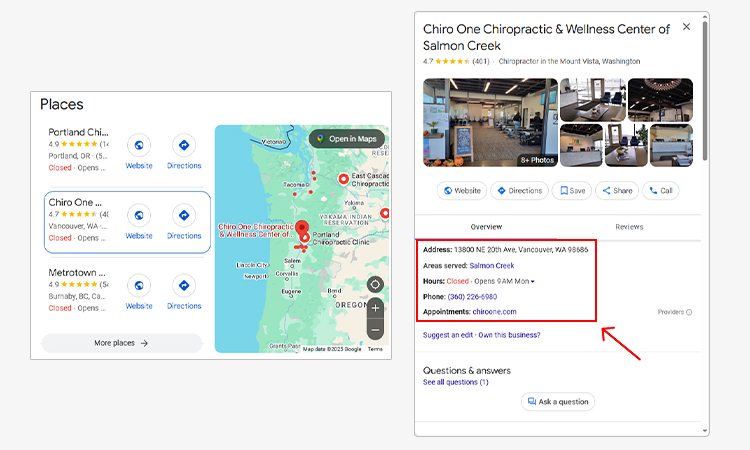
Usually, when someone searches for healthcare providers near them, their Google Business Profile is the first thing they check out. It not only serves as a digital business card, but it is also a space where content can work out for you, right in the search results. Cool, right? It is one of the most important strategies for effective content marketing for chiropractors, but it often gets ignored.
By posting weekly updates on Google Business Profile, chiropractors can stay relevant and prominently visible in local searches.
Chiropractors can post quick health tips, seasonal advice, a simple procedure post, and even a reminder about an ongoing special offer. Furthermore, you can also share a success story or showcase a specific service that is related to a common concern, like poor posture.
Now the real question is, why must chiropractors update their Google Business Profile posts frequently?
- Better Local SEO and Visibility
Do you know 64% of customers use Google Business Profile to find contact details of a local business? This showcases the importance of having a properly maintained GBP. Google favours nothing more than an active, consistent, and accurate profile. Regularly posting on GBP can help your chiropractic practice appear more frequently on Google Maps, increasing the chances of appearing in the “Local-3 Pack.”
- More Patient Engagement and Trust
Fresh content, such as new photos of staff, procedures, or offers, can make your practice look professional, which can help build trust with prospective patients. It gives patients a solid reason to interact with your chiropractic practice, like visiting your website or calling for more details.
- Improved Communication
Posting regularly can keep patients clearly informed about any new updates on your chiropractic practice, such as new services, business hours, and special events, ensuring they have accurate and relevant information.
- Higher Conversion Rates
GBP posts that have relevant and clear CTAs like “Schedule an Appointment” or “Contact Us” can transform searchers into patients more effectively than static posts.
- Offers a Competitive Edge
Consistent, active, and fresh updates on your Google Business Profile can help chiropractors stand out from their competitors who may have status or outdated posts in their profile.
Tips on how chiropractors can keep their Google Business Profile fresh with new photos and videos?
- Upload high-resolution images and videos of your storefront, services, team, and products.
- Include behind-the-scenes shots in order to create authenticity.
- Update seasonal images or photos and videos of events to keep your profile dynamic.
- Add detailed product listings with proper price, descriptions, and images.
- Highlight best-rated or seasonal services.
- Showcase product availability in order to avoid misleading prospective buyers.
- Chiropractors must post at least once a week- whether it is a latest service launch, company update, or limited-time offer.
- Share seasonal sales, promotions, and holiday hours to keep patients informed.
- Promote important events or special services in order to get more foot traffic and engagement.
- Understand common patient queries on chiropractic care and add relevant answers to your GBP FAQs.
- Regularly update the FAQ section on the basis of customer feedback and new services.
- Incorporate new keywords organically in your answers to enhance search visibility.
- Focus on Conditions and Results, Not Services
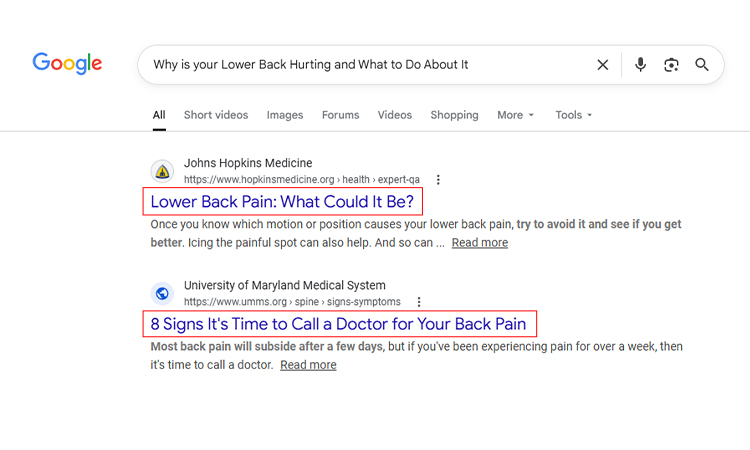
When someone searches for something on the Internet, they are not simply typing in “spinal manipulation” or “joint mobilization,” they are rather typing in their problems, “Why is my back hurting while sitting?” or “Therapeutic exercises to relieve lower back pain”
The majority of chiropractors make their content focusing overly on “What” they do rather than “Why” it matters. While other services become crucial, your content should clearly address the patient’s pain points. Chiropractors must develop content that covers the daily challenges, symptoms, or what life will look like after the treatment.
For instance, instead of writing a post with a heading that goes, “Our Chiropractic Treatment,” chiropractic practices must focus on “Why is your Lower Back Hurting and What to Do About It.” By doing this, you are still encouraging them to explore more about your services, but without being too salesly.
The more your content speaks the language of your audience, the more likely they will feel valued and ultimately take the next step.
Here’s how chiropractors can create content by focusing on conditions, not just services:
- Shift from Features to Outcomes
Leverage a structured approach in order to translate technical features into effective results.
Feature (“The What”): 24/7 automated support.
Benefit (The Why): Patient concerns are addressed instantly
Outcome (The Result): Minimized churn and higher patient satisfaction scores.
- Create Content Around Patient Pain Points
As we already discussed before, effective content marketing for chiropractors requires content creation around common patient concerns. So, before you even start writing, determine the specific problems that your audiences are facing. Develop content that directly addresses the pain points and positions your services as a solution to these challenges.
Instead of: “Our Spinal Manipulation Therapy is the Best”
Try: “Regain your Range of Motion with Our Spinal Manipulation Therapy”
- Leverage Storytelling and Case Studies
Real-world, data-driven examples often showcase impact better than statistical or technical specifications.
Case Studies: Chiropractors can showcase a patient’s condition before (e,g., struggling with joint mobilisation) and after (achieving better range of motion)
Use-Cases: Focus on specific, relatable scenarios where the pain point was resolved, and results were achieved.
- Structure Content for Transformation
When developing content, chiropractors must focus on the “before and after journey.”
- Determine the Current Status: Clearly describe the pain points, frustrations, and inefficiencies that your patients are currently experiencing.
- Explain the Desired Future State: Sketch a picture of the outcome- higher revenue, efficiency, or peace of mind they will experience.
- Position the Product as the Bridge: Clearly showcase how your chiropractic solution facilitates the process without getting lost in technical jargon
- Create Engaging Chiropractic Videos to Captivate Patients
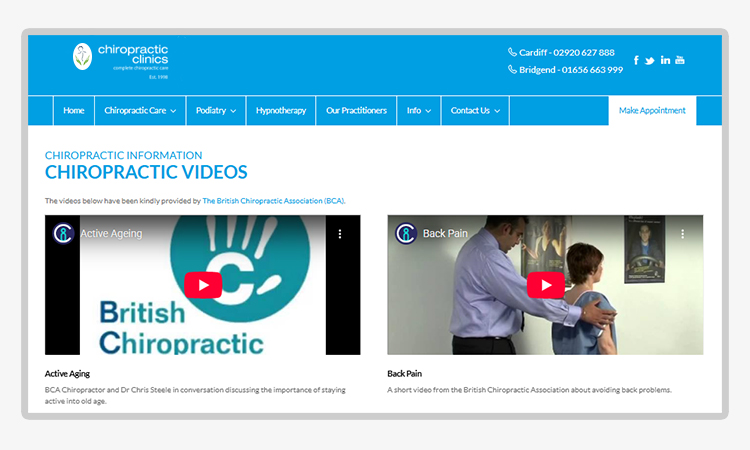
91% of businesses use video as a marketing tool. With the majority of people preferring to watch a video over reading a huge chunk of paragraphs.
By creating engaging videos, chiropractors can not only connect with their audience successfully but also educate patients about the benefits of chiropractic care, ultimately leading to practice growth.
So, in this section of the blog, we will look at the type of videos chiropractic content can develop, as well as the steps to develop effective video content to attract chiropractic patients.
Steps to Create Effective Video Content to Attract More Patients:
Step 1: Develop a Well-Defined Plan
In order to create effective video content for your chiropractic website, you must first have a solid plan in hand:
- Define your Goal: Firstly, chiropractors must determine their major goal. What do they want to achieve through content marketing? Do they want to boost their brand awareness, educate existing patients, and drive patient inquiries in order to achieve better outcomes?
- Determine the Target Audience: Personalize content to your specific demographics to ensure your video content reaches the right audience. (For example, “younger,” “older”)
- Understand your “Why”: Determine the purpose of your video content- it is to build authority in a specific niche (e.g., cardiology, mental health) or to promote new services.
- Plan the Content: Develop a content calendar and determine topics that address common patient queries or anxieties.
- Develop a Simple Script: Keep the scripts of your video concise, emphasizing on a powerful “Hook” within the first 3 seconds and getting straight to the point.
Step 2: Plan the Production
- Educational Content: Demonstrate treatments by explaining common chiropractic problems like headache, lower back pain, or sciatica, and clearly explaining how your chiropractic solutions can offer relief.
- Success Stories and Patient Testimonials: Chiropractors must share real-life stories in order to highlight positive outcomes and results.
- Behind the Scenes and Clinical Tours: Humanise your chiropractic practice by showcasing the day-to-day operations, introducing the staff, and demonstrating a welcoming environment.
- Demo Videos: Show, don’t just tell, by recording adjustments and chiropractic techniques with proper consent and including the “Satisfied crunch” to captivate attention can lead to higher engagement.
- At Home Care Tips: Through videos, chiropractors can offer valuable, actionable tips for posture correction and stretches that patients can do at home.
- Share Relevant Health-Related News
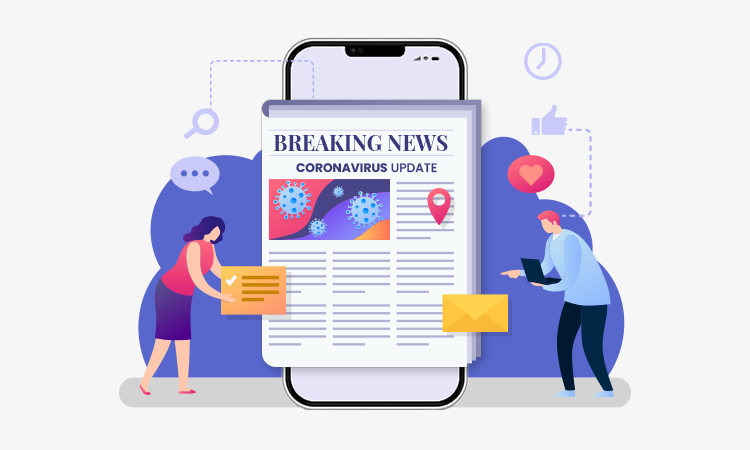
Sharing health-related news on various platforms is one of the most vital strategies for successful content marketing for chiropractors.
By sharing timely, relevant, and evidence-based healthcare news, chiropractors can directly address their patients’ need for trustworthy information, enhance search engine optimization, and establish your practice as a thought leader in the industry.
The majority of patients turn to their healthcare providers first when they are looking for information on healthcare and well-being. Strengthening your marketing strategy by making a list of news from reputable sources can not only enhance credibility but also encourage your potential patients to consider your practice as an educational and valuable resource that they can turn to.
Here are some best tips for chiropractors to share helpful health-related news for effective content marketing:
- Establish Trust Through E-E-A-T
- Leverage Reliable Sources: Chiropractors make sure to base their health news on credible sources like .gov sites, verified research, and medical journals.
- Use Subject Matter Experts (SMEs): Have your medical staff, like chiropractic specialists or doctors, review your content in order to ensure accuracy.
- Highlight Credentials: Clearly showcase the credentials or qualifications of the medical professionals who are behind your content.
- Focus on Accuracy and Authoritativeness
- Fact Check Before Sharing: Even before sharing health-related news, chiropractors must double-check facts to ensure only the right information is reaching their audience. With the emergence of AI-generated misinformation, make sure to verify every claim, as inaccurate information can not only erode trust but also ruin credibility.
- Contextualize New Research: When sharing “breakthroughs,” chiropractic practitioners must clearly explain all the limitations. Mention whether or not the study was performed on animals or a small group of humans in order to avoid exaggerated claims like “Cure.”
- Personalize Content to your Audiences
- Use Simple Language: Patients come from various backgrounds, and not everyone understands healthcare jargon. In order to make your news content more digestible for patients, translate complex technical chiropractic concepts into simpler, more actionable language.
- Emphasize Patient Utility: Instead of just reporting news, clearly explain “Why” it matters to the reader. For example, your news content must answer this question: “How does this affect my health?”
- Segment your Audience: Chiropractors must customize their content to a specific audience group based on their chiropractic condition, age, and interests to make it feel more personalized.
- Use Visually Appealing and Engaging Formats
- Leverage Infographics for Complex Data: Data-heavy studies are the best shared if they come in infographics format. They are highly shareable and break down complex chiropractic-related information.
- Include Expert Insights: Chiropractic practices can have a doctor, nurse, or specialist from their clinic to explain the news. This can add more trust and a human touch to their news.
- Ensure Compliance and Ethical Standards
- Strictly Adhere to Privacy Laws: Make sure your news content strictly complies with healthcare regulations such as HIPAA and GDPR, particularly if you are sharing patient testimonials and case studies.
- Avoid Fear-Based Marketing: Chiropractors must avoid exaggerating health-risks in order to attract attention. Instead, leverage positive reinforcement and educational framing.
- Disclose Conflicts of Interest: If the news that you are sharing is sponsored or related to a product your clinic sells, make sure to be transparent about it.
- Optimize for Action and Distribution
- Use “Pre-Bunking”: Chiropractors must proactively post accurate information even before misinformation spreads in order to build a trusted and informed audience.
- Make Use of Relevant Hashtags: Use a mix of broad and specific hashtags to increase the discoverability of your news. For example, # PainManagement or #PhysicalHealth2026.
- Develop “Actionable” Newsletters: Chiropractors can send regular updates but make sure they contain valuable, actionable advice and not just linking to news articles.
- Add Clear CTAs: Every piece of your news content must seamlessly guide the reader on the next step, such as “Book a Consultation,” “Schedule a Screening,” or “Download a Guide.”
- Maintain Consistency with a Strategic Content Calendar
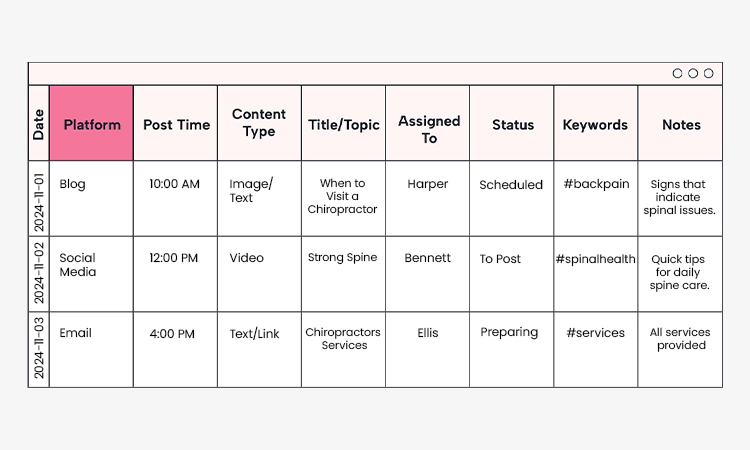
For content marketing for chiropractors, maintaining consistency is the key to success. A consistent posting schedule can help chiropractors maintain audience interest and build a sense of expectation for their content. Keeping a content calendar in hand can not only make content posting much easier, but it is also crucial to create an exceptional and long-term strategy.
Here are a few quick tips to develop a content calendar:
- Clearly Define your Objectives
- Set SMART Goals: In order to create an effective content calendar, chiropractors must first identify their content marketing goal. What do they want to achieve through content? Is it to enhance conversions, boost brand awareness, and drive more traffic? For example, “Increase Instagram engagement by 10% in 2026”
- Know your Audience: Personalize topics to your target audience’s interests and concerns.
- Set a Realistic Frequency: Chiropractors must start with a sustainable schedule in order to avoid irritating patients. For example, chiropractic clinics can decide on 2 blog posts/week.
- Choose the Right Setup and Tool
- Start Simple: Make sure to leverage free, flexible tools such as Google Sheets or Trello to ensure easy collaboration and colour-coding.
- Include Essential Fields: When creating a content calendar for your chiropractic practice, make sure to add column headers for: Topic/Title, Publish Date, Type of Content (Blog, Social, Email), Status, Owner, and Distribution Channel
- Categorize Each Activity: Assign different colours to different content types to instantly determine the content mix. For example: Blue for video content and red for blog posts.
- Structure your Content
- Leverage Content Pillars: Identify 3-5 main themes for your chiropractic practice in order to ensure you are creating diverse but consistent content.
- Plan Ahead: Plan 4-6 weeks of content in advance or at least more than 10 pieces to guarantee a consistent posting flow.
- Combine Content Types: Chiropractors can combine timely topics, such as industry news or emerging trends, with evergreen content, such as FAQs and how-to guides, to keep their feeds engaging and fresh.
- Implement CTAs: Include a clear call-to-action in every piece of your content to guide the users properly.
- Maintain and Optimize
- Stay Flexible: Leave blank shots for last-minute trending, urgent, or reactive content topics.
- Assign Ownership: To maintain and optimize your content calendar, chiropractors must clearly define who is creating, editing, and posting the content to avoid hindrance.
- Review Regularly: Schedule monthly or quarterly meetings to evaluate performance metrics like conversions and shares, and adjust the strategy.
- Reframe your Content Calendar: Transform old blog posts into social media threads, videos, or engaging infographics in order to save time.
- Leverage Patient Testimonials as Educational Content
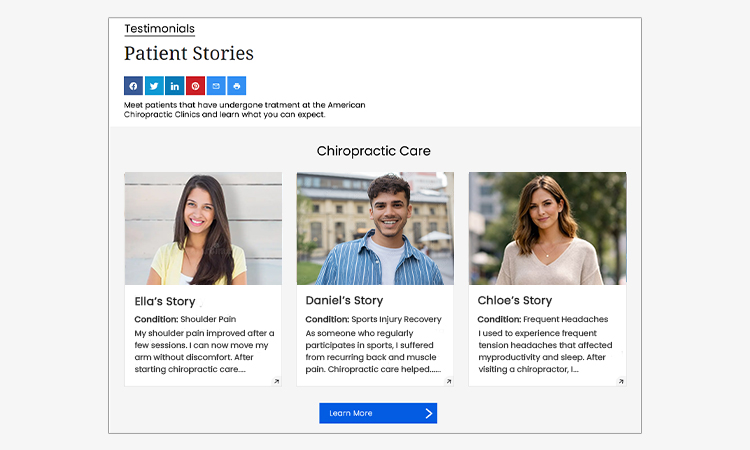
Customer testimonials are considered an effective content marketing strategy by 89% of businesses. By including patient testimonials, chiropractors are highly effective, authentic, and compliant strategies for chiropractic content marketing.
Rather than using testimonials solely for promotional purposes, chiropractors can re-purpose them into deep, educational narratives that can help foster trust, enhance SEO, and answer common patient queries.
But how can chiropractors leverage patient testimonials as educational content? Here’s how.
- Transform Testimonials into “Patient Stories”
Chiropractors must go beyond one-sentence testimonials by creating comprehensive, in-depth case studies.
- The Structure: Follow a clear narrative arc: The symptoms/problems> The search for diagnosis> The treatment approach> The Outcome.
- Educational Angle: Explain the specifics of chiropractic therapy in order to inform readers on what to expect, addressing common queries or fears.
- Use: Publish these testimonials as blog posts or detailed “patient story” pages on your chiropractic website.
- Leverage Video to Provide Authentic, Relatable Education
Video testimonials are among the most effective forms of content. Why? Because 72% of customers will trust a brand more with positive video testimonials. Not only that, but they are also a major part of content marketing for chiropractors.
- Clearly Explain Chiropractic Procedures: Encourage patients to talk about specific aspects of their chiropractic therapy in your clinic. For example, how they managed recovery or how your devices have helped them.
- Incorporate Short-Form Content: Truncate longer videos into “Patient highlights” clips and use them on Instagram reels, TikTok, Facebook, or YouTube Shorts, emphasising on a powerful and single conclusion.
- Incorporate Testimonials into Procedure-Specific Content
Rather than creating a dedicated, crowded “Testimonials” page, chiropractic clinics must place stories directly on relevant service pages. For example, “incorporating a knee replacement success story on the orthopaedic knee treatment page”.
- Contextual Relevance: This instantly offers social proof and education when the potential patient is going through the decision-making process.
- Before-and-After Pairing: Integrate written testimonials with videos of before-and-after or scans to prove positive outcomes. This is highly effective for chiropractic therapy services.
- Create a Series of Educational Patient Testimonials
- Testimonial Tuesday: Chiropractors can leverage social media to showcase the experiences of various patients every week, strongly emphasizing on the unique aspects of their care.
- Themed Campaigns: Create an engaging series that especially focuses on a specific theme, such as “Overcoming Chronic Back Pain” or “The First 30 Days of Recovery,” showing multiple patients who have undergone similar chiropractic treatments.
- Reframe Old Content to Ensure Maximum Impact
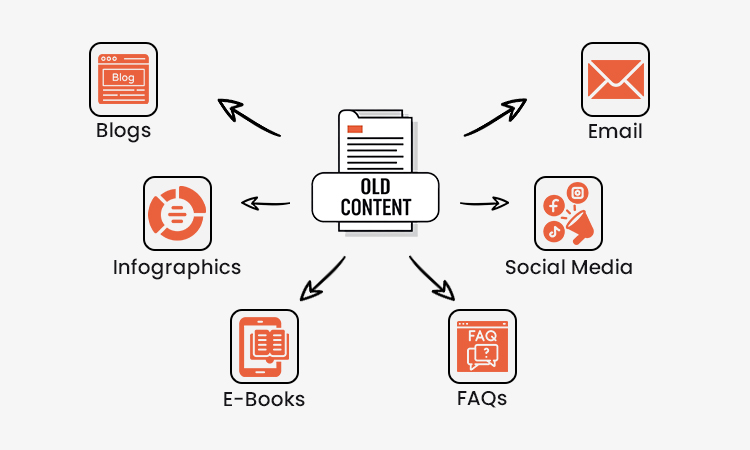
Okay, let’s face it. No matter how good the content you develop, it will most likely lose its value someday or another. With thousands of emerging trends in the healthcare industry, no content can remain evergreen.
So, what can you do in this case? Review and repurpose your old content to ensure they remain valuable to potential audiences.
Here are a few ways in which chiropractors can re-purpose their old content to keep it fresh and ensure consistent engagement:
- Transform Written Content into Visual Content
- Blog Posts and Social Media Carousels: Social media carousels remain one of the most effective content formats, offering an engagement of 0.55%. Nowadays, patients are always on the go. So rather than stopping to read large chunks of paragraphs, they would rather swipe to view the same content in image format. Chiropractors can turn a detailed blog post into a Facebook or Instagram carousel to achieve higher engagement. For example, “5 Effective Stretches to Relive Lower Back Pain.“
- Turn Articles into Scripts: Chiropractors can use old blog articles as scripts for 60-second TikTok, Reels, and YouTube Shorts, emphasizing on showcasing chiropractic techniques.
- Develop Infographics: Convert data-heavy or old posts on spinal health into infographics by leveraging advanced tools like Canva.
- Transform Technical Insights into FAQs: Transform outdated, complex, or technical articles into simplified FAQ-style posts or videos that clearly answer common patient queries.
- Use Old Video and Audio Content
- Truncate Long Videos: Break down long-form YouTube videos, such as an educational seminar, into bite-sized highlights of approximately 1-2 minute clips for TikTok or Instagram reels.
- Develop Relevant Audio Content: Chiropractors can extract audio from old webinars or educational videos in order to create a podcast episode as a series of chiropractic tips in audio format.
- Reframe Live Q&As: Record, edit, and re-post old live Q&A sessions on various social media platforms or in a “What to Expect” blog post.
- Redesign Content for New Mediums
- Create E-Books: Gather several blog posts on a similar topic and combine them into an easily downloadable E-book or guide. This can act as a lead magnet on your website. For example, chiropractors can create E-books such as “Posture Tips for Corporate Workers.”
- Automated Email Sequences: Transform a series of old blog posts into an automated email nurturing campaign for new patients, with one tip in every email.
- Update and Re-Publish: Rephrase outdated, high-performing blog posts with new images, updated statistics, and relevant tips, and publish them as “New” content.
- Boost Social and Local Impact
- Reshare Best Testimonials: Chiropractors must identify old, glowing reviews from patients or success stories and transform them into fresh, visually engaging images and short video clips.
- “Behind the Scenes” Recaps: Make use of old images or videos from behind-the-scenes team introductions or community events to strengthen your clinic’s personality.
- Google Business Updates: Chiropractic practices can use short snippets from old blog posts or weekly tips. Sharing weekly tips on Google Business Profile can help stay visible in local searches.
- Promote your Content Across Various Platforms
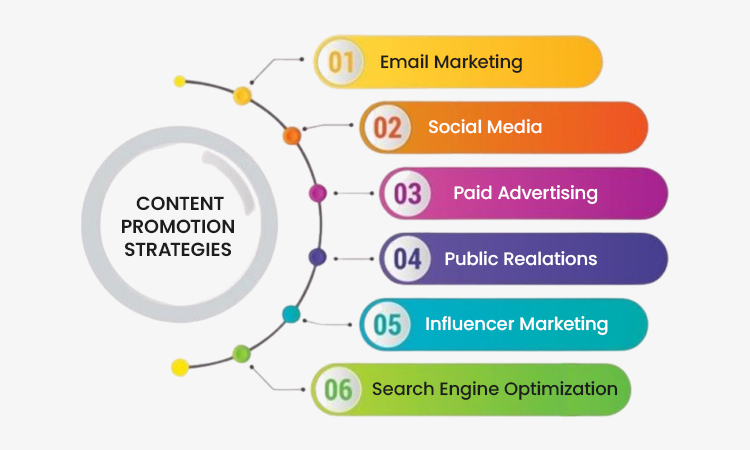
For successful content marketing for chiropractors, promoting content across the right platform is a must in order to reach the ideal patients. Your content strategy must be well-designed and have a clear plan for distributing and boosting your content in order to reach your target audience.
Here are a few content promotion strategies that are especially designed for chiropractic doctors:
- Email Marketing: Chiropractors can take advantage of their email list to notify their subscribers about their latest content and encourage them to interact with it.
- Social Media: Use your social media platforms to share your content with your followers and generate engagement.
- Paid Advertising: If you have a fixed budget, you can still use Google Ads or Meta Advertising solutions in order to boost your content’s visibility and reach a wider audience.
- Public Relations: Chiropractic practices can leverage advanced PR tactics to get their content featured on reputable publications and media outlets that your target audiences trust the most.
- Influencer Marketing: Collaborate with influencers such as famous bloggers or health influencers to share your content.
- Search Engine Optimization: Chiropractors must optimize their content well so that they start ranking higher in the search results.
NOTE: Not every platform will work out for everyone. The content distribution channel you choose for your chiropractic practice must strongly align with your objectives, your audience’s preferences, and the budget.
How to Determine the Effectiveness of a Content Marketing Campaign: Key Performance Metrics to Measure
- Social Shares and Engagement Rate
Social media is an excellent way to reach new audiences and promote your chiropractic content. However, sharing posts is not the only thing that chiropractors must use it for.
Tracking metrics such as social shares and engagement rate is vital in order to gain a clear idea of how well your content is performing on social media.
- Article Views
Views refer to the total number of visits to your web pages or app screens during a particular time period. This metric can immensely help chiropractors to determine what kind of content pieces are getting noticed by audiences and attracting the most traffic.
For example, chiropractors can create more how-to guides if they notice they are consistently driving the most traffic. In order to track this metric, chiropractors can leverage tools like Google Analytics.
- Follower or Email Subscriber Growth
This metric is especially important for chiropractors who focus more on email marketing and social media. These metrics measure the rate at which your email list or loyal following count grows over your content marketing efforts.
This metric usually denotes how effectively your content is building a loyal audience; an audience that is interested in listening to anything and everything that you have to say about your chiropractic clinic.
- Keyword Rankings
This metric is crucial to track to ensure successful content marketing for chiropractors. Keyword rankings track the position that your website holds for different search queries. This means where they appear on search engine results pages.
This information can help chiropractors determine the effectiveness of their content marketing strategy and further guide their keyword optimization. Chiropractors must monitor their keyword rankings regularly and stay on top of changes in their positions.
- Organic Search Traffic
Organic search traffic is the number of people who have visited your website from unpaid search engine results. Keeping track of this metric is a must, as it can help chiropractors determine whether or not their content is successfully attracting target audiences to their website.
Chiropractic practices can leverage tools like Google Search Console to monitor their content’s organic search traffic.
- Impressions
Impression is the total number of times a piece of content was displayed or shown to users on a given platform. For example, suppose a LinkedIn post displayed 1,000 times on people’s feeds means that it has earned 1,000 impressions.
Keeping track of this metric can help figure out how much exposure your content is receiving. For impressions, leveraging a platform’s individual tool is the best choice.
For example, if you are willing to track the impression of a LinkedIn content, then it is better to use LinkedIn’s analytics tool.
- Conversion Rate
Conversion rate is the percentage of people who have completed a desired action over a specified amount of time. This action might include signing up for an email newsletter, contacting your chiropractic clinic, or scheduling an appointment.
Tracking this metric is crucial as it offers valuable insights into whether or not your content is fulfilling your goals.
- Bounce Rate
This metric measures the number of visitors who are leaving your website after viewing just a single page. If there is an increase in bounce rate, then that means that your content is not meeting the expectations of your audience, or you are attracting the completely wrong audience.
Either way, this metric is something that will drive your content marketing strategy in the right direction.
- Backlink Analysis
This is another crucial metric that must be tracked to ensure effective content marketing for chiropractors. Backlink analysis refers to tracking the number and quality of other websites that link to your content. And affects the SEO optimization of your website. Backlinks give Google a clear idea of your website and the general content authority.
- Content Decay Rate
This is the measurement of how quickly your content’s performance is declining over time. This could be through engagement, traffic, or conversion.
Content decay rate is a crucial metric to track, especially when it comes to determining which content needs to be re-framed or repurposed.
Best Content Marketing Tools Chiropractic Practice can Implement
| Tools | Best For | Unique Features |
| Ahrefs | Search Engine Optimization and Competitor Analysis | A wide range of advanced tools covering almost every aspect of SEO |
| Google Analytics | This tool is best for analytics | Great for tracking which blog posts or pages are driving the most traffic. |
| Google Business Profile | Local Search Engine Optimization or Content Optimization | This tool is crucial for posting weekly healthcare tips, managing reviews, and posting patient images. |
| Google Keyword Planner | This is an exceptional keyword research tool that is often used by experts. | Finding high-intent keywords, local search terms such as “chiropractor near me” or “soft tissue mobilization therapy in Canada” |
| Google Search Console | It is one of the most effective tools for SEO | Tracking search performance and determining keyword opportunities |
| Canva | Canva is a beginner-friendly graphic design tool. | Creating professional, branded social media posts, flyers, and infographics. |
| Hootsuite | Effective social media management tool | Scheduling posts across various social media platforms, including Facebook, Instagram and LinkedIn, to maintain consistency. |
| Mailchimp | An affordable email marketing tool that chiropractors who focus on email marketing can use. | Sending out nurturing newsletters to existing patients and promoting informative content. |
| Jasper | This tool is a great AI-writing tool. | Helps generate educational blog posts for patients, social media captions, and email newsletters instantly. |
| SEMrush | All-in-One SEO tool | Allows thorough competitor auditing, comprehensive keyword research, and SEO content template generation |
5 Major Content Marketing Mistakes that Every Chiropractor Must Avoid
Now that you have a clear idea of effective content marketing tips, you must know the major content marketing mistakes that chiropractors must avoid making:
- Lacking a Solid Content Strategy
This is a common mistake that is often made when doing content marketing for chiropractors. Publishing content for the sake of output without a clear content strategy can lead to scattered efforts and weak outcomes.
All businesses, irrespective of what sector they belong to, require a well-documented content strategy that clearly outlines formats, objectives, promotional strategy, and a well-planned content calendar.
Without a clear content strategy, chiropractors might end up creating content that does not support wider business objectives or generic content that gets lost within thousands of high-quality pieces of content.
- Inconsistent Tone and Messaging
No matter where our content appears, each piece of it must correspond to your practice’s identity.
For example, if your website uses a professional, authoritative voice but your social media conveys a casual tone, it might make potential patients feel uncertain about what your practice is actually about.
Your brand messaging may vary between overly casual and a professional tone in your marketing efforts, and your patients might end up losing trust in your chiropractic practice. Not only patients, but inconsistent messaging can also confuse search engines, making it harder for them to crawl and index your practice.
In order to prevent this mistake, chiropractors must note down a comprehensive list of style, voice, and tone guidelines. Leverage them as filters for every piece of content, from social media to emails.
- Relying Heavily on AI Content Tools
We cannot deny that AI tools make tasks really easy these days. We all love ChatGPT for writing assistance. However, they must be seen as just an assistant.
While AI tools can immensely help enhance efficiency and help write content within just a few seconds, relying heavily on these tools might lead to generic content without any human touch.
So, chiropractors can use AI as a support but not as a substitute. Make sure to always have a specialist or expert review it and modify your content to guarantee creativity, accuracy, and a tone that perfectly aligns with your practice’s identity.
- Lack of Authenticity and Research
Both search engines and patients prioritize authenticity. Depending too much on generic statements, details, and recycled topics might make you look like you have nothing new to offer to your patients. This is one of the major mistakes of content marketing for chiropractors that is often made by many.
High-quality content often starts with thorough research and creative thinking in order to add a new perspective to the mix.
Content on old and boring topics can cause search engines to make your website rank lower in the search engine rankings, losing to chiropractic practices that have a fresher take.
In order to avoid this mistake, chiropractors can leverage tools like BuzzSumo or SEMrush. These tools can help determine what is missing in the competitor content and how you can fill that gap through your content.
- Ignoring Content Quality Checks
Even the best drafts get ignored due to small typos, tone inconsistencies, and broken links. Publishing content without checking it thoroughly might indicate a lack of care to offer the best, as well as confuse not only the audience but also the search engines.
In order to avoid this grave content marketing mistake, chiropractors must invest time in thorough proofreading, fact verification, and grammar checking before they publish content.
Frequently Asked Questions (FAQs)
Ans. Content marketing usually takes 6-9 months to drive meaningful and sustainable outcomes such as higher organic traffic and lead generation.
Ans. Local SEO content can help chiropractors to grab the attention of local patients who are seeking chiropractic therapy by boosting visibility in the “near me” searches, improving rankings in Google Maps, and fostering trust through high-quality, localized content.
Ans. Yes, video content marketing for chiropractors is very effective for chiropractors as it serves as the best strategy to establish trust, showcase expertise, and boost patient engagement.
Ans. Content that strongly focuses on local, condition-specific, and trust-building information that clearly answers the patients’ concerns, rather than generic and broad healthcare topic is the type of content that ranks the best for chiropractic practices on Google.
Ans. Chiropractic practices must focus on a balanced approach that heavily emphasizes creating informative content that can establish trust, authority, and long-term patient loyalty while leveraging promotional content to drive instant access. On the other hand, educational content is usually considered more effective for building credibility in the chiropractic sector and generating more engagement than promotional content.
Ans. Consistency is the key, but chiropractors must focus on consistency over volume. We recommend posting content 2-3 times a week on major social media platforms such as Facebook and Instagram. Weekly updating Google Business Profile is highly recommended to stay visible in the search results.
Conclusion
74% of marketers have agreed that content marketing can help generate leads or demand. Not only that, but content marketing for chiropractors, when done right, can help establish brand authority, generate more organic traffic, and provide valuable chiropractic information to audiences rather than just ads. It is a digital marketing strategy that is not only cost-effective but also boosts sales conversion rates throughout the buyer’s journey.
By considering the content marketing strategies and avoiding the common content marketing mistakes mentioned above, chiropractors can achieve successful content marketing outcomes. In case you are just starting out and have no idea how to proceed, we recommend you partner with an experienced healthcare content marketing agency.

